Caliper vernier brass
1344×768 · AVIF · CC BY 4.0
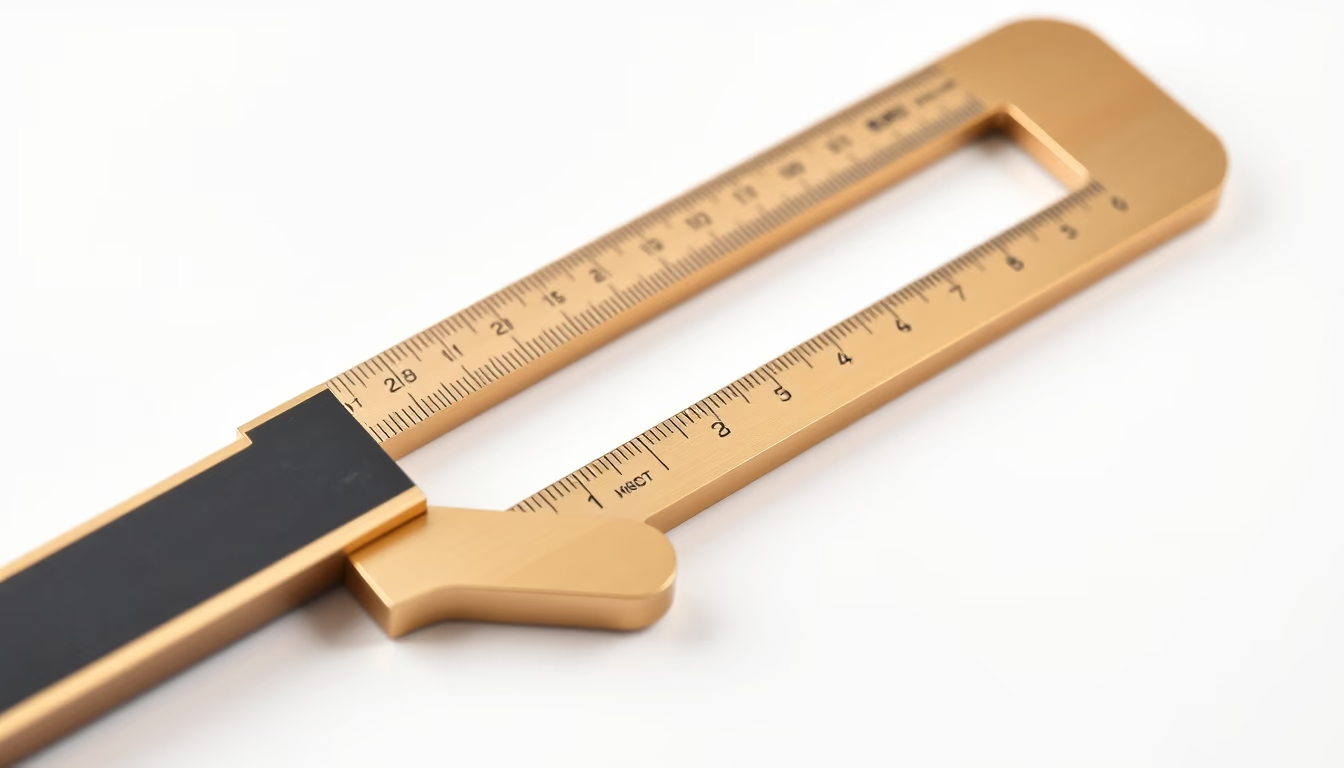
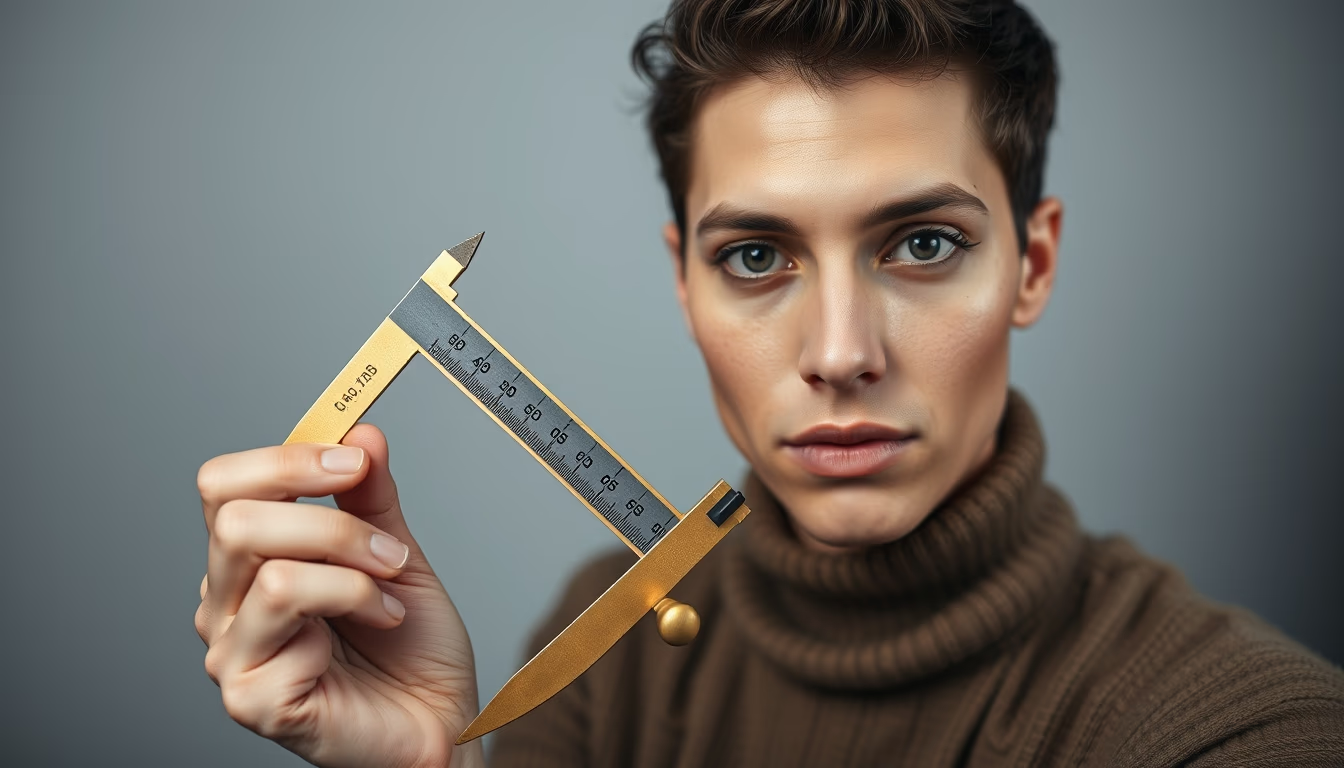
Brass vernier caliper, a precision measuring tool with a vernier scale, widely used in mechanics and jewelry making since the 19th century.
About this subject
The vernier caliper, featuring the vernier scale invented by French mathematician Pierre Vernier in 1631, revolutionized precision measurement. Unlike ordinary rulers, the vernier scale allows readings with accuracy up to 0.02 mm or 0.001 inch. The brass version, common in the 19th and 20th centuries, offered corrosion resistance and dimensional stability ideal for industrial workshops and jewelry ateliers. Such tools were essential for manufacturing machines, engines, and scientific instruments where minimal tolerances mattered.
Vintage brass calipers are now collector's items, valued for their aesthetics and engineering. Unlike modern digital models, they require user skill to interpret the vernier scale, a knowledge that is part of metrology history. Their solid brass construction, often with adjustment screws and locks, reflects the craftsmanship of past eras. Collectors seek brands like Mitutoyo, Starrett, or Brown & Sharpe, but unmarked pieces are also appreciated.
Beyond technical use, the brass vernier caliper represents a milestone in democratizing precision. Before its popularization, accurate measurements depended on expensive, rare instruments. With industrialization, tools like this became accessible to mechanics and artisans, driving innovation. Today, even with digital technology, many professionals still prefer the analog vernier for its reliability and lack of batteries.
Frequently Asked Questions
How does the vernier scale on a brass caliper work?
The vernier scale uses a sliding secondary scale with divisions slightly smaller than the main scale. By aligning the lines, the user reads the fraction of the smallest division, increasing accuracy. For example, on a 0.02 mm caliper, each mark on the vernier scale equals 0.02 mm.
Why was brass preferred for making vintage calipers?
Brass was chosen for its corrosion resistance, low thermal expansion, and ease of machining. Unlike steel, it does not rust, making it ideal for humid or chemical-laden environments. Its weight and golden appearance also provided durability and aesthetic value.
What is the difference between a brass vernier caliper and a modern digital one?
The vernier caliper requires manual scale reading and no battery, making it more reliable long-term. The digital one offers instant readout on a display but depends on electronics. Brass calipers are more robust and historic, while digital ones are more convenient for quick use.
Direct URL
https://pub-c7d6a6ea828543ac903a74a341ccb2e1.r2.dev/imagens/caliper-vernier-brass-commercial-product-photography-fresh3.avifHow to credit
Include a visible link back to UtilizAí. Copy one of the snippets below:
<a href="https://xn--utiliza-eza.com/en/midia/imagens/caliper-vernier-brass-commercial-product-photography-fresh3">Caliper vernier brass</a> by <a href="https://xn--utiliza-eza.com">UtilizAí</a>, licensed under <a href="https://creativecommons.org/licenses/by/4.0/">CC BY 4.0</a>.
[Caliper vernier brass](https://xn--utiliza-eza.com/en/midia/imagens/caliper-vernier-brass-commercial-product-photography-fresh3) by [UtilizAí](https://xn--utiliza-eza.com), CC BY 4.0
License: CC-BY-4.0