Caliper vernier brass
1344×768 · AVIF · CC BY 4.0
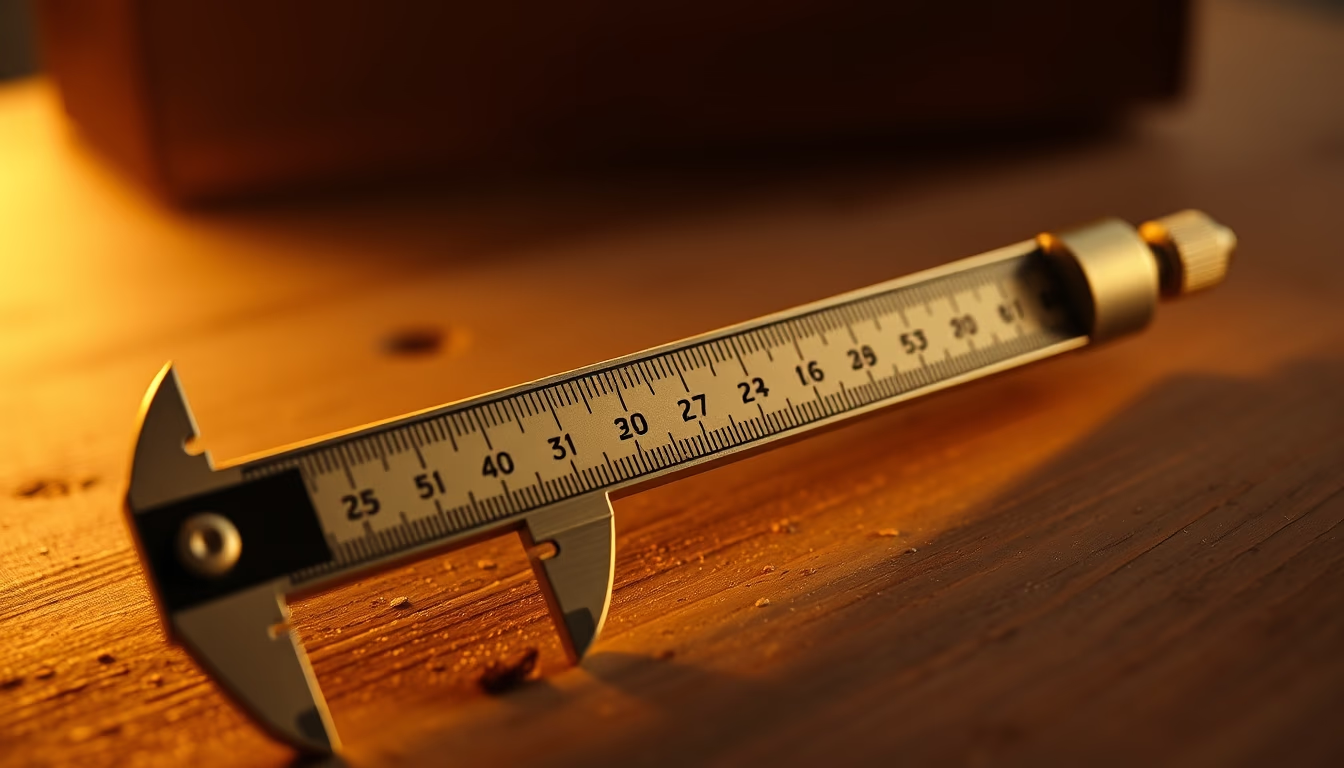
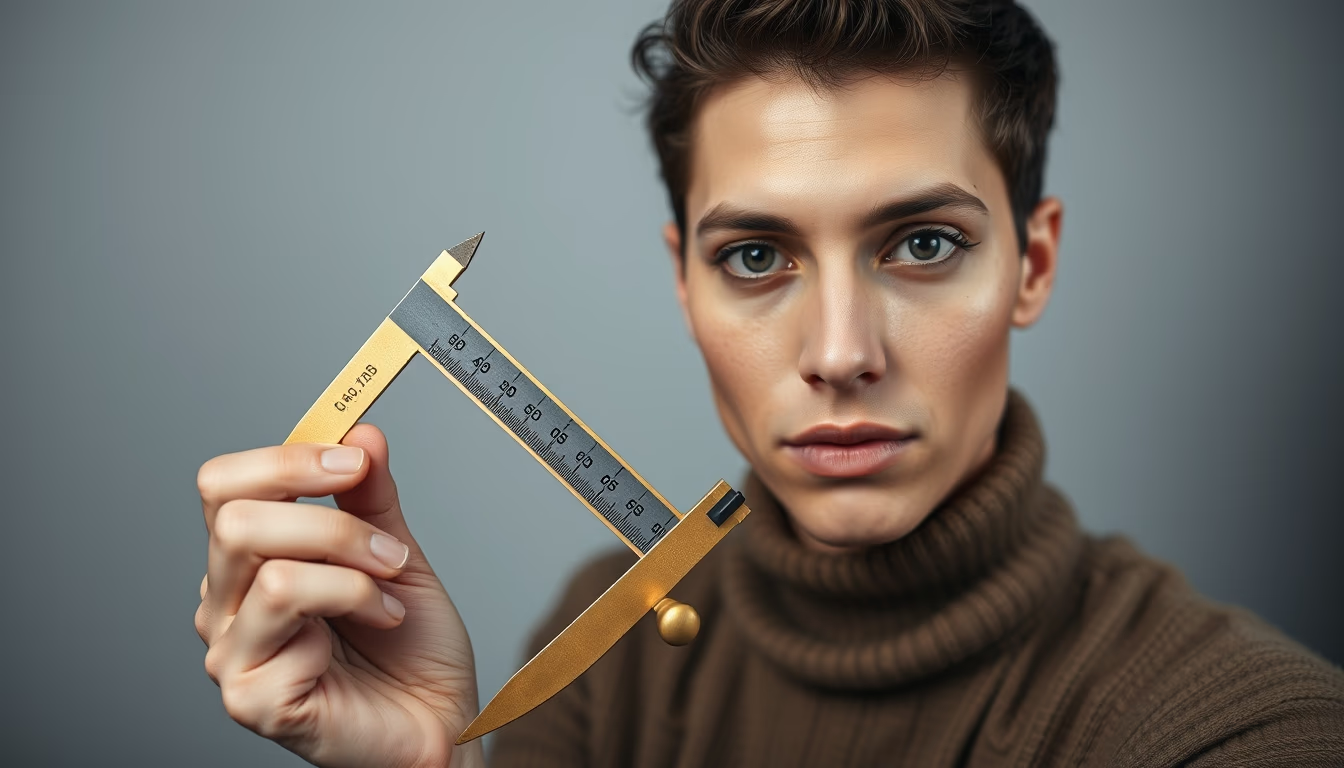
Brass vernier caliper, a high-precision measuring instrument widely used in mechanics and engineering since the 17th century.
About this subject
The vernier caliper is a measuring instrument that allows readings with precision up to 0.02 mm or 0.001 inch. Invented by French mathematician Pierre Vernier in 1631, it became an essential tool in machine shops, laboratories, and industries. The brass model, common in antique pieces, stands out for its durability and corrosion resistance, often found in historical tool collections.
Reading a vernier caliper involves a main scale and a sliding vernier scale (nonius), enabling measurements of internal diameters, external diameters, and depths. Each division on the vernier represents a fraction of the smallest main scale division. The zero of the vernier indicates the whole number, and the exact alignment of one of its marks with a mark on the main scale provides the fraction. This technique was revolutionary for its time and is still taught in technical courses.
The use of brass in caliper manufacturing dates back to the 18th and 19th centuries when steel was expensive and difficult to work. Brass offers thermal stability and a low coefficient of expansion, ideal for precise measurements. Although modern models use stainless or carbon steel, brass verniers are valued by craftsmen and collectors for their aesthetics and mechanical precision.
In global contexts, the vernier caliper is widely used in metrology courses and in automotive and metalworking industries. Its precision enables fine adjustments in parts and components, ensuring product quality. Despite the advancement of digital instruments, the manual vernier is still preferred in situations requiring reliability without battery dependency.
Frequently Asked Questions
What is a vernier caliper?
It is a measuring instrument that uses a main scale and a sliding vernier scale to make precise readings of lengths, diameters, and depths, with accuracy up to 0.02 mm.
How do you read a vernier caliper?
First, read the whole number on the main scale where the vernier zero aligns. Then, find the vernier mark that exactly coincides with a main scale mark. That mark indicates the fraction, which is added to the whole number.
Why is brass used in antique calipers?
Brass was chosen for its corrosion resistance, thermal stability, and ease of machining. Its low thermal expansion coefficient maintains accuracy under temperature variations.
Direct URL
https://pub-c7d6a6ea828543ac903a74a341ccb2e1.r2.dev/imagens/caliper-vernier-brass-cinematic-wide-shot-fresh16.avifHow to credit
Include a visible link back to UtilizAí. Copy one of the snippets below:
<a href="https://xn--utiliza-eza.com/en/midia/imagens/caliper-vernier-brass-cinematic-wide-shot-fresh16">Caliper vernier brass</a> by <a href="https://xn--utiliza-eza.com">UtilizAí</a>, licensed under <a href="https://creativecommons.org/licenses/by/4.0/">CC BY 4.0</a>.
[Caliper vernier brass](https://xn--utiliza-eza.com/en/midia/imagens/caliper-vernier-brass-cinematic-wide-shot-fresh16) by [UtilizAí](https://xn--utiliza-eza.com), CC BY 4.0
License: CC-BY-4.0