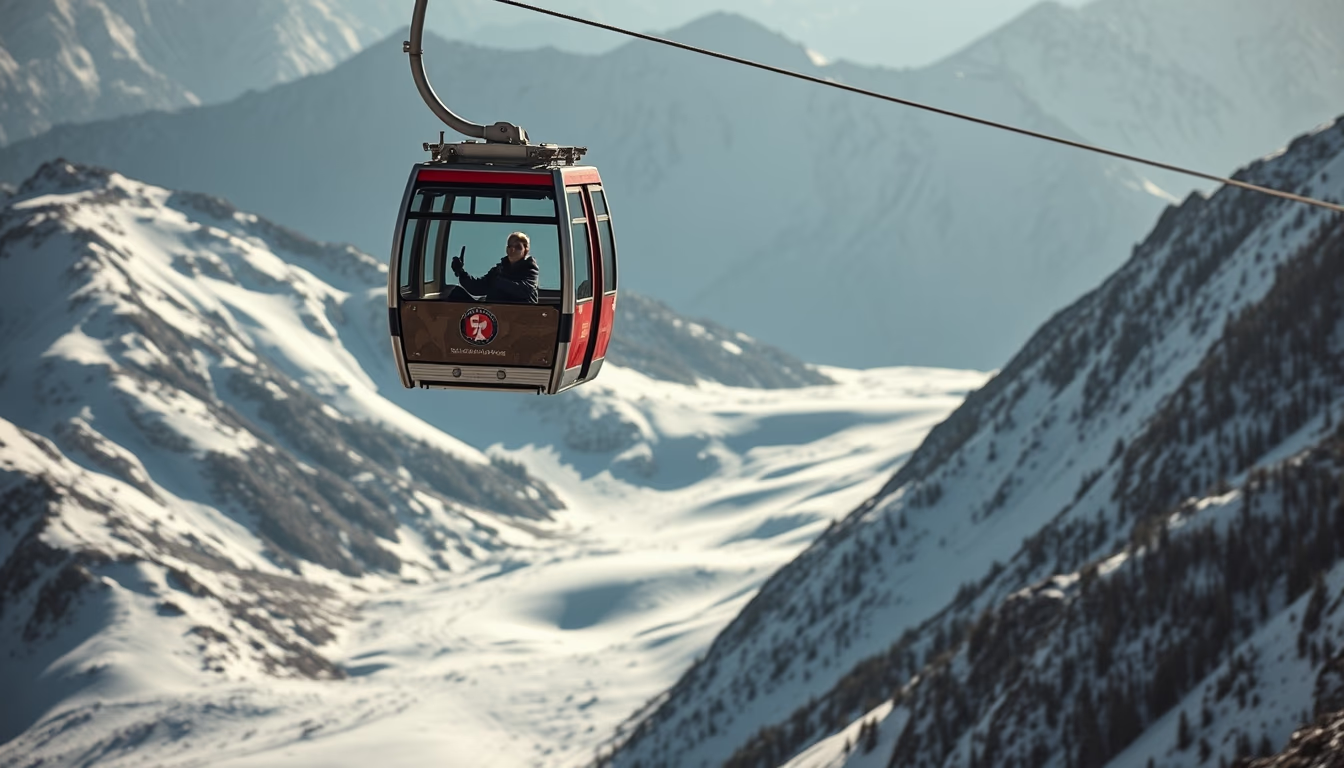
Cable car alpine
1344×768 · AVIF · CC BY 4.0
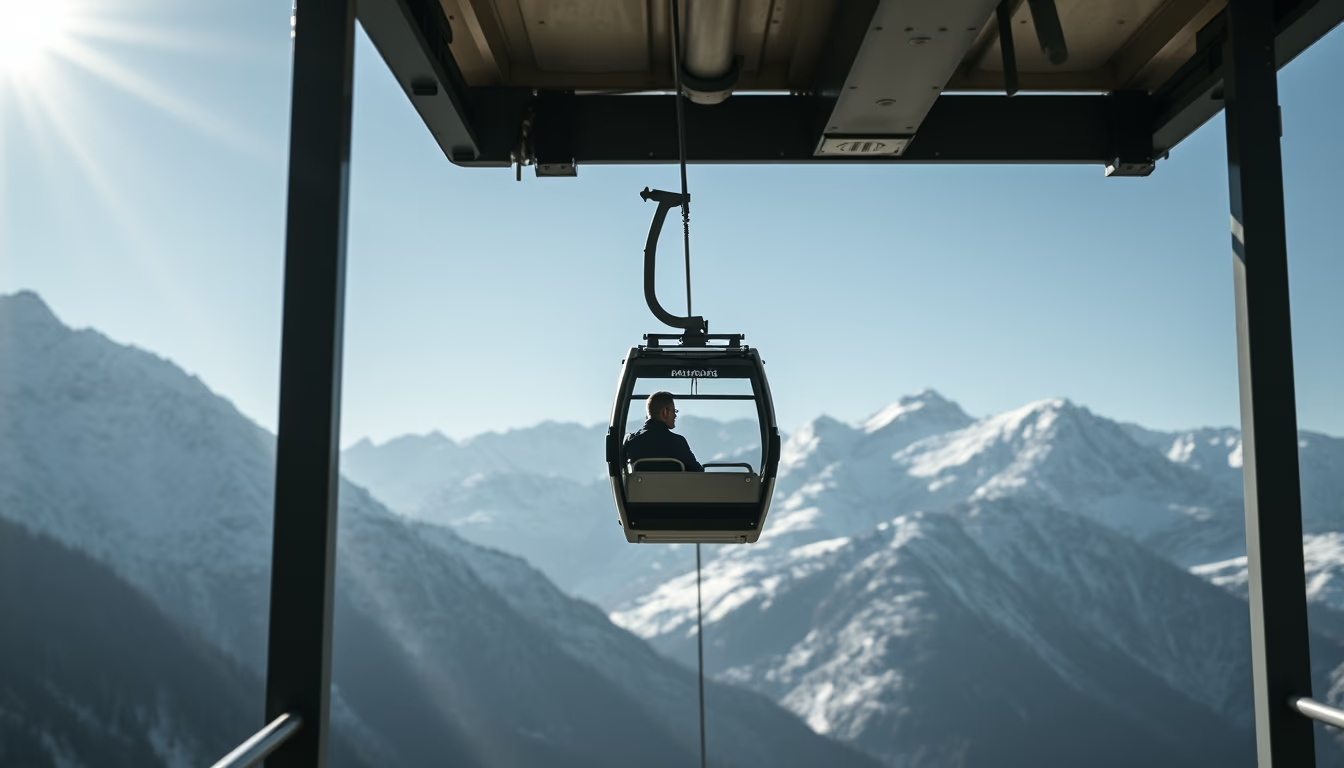
Alpine cable cars combine engineering and stunning landscapes, transporting thousands of visitors to extreme altitudes worldwide.
About this subject
Alpine cable cars are aerial ropeway systems designed to overcome the steep gradients of mountainous regions. Common in the European Alps, the Andes, and the Himalayas, they provide access to peaks and glaciers that would otherwise be unreachable by road. Their construction involves steel towers, haul ropes, and cabins that can carry dozens of passengers per trip.
The history of alpine cable cars dates back to the late 19th century, with the first passenger cable car inaugurated in 1866 in Switzerland (Bürgenstock). Since then, technology has evolved to detachable systems allowing higher capacity and speed. Iconic examples include the Aiguille du Midi in France (3,842 m altitude) and the Matterhorn Glacier Ride in Switzerland, reaching 3,883 m.
Technically, modern cable cars use continuous steel cables driven by electric motors, with automatic grips that attach cabins. The minimalist design, straight lines, aerodynamic cabins, and slender towers, aims to blend into the natural landscape, minimizing visual intrusion. Safety systems include emergency brakes, wind sensors, and motor redundancy.
From a tourism perspective, alpine cable cars drive local economies by transporting skiers, climbers, and sightseers to panoramic viewpoints and restaurants. Their environmental impact is debated: construction and operation consume energy, but they replace roads that would cause greater degradation. Many resorts invest in low-carbon cable cars with eco-friendly design.
Frequently Asked Questions
What is the highest alpine cable car in the world?
The Matterhorn Glacier Ride in Switzerland is one of the highest, reaching 3,883 meters. Another example is the Aiguille du Midi cable car in France, at 3,842 meters.
How does an alpine cable car work?
An electric motor drives a continuous steel cable to which cabins attach via grips. In detachable systems, cabins slow down at stations for boarding and then accelerate again.
What is the speed of a modern cable car?
Typical operating speed ranges from 5 to 7 meters per second (18 to 25 km/h), depending on the system and weather conditions. In strong winds, operation may be reduced or suspended.
Direct URL
https://pub-c7d6a6ea828543ac903a74a341ccb2e1.r2.dev/imagens/cable-car-alpine-minimalist-composition-p3.avifHow to credit
Include a visible link back to UtilizAí. Copy one of the snippets below:
<a href="https://xn--utiliza-eza.com/en/midia/imagens/cable-car-alpine-minimalist-composition-p3">Cable car alpine</a> by <a href="https://xn--utiliza-eza.com">UtilizAí</a>, licensed under <a href="https://creativecommons.org/licenses/by/4.0/">CC BY 4.0</a>.
[Cable car alpine](https://xn--utiliza-eza.com/en/midia/imagens/cable-car-alpine-minimalist-composition-p3) by [UtilizAí](https://xn--utiliza-eza.com), CC BY 4.0
License: CC-BY-4.0