Cable car alpine
1344×768 · AVIF · CC BY 4.0
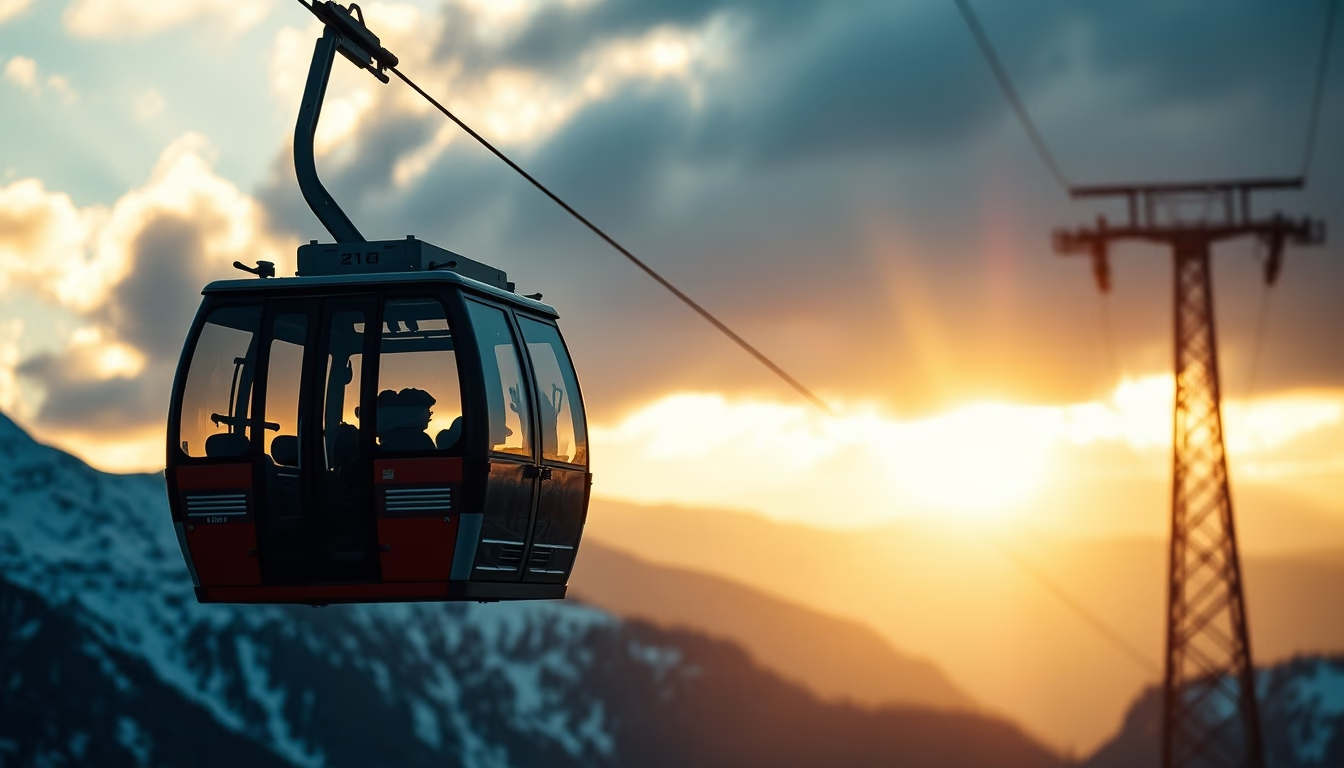
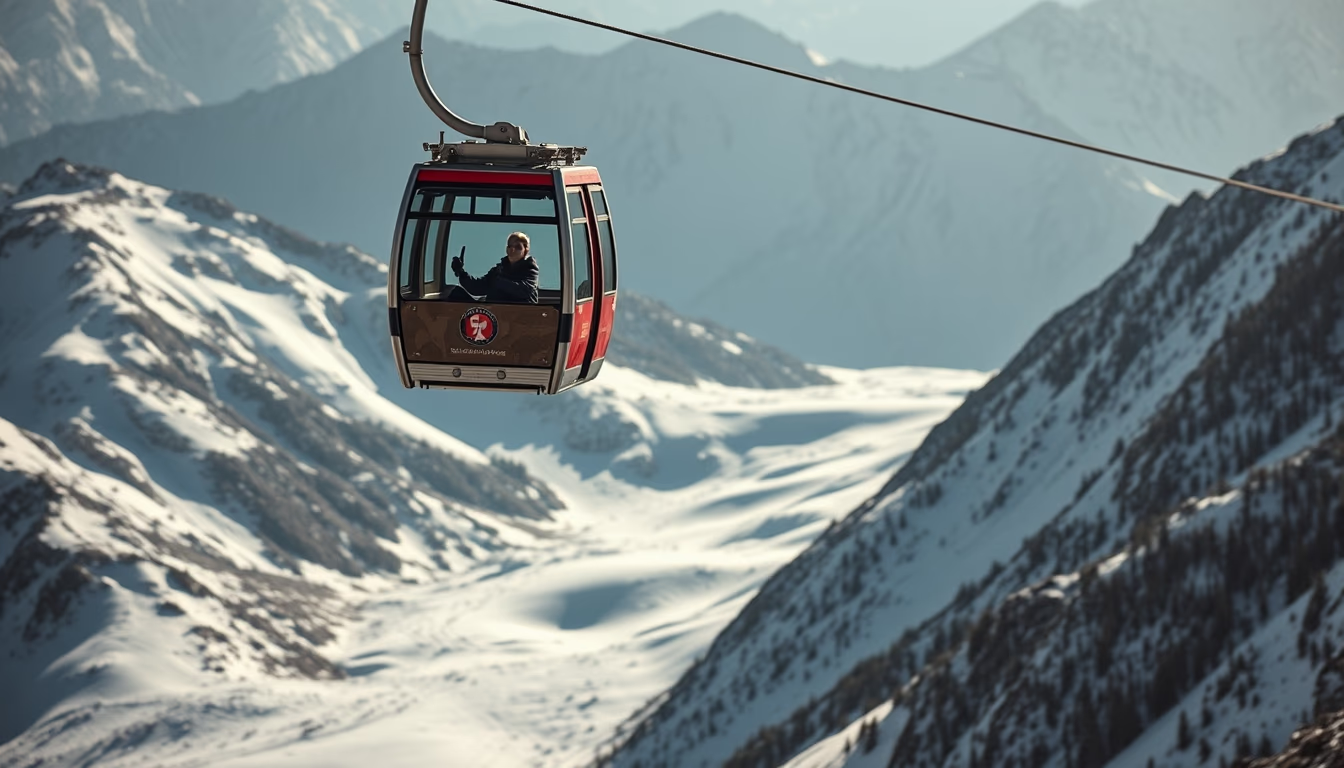
Alpine cable cars are aerial cable transport systems connecting villages and ski resorts in mountainous regions, offering panoramic views and access to high altitudes.
About this subject
Alpine cable cars, also known as gondolas or aerial trams, are iconic transport systems in mountain ranges like the European Alps, the Andes, and the Rockies. They operate via steel cables suspended between towers, carrying cabins that hold from 4 to over 100 passengers. The first modern cable car was installed in 1908 on Monte Cotugno, Italy, but it was the winter tourism boom of the 1950s that spurred their proliferation.
In Switzerland, the Klein Matterhorn cable car at 3,883 meters is one of Europe's highest, connecting Zermatt to a glacier. In France, the Aiguille du Midi goes from Chamonix to 3,842 meters. Austria's Grossglockner cable car offers views of the country's highest peak. In Brazil, the Sugarloaf Mountain cable car in Rio is a famous urban system, though not alpine. In alpine regions, these systems are essential for ski tourism and for transporting residents in remote areas.
Technically, alpine cable cars operate with continuous loop (gondola) or reversible (tram) cables. Safety is high, with redundant brakes and regular inspections. As of 2022, the longest cable car in the world was the Peak 2 Peak at Whistler, Canada, spanning 4.4 km. Cable cars also serve cargo transport and high-mountain infrastructure maintenance. Sustainability is a key advantage: they emit less CO2 per passenger than cars or tourist buses.
Beyond functionality, alpine cable cars are attractions themselves, offering views of snow-capped peaks, glaciers, and deep valleys. Some feature glass floors, like the Iceman in Tyrol, or reach altitudes that require acclimatization. In 2026, new cable cars with AI and autonomous cabins are expected to launch, reinforcing the trend of eco-friendly transport and tourism. For photography enthusiasts, these structures are perfect subjects, blending engineering and nature.
Frequently Asked Questions
What is the highest alpine cable car in the world?
The Klein Matterhorn cable car in Switzerland reaches 3,883 meters, while the Aiguille du Midi in France goes to 3,842 meters. Both are among the highest in the world.
Are alpine cable cars safe during storms?
Yes, they are designed with lightning protection and strong wind resistance. In extreme conditions, operation is suspended for safety. Regular inspections ensure cable and tower integrity.
What is the difference between a cable car and a gondola?
A cable car typically refers to a reversible system with cabins that go back and forth, while a gondola uses a continuous loop with cabins circulating non-stop. Both are types of alpine cable cars.
Direct URL
https://pub-c7d6a6ea828543ac903a74a341ccb2e1.r2.dev/imagens/cable-car-alpine-fine-art-photography-p4.avifHow to credit
Include a visible link back to UtilizAí. Copy one of the snippets below:
<a href="https://xn--utiliza-eza.com/en/midia/imagens/cable-car-alpine-fine-art-photography-p4">Cable car alpine</a> by <a href="https://xn--utiliza-eza.com">UtilizAí</a>, licensed under <a href="https://creativecommons.org/licenses/by/4.0/">CC BY 4.0</a>.
[Cable car alpine](https://xn--utiliza-eza.com/en/midia/imagens/cable-car-alpine-fine-art-photography-p4) by [UtilizAí](https://xn--utiliza-eza.com), CC BY 4.0
License: CC-BY-4.0