Cable car alpine
1344×768 · AVIF · CC BY 4.0
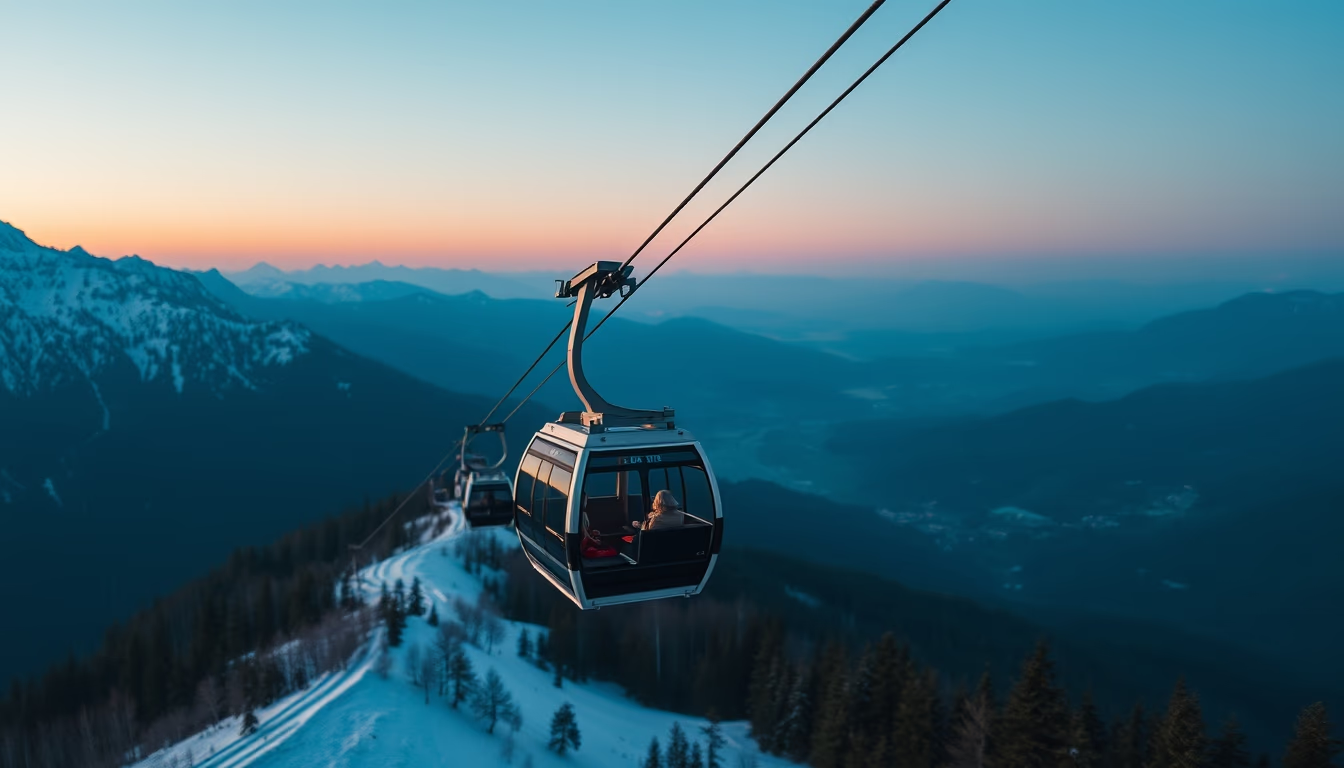
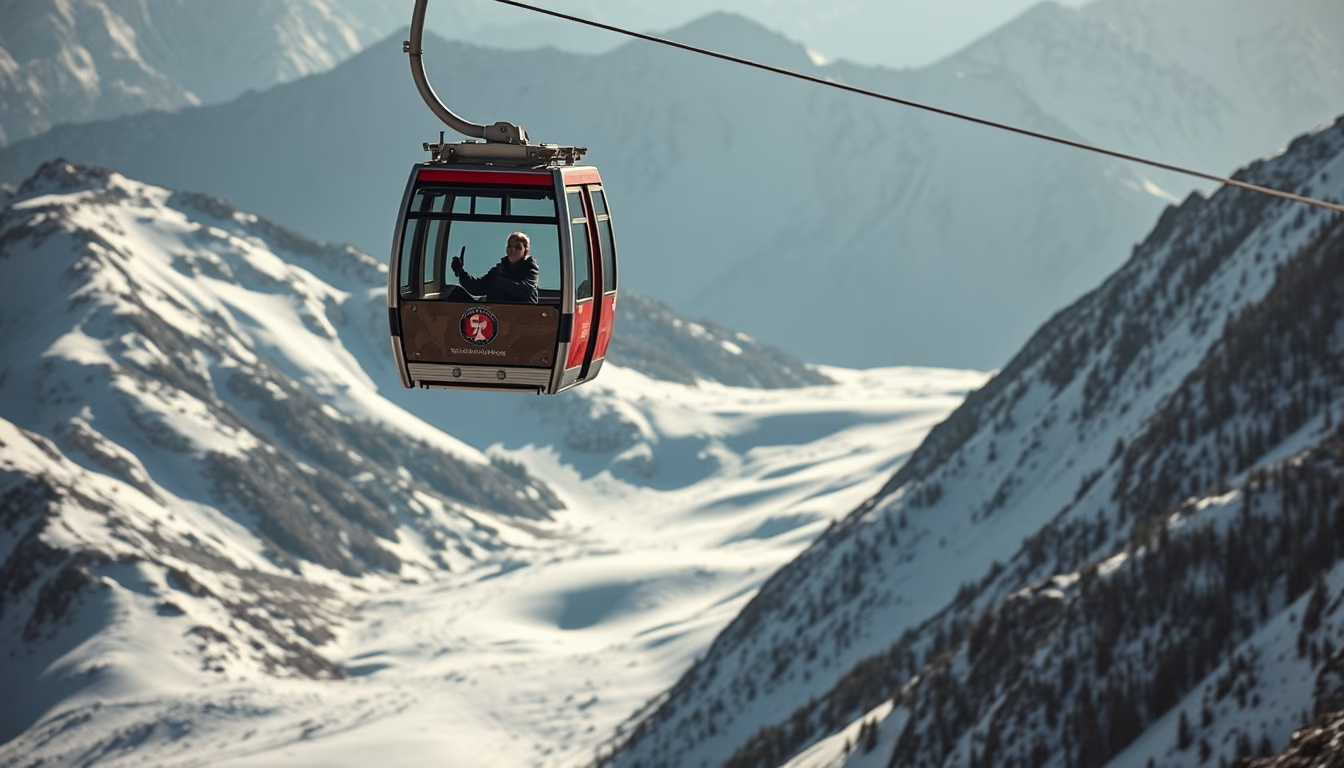
Alpine cable cars are iconic transport systems connecting villages to snowy peaks with panoramic views.
About this subject
Alpine cable cars are aerial ropeway transport systems primarily used in mountainous regions like the European Alps. They carry passengers and goods between points at different altitudes, overcoming steep gradients that would be challenging for conventional roads. These systems are essential for winter tourism, connecting ski resorts, remote villages, and scenic viewpoints. Many operate year-round, offering an eco-friendly alternative to road transport in environmentally sensitive areas.
The first passenger cable car opened in 1908 in Bolzano, Italy. Today, the Alps host some of the longest and highest cable cars in the world, such as the Aiguille du Midi in France and the Matterhorn Glacier Ride in Switzerland. Technology includes enclosed cabins, gondolas, and open lifts, with capacities for dozens of passengers. Elevations exceed 3,800 meters, like at Klein Matterhorn. Maintenance is challenging due to harsh weather, including strong winds and snow.
Cable cars also play a crucial role in local geography, providing access to previously inaccessible areas and boosting economic development in Alpine regions. In Brazil, examples like Sugarloaf Mountain cable car exist, but the Alps offer an unmatched scale and density of cable car networks. Aerial drone photography has become common to capture the grandeur of these structures amidst snow-covered landscapes.
Frequently Asked Questions
What is the maximum altitude an alpine cable car can reach?
The Klein Matterhorn cable car in Switzerland reaches 3,883 meters, making it one of the highest in the world.
How do cable cars operate during harsh winter conditions?
Heating systems on cables and cabins, along with remote operation, ensure continuous service, but strong winds may cause shutdowns for safety.
What is the difference between a cable car and a gondola lift?
A cable car typically uses large cabins that stop at stations, while gondolas have smaller continuous-moving cabins attached to a looped cable.
Direct URL
https://pub-c7d6a6ea828543ac903a74a341ccb2e1.r2.dev/imagens/cable-car-alpine-aerial-drone-shot-p1.avifHow to credit
Include a visible link back to UtilizAí. Copy one of the snippets below:
<a href="https://xn--utiliza-eza.com/en/midia/imagens/cable-car-alpine-aerial-drone-shot-p1">Cable car alpine</a> by <a href="https://xn--utiliza-eza.com">UtilizAí</a>, licensed under <a href="https://creativecommons.org/licenses/by/4.0/">CC BY 4.0</a>.
[Cable car alpine](https://xn--utiliza-eza.com/en/midia/imagens/cable-car-alpine-aerial-drone-shot-p1) by [UtilizAí](https://xn--utiliza-eza.com), CC BY 4.0
License: CC-BY-4.0