Bubble chamber tracks
1344×768 · AVIF · CC BY 4.0
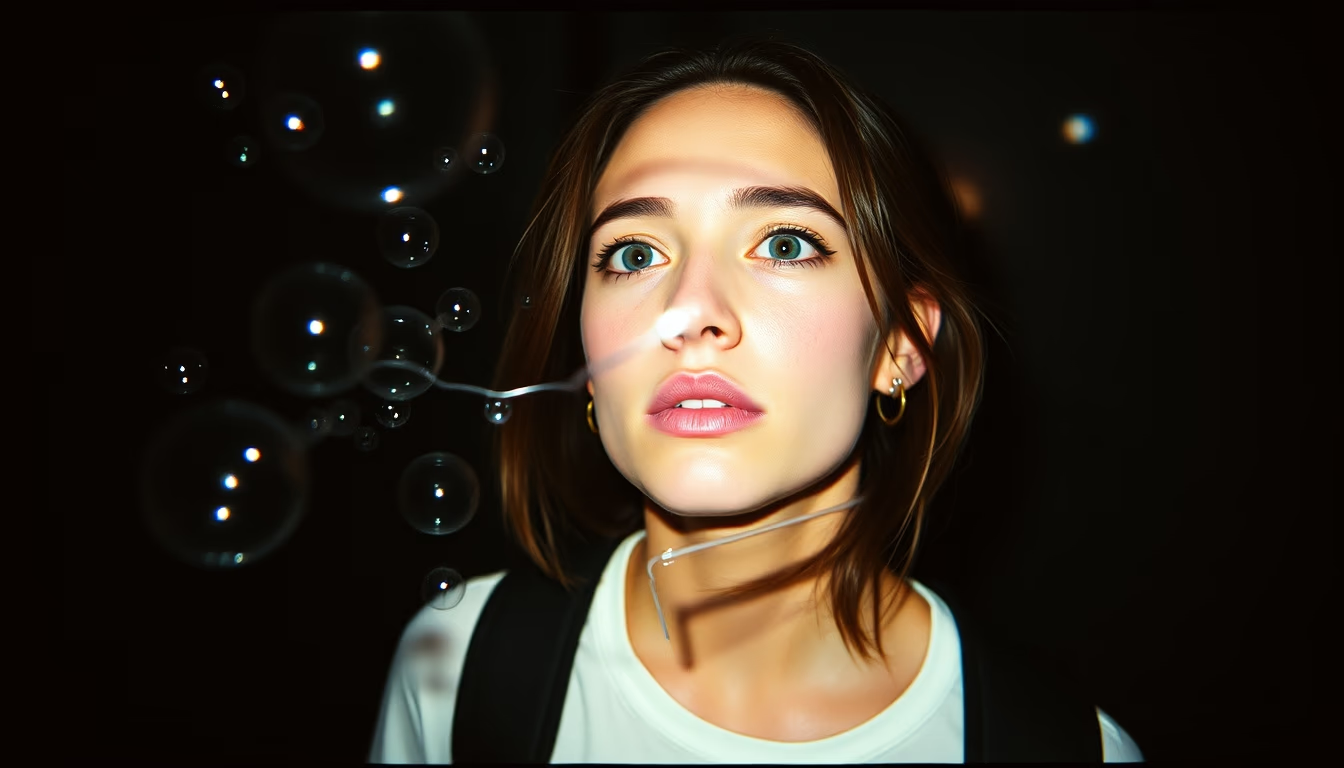
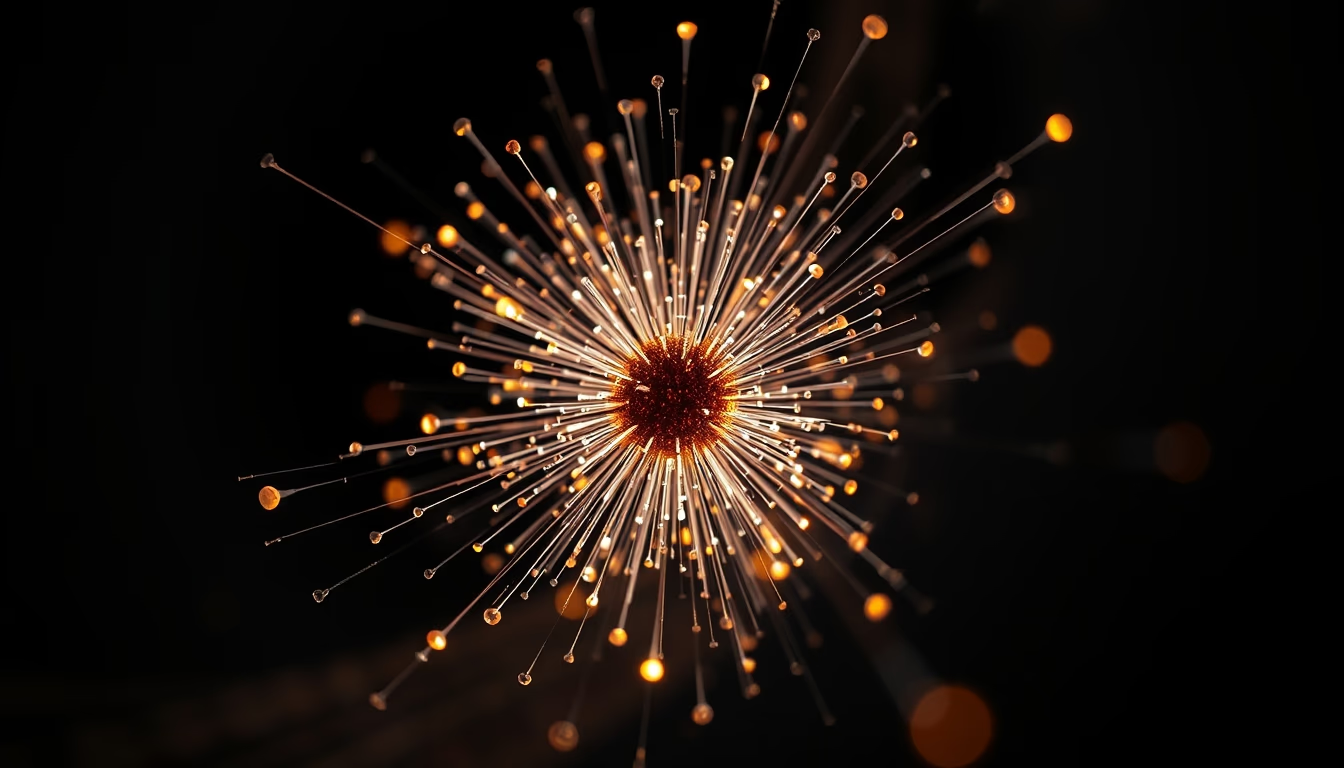
Bubble chamber tracks reveal subatomic particles, blending physics and art in iconic science imagery.
About this subject
The bubble chamber was invented by American physicist Donald Glaser in 1952, earning him the Nobel Prize in Physics in 1960. The device consists of a container filled with a superheated liquid, typically liquid hydrogen or a propane mixture. When charged particles pass through the liquid, they deposit energy along their path, causing the liquid to boil locally. Tiny bubbles form along the particle's trajectory and are photographed by cameras positioned around the chamber. The result is images showing spiraling, straight, or curved tracks, depending on the type of particle, its energy, and interactions with applied magnetic fields.
These images were crucial for the discovery and study of various subatomic particles, such as mesons, hyperons, and early hints of quarks. Bubble chambers were installed at major accelerators like CERN and Fermilab, generating millions of photographs that were manually analyzed by scientists at scanning tables. Each track told a story: curvatures indicated charge-to-mass ratios, kinks and branches signaled decays, and bubble density helped identify particle speed.
Today, bubble chambers have been largely replaced by more efficient electronic detectors, such as wire chambers and spark chambers, which produce digital data directly. However, bubble chamber images remain iconic symbols of the golden age of particle physics. They are often used in educational and artistic contexts, illustrating the hidden beauty of microscopic phenomena. The grainy, analog aesthetic of these photos evokes a sense of discovery and craftsmanship that continues to fascinate, blending scientific rigor with visual expression.
Frequently Asked Questions
How does a bubble chamber work?
A bubble chamber uses a superheated liquid (e.g., liquid hydrogen) that boils along the path of charged particles, forming visible bubbles. The bubbles are photographed to record the tracks.
Who invented the bubble chamber?
Physicist Donald Glaser invented the bubble chamber in 1952, for which he received the Nobel Prize in Physics in 1960.
Which particles were discovered using bubble chambers?
Many particles were discovered or studied with bubble chambers, including mesons, hyperons, and evidence of quarks. Examples include the K meson and the Lambda baryon.
Direct URL
https://pub-c7d6a6ea828543ac903a74a341ccb2e1.r2.dev/imagens/bubble-chamber-tracks-lo-fi-disposable-camera-p8.avifHow to credit
Include a visible link back to UtilizAí. Copy one of the snippets below:
<a href="https://xn--utiliza-eza.com/en/midia/imagens/bubble-chamber-tracks-lo-fi-disposable-camera-p8">Bubble chamber tracks</a> by <a href="https://xn--utiliza-eza.com">UtilizAí</a>, licensed under <a href="https://creativecommons.org/licenses/by/4.0/">CC BY 4.0</a>.
[Bubble chamber tracks](https://xn--utiliza-eza.com/en/midia/imagens/bubble-chamber-tracks-lo-fi-disposable-camera-p8) by [UtilizAí](https://xn--utiliza-eza.com), CC BY 4.0
License: CC-BY-4.0