Brutalist concrete facade
1344×768 · AVIF · CC BY 4.0
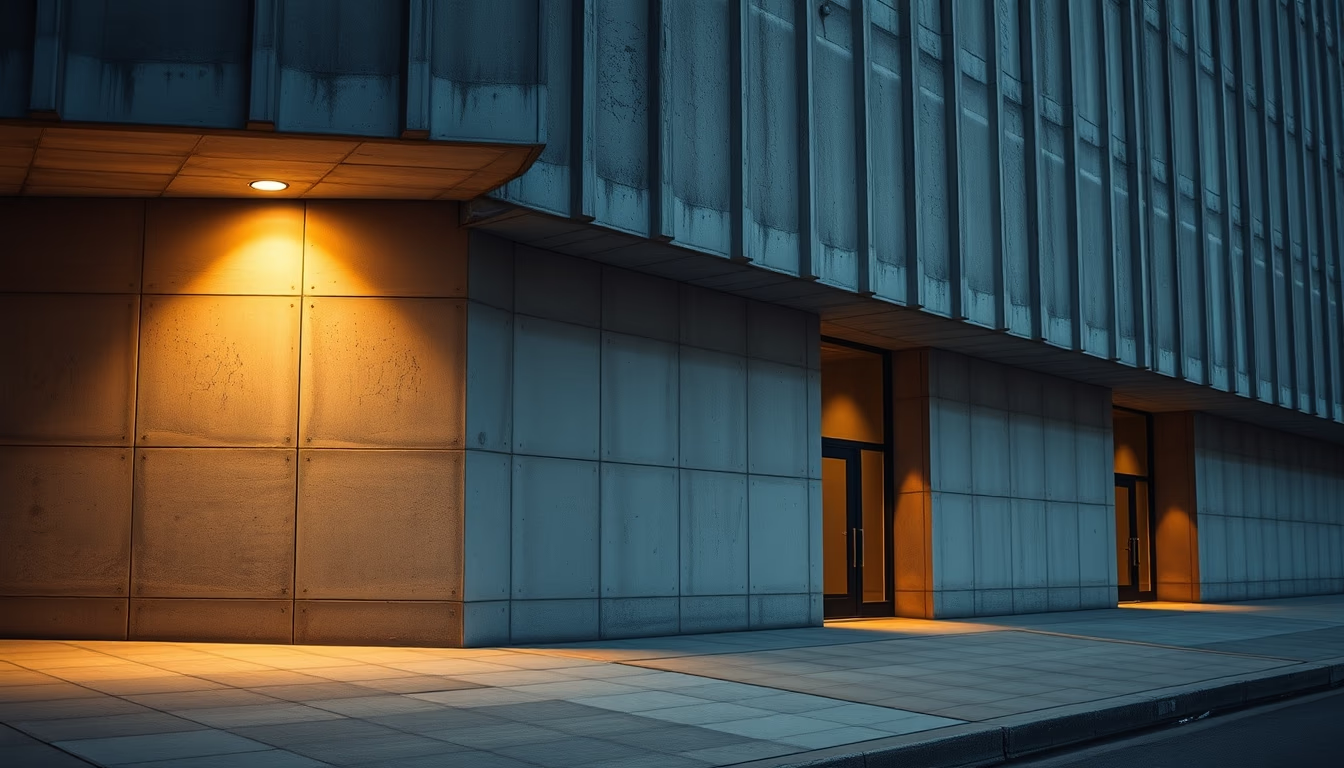
The brutalist concrete facade is an icon of 20th-century architecture, characterized by the raw expression of materials and monumental geometric forms.
About this subject
Brutalism emerged in the 1950s, mainly in Europe, as a branch of modernist architecture that emphasized honesty of materials, especially exposed reinforced concrete. The term derives from the French "béton brut" (raw concrete), coined by architect Le Corbusier. Its facades are characterized by textured surfaces, angular forms, and repetition of modules, creating an aesthetic that is both imposing and functional.
In Brazil, brutalism flourished in the 1960s and 1970s, with works by architects such as Paulo Mendes da Rocha and Lina Bo Bardi. Notable examples include the São Paulo Museum of Art (MASP), with its iconic concrete porticos, and the Faculty of Architecture and Urbanism of the University of São Paulo (FAU-USP), known for its large spans and expressive use of concrete. These structures reflect a period of optimism and industrialization in the country.
Globally, brutalism was adopted in diverse contexts, from housing complexes in France and England to institutional buildings in the United States. The style often sparked controversy: admired for its structural honesty and criticized for its austere appearance. Today, there is a revival of interest in brutalism, with preservation movements and a new generation of architects reinterpreting its principles. The concrete facade, with its formwork marks and textures, remains a testament to 20th-century architecture, inviting reflection on the relationship between form, function, and materiality.
Frequently Asked Questions
What defines a brutalist concrete facade?
A brutalist facade is characterized by the use of exposed concrete with visible formwork marks and textures, angular geometric forms, and repetitive modules. The aesthetic emphasizes the raw expression of materials and structural functionality.
What are the main examples of brutalism in Brazil?
In Brazil, notable examples include the São Paulo Museum of Art (MASP), designed by Lina Bo Bardi, and the Faculty of Architecture and Urbanism of the University of São Paulo (FAU-USP), by João Batista Vilanova Artigas. Both use exposed concrete innovatively.
Is brutalism still used in contemporary architecture?
Yes, there is a revival of interest in brutalism, with contemporary architects reinterpreting its principles. New projects seek to combine the raw concrete aesthetic with sustainability and modern technologies.
Direct URL
https://pub-c7d6a6ea828543ac903a74a341ccb2e1.r2.dev/imagens/brutalist-concrete-facade-fine-art-photography-p1.avifHow to credit
Include a visible link back to UtilizAí. Copy one of the snippets below:
<a href="https://xn--utiliza-eza.com/en/midia/imagens/brutalist-concrete-facade-fine-art-photography-p1">Brutalist concrete facade</a> by <a href="https://xn--utiliza-eza.com">UtilizAí</a>, licensed under <a href="https://creativecommons.org/licenses/by/4.0/">CC BY 4.0</a>.
[Brutalist concrete facade](https://xn--utiliza-eza.com/en/midia/imagens/brutalist-concrete-facade-fine-art-photography-p1) by [UtilizAí](https://xn--utiliza-eza.com), CC BY 4.0
License: CC-BY-4.0