Brutalist concrete facade
1344×768 · AVIF · CC BY 4.0
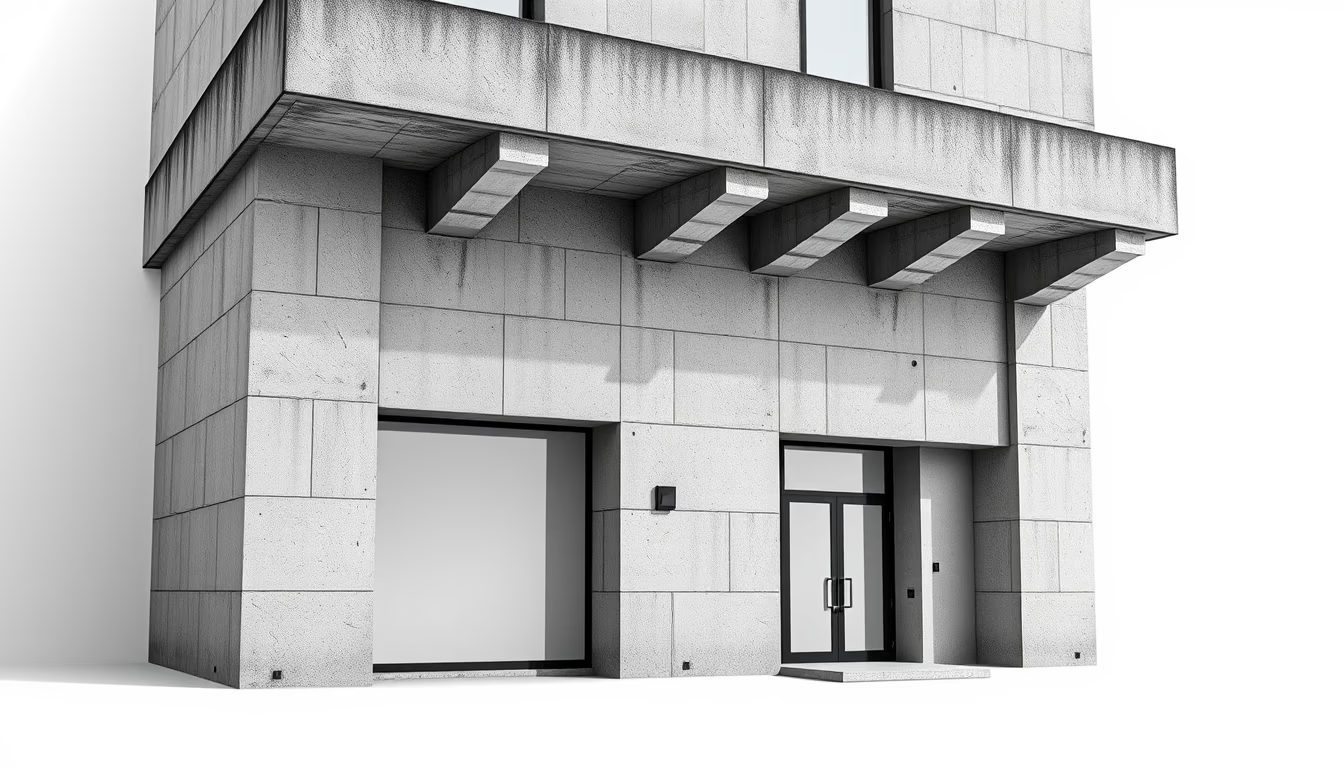
Brutalist concrete facades define 20th-century architecture with robust geometric forms and striking textures.
About this subject
Brutalism is an architectural style that thrived between the 1950s and 1970s, defined by the prominent use of exposed reinforced concrete, or béton brut. Brutalist facades are characterized by repetitive geometric forms, monolithic masses, and the direct expression of materials without cladding. The aesthetic emphasizes the texture left by wooden formwork on concrete, creating a play of light and shadow that changes throughout the day.
In Brazil, brutalism found fertile ground in the works of architects such as Lina Bo Bardi, Paulo Mendes da Rocha, and Vilanova Artigas. Iconic examples include the São Paulo Museum of Art (MASP), with its free span supported by concrete beams, and SESC Pompéia, which transforms an old factory into a cultural center while preserving the industrial structure. The facade of Edifício Copan in São Paulo, though sinuous, also uses exposed concrete expressively.
Globally, brutalism is associated with projects by Le Corbusier, such as the Unité d'Habitation in Marseille, and institutional or housing complexes in the United Kingdom (Barbican Centre) and the United States (Boston City Hall). Commercial photography of brutalist facades exploits angular geometry and textured surfaces, often in black-and-white or with dramatic lighting, to highlight the plasticity of concrete.
The interest in brutalism has resurged in recent years and is noted as a trend for 2026. Influencers, contemporary architects, and fashion brands adopt its raw, minimalist aesthetic, which contrasts with digitized design. Product photography and advertising frequently use these facades as backdrops to convey strength, authenticity, and a sense of permanence.
Frequently Asked Questions
What defines a brutalist facade?
A brutalist facade is defined by exposed concrete, repetitive geometric forms, monolithic masses, and lack of cladding. The texture of concrete and the interplay of light and shadow are key features.
What are the key examples of Brazilian brutalist architecture?
Notable examples include MASP (Lina Bo Bardi), SESC Pompéia (Lina Bo Bardi), Edifício Copan (Oscar Niemeyer, with brutalist influences), and FAU-USP (Vilanova Artigas).
Why is brutalism trending again in 2026?
Brutalism is resurging as a counterpoint to digital and minimalist architecture. Its raw, authentic aesthetic is valued in product photography, fashion, and design, symbolizing strength and permanence.
Direct URL
https://pub-c7d6a6ea828543ac903a74a341ccb2e1.r2.dev/imagens/brutalist-concrete-facade-commercial-product-photography-p3.avifHow to credit
Include a visible link back to UtilizAí. Copy one of the snippets below:
<a href="https://xn--utiliza-eza.com/en/midia/imagens/brutalist-concrete-facade-commercial-product-photography-p3">Brutalist concrete facade</a> by <a href="https://xn--utiliza-eza.com">UtilizAí</a>, licensed under <a href="https://creativecommons.org/licenses/by/4.0/">CC BY 4.0</a>.
[Brutalist concrete facade](https://xn--utiliza-eza.com/en/midia/imagens/brutalist-concrete-facade-commercial-product-photography-p3) by [UtilizAí](https://xn--utiliza-eza.com), CC BY 4.0
License: CC-BY-4.0