Brazilian Bitcoin miner inspecting industrial mining rigs
1344×768 · AVIF · CC BY 4.0
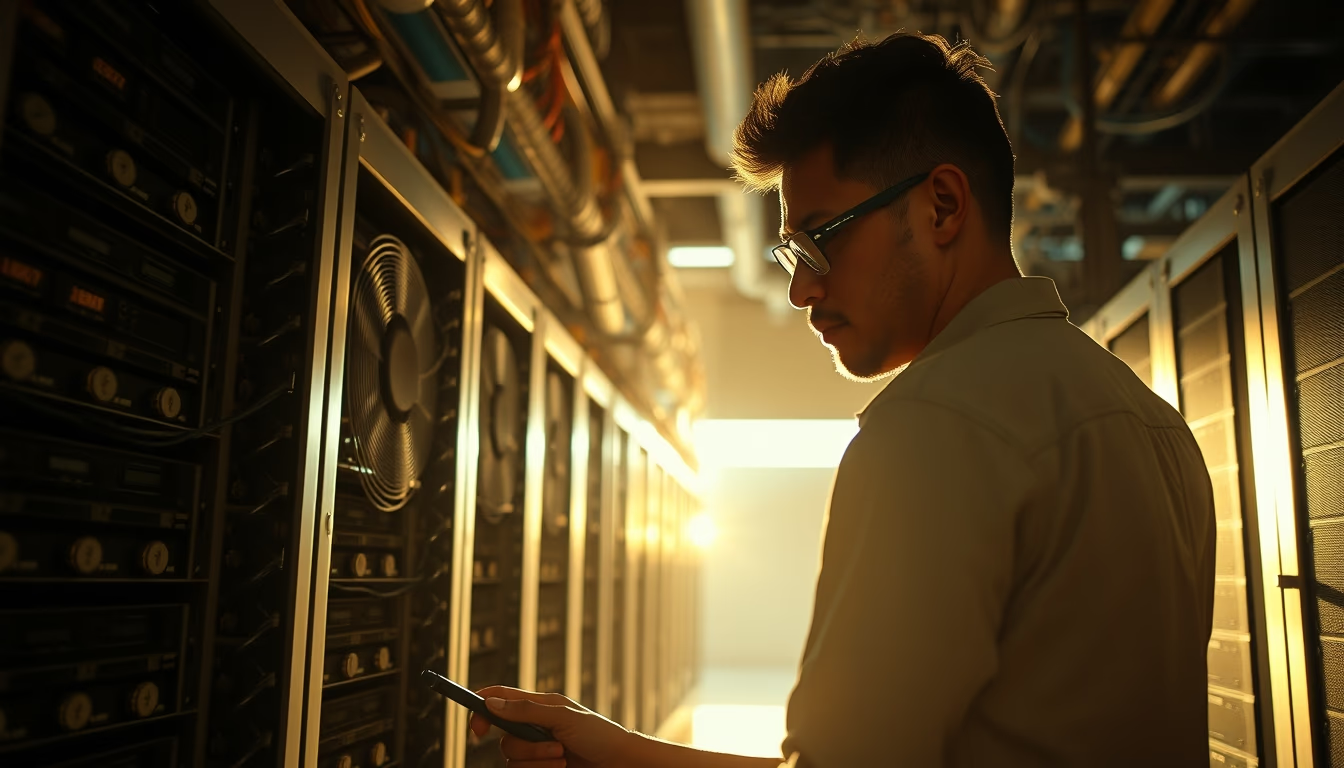
A Bitcoin miner inspects industrial mining rigs in a spacious warehouse during the late afternoon.
About this subject
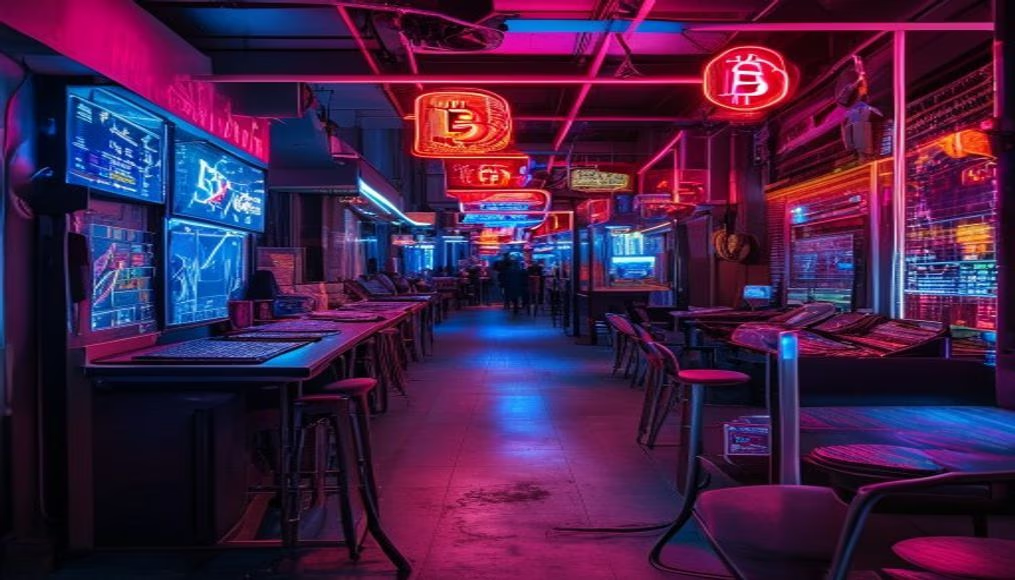
Bitcoin mining is a fundamental process for the security and operation of the blockchain network. In large-scale operations like the one depicted, miners use specialized equipment called ASICs (Application-Specific Integrated Circuits), designed exclusively to calculate SHA-256 hashes. These devices consume large amounts of electrical energy, generating intense heat, which requires robust cooling systems. Brazil, with its predominantly renewable energy matrix (hydroelectric, wind, and solar), has become an attractive hub for mining farms, especially in regions with energy surplus, such as the South and Central-West.
Regular inspection of equipment is crucial to maintain operational efficiency. Experienced miners check chip temperatures, fan speeds, and the integrity of electrical connections. A single failure can result in significant revenue loss, as Bitcoin is generated every block solved, currently every 10 minutes. Mining difficulty adjusts automatically every 2016 blocks, ensuring new bitcoins are issued predictably until the 21 million cap is reached.
Industrial mining in Brazil also faces regulatory and tax challenges. The Federal Revenue Service requires the declaration of crypto assets, and ANEEL (National Electric Energy Agency) monitors energy consumption to prevent fraud. Despite this, the country offers advantages such as low electricity costs during off-peak hours and a subtropical climate that reduces the need for artificial cooling. With the upcoming halving (reduction of block reward by half) scheduled for 2024, operational efficiency becomes even more critical for the sustainability of mining businesses.
Frequently Asked Questions
What is Bitcoin mining?
Bitcoin mining is the process of validating transactions and adding new blocks to the blockchain by solving complex mathematical problems. Miners are rewarded with new bitcoins and transaction fees.
Why is Brazil attractive for Bitcoin mining?
Brazil has a renewable and low-cost energy matrix, especially in regions with energy surplus. The subtropical climate also reduces cooling costs for equipment.
What is an ASIC?
ASIC stands for Application-Specific Integrated Circuit, a chip designed exclusively for mining cryptocurrencies like Bitcoin. It is far more efficient than GPUs or CPUs for this task.
Direct URL
https://pub-c7d6a6ea828543ac903a74a341ccb2e1.r2.dev/imagens/brazilian-bitcoin-miner-inspecting-industrial-mining-rigs-wide-late-afternoon-6.avifHow to credit
Include a visible link back to UtilizAí. Copy one of the snippets below:
<a href="https://xn--utiliza-eza.com/en/midia/imagens/brazilian-bitcoin-miner-inspecting-industrial-mining-rigs-wide-late-afternoon-6">Brazilian Bitcoin miner inspecting industrial mining rigs</a> by <a href="https://xn--utiliza-eza.com">UtilizAí</a>, licensed under <a href="https://creativecommons.org/licenses/by/4.0/">CC BY 4.0</a>.
[Brazilian Bitcoin miner inspecting industrial mining rigs](https://xn--utiliza-eza.com/en/midia/imagens/brazilian-bitcoin-miner-inspecting-industrial-mining-rigs-wide-late-afternoon-6) by [UtilizAí](https://xn--utiliza-eza.com), CC BY 4.0
License: CC-BY-4.0