Brazilian Bitcoin miner inspecting industrial mining rigs
1344×768 · AVIF · CC BY 4.0
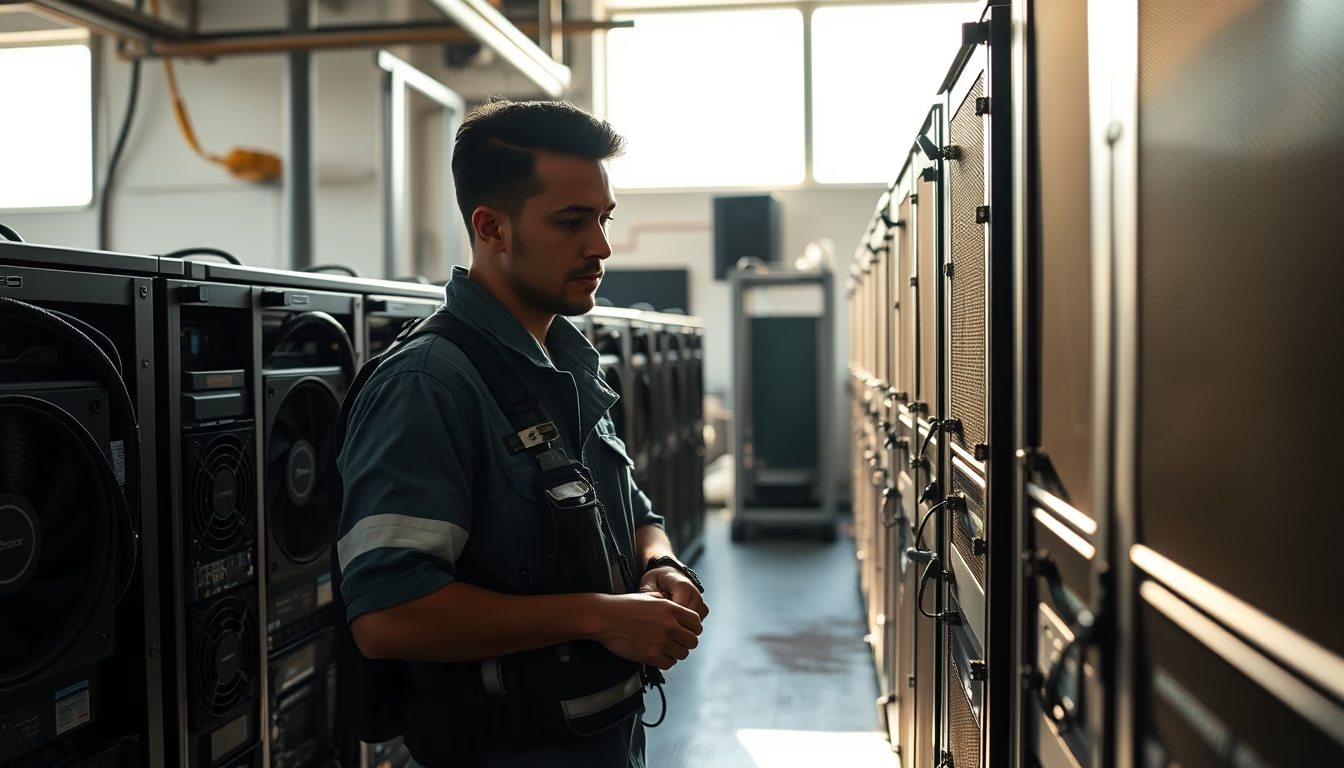
Brazilian Bitcoin miner inspecting industrial mining rigs during a documentary morning shoot.
About this subject
Bitcoin mining is a computationally intensive activity that requires specialized hardware known as ASICs (Application-Specific Integrated Circuits). In Brazil, cheap hydroelectric power, especially in the Northern region, has made the country an attractive hub for large-scale mining operations. Companies like MinerOne and Bitfarms have established mining farms in locations such as the state of Rondônia, leveraging surplus energy from hydroelectric dams.
Industrial mining rigs consist of hundreds or thousands of ASICs organized in racks, consuming megawatts of power. Each ASIC can generate up to 110 TH/s (terahashes per second), competing to solve mathematical problems and validate transactions on the Bitcoin network. The heat generated by this equipment requires advanced cooling systems, such as liquid cooling or immersion in dielectric fluid.
The morning inspection captured in the image reflects the routine of preventive maintenance, crucial to avoid failures that result in revenue loss. Technicians check temperature, humidity, power consumption, and cable integrity. In Brazil, cryptocurrency mining faces regulatory and tax challenges, but the recent sector regulation (Law 14.478/2022) has brought more legal certainty for investors.
Interestingly, Brazil was the third-largest Bitcoin producer in the world in 2021, according to the Cambridge Centre for Alternative Finance, driven by renewable energy. However, the activity sparks debate over energy consumption and environmental impact, although many Brazilian miners use clean sources.
Frequently Asked Questions
What are ASICs and why are they used in Bitcoin mining?
ASICs (Application-Specific Integrated Circuits) are chips designed exclusively for Bitcoin mining, offering high energy efficiency and hash power. They replaced GPUs and CPUs because they are much faster at solving the SHA-256 algorithms.
Why is Brazil an attractive location for Bitcoin mining?
Brazil has abundant cheap hydroelectric power, especially in the Northern region, reducing operational costs. Additionally, the warm climate in some areas can be mitigated with cooling systems, and recent regulation has brought more legal certainty.
What are the main challenges of Bitcoin mining in Brazil?
Challenges include high tax burdens on equipment imports, regulatory uncertainties (though Law 14.478/2022 has helped), and the need for investment in cooling infrastructure and stable power.
Direct URL
https://pub-c7d6a6ea828543ac903a74a341ccb2e1.r2.dev/imagens/brazilian-bitcoin-miner-inspecting-industrial-mining-rigs-documentary-morning.avifHow to credit
Include a visible link back to UtilizAí. Copy one of the snippets below:
<a href="https://xn--utiliza-eza.com/en/midia/imagens/brazilian-bitcoin-miner-inspecting-industrial-mining-rigs-documentary-morning">Brazilian Bitcoin miner inspecting industrial mining rigs</a> by <a href="https://xn--utiliza-eza.com">UtilizAí</a>, licensed under <a href="https://creativecommons.org/licenses/by/4.0/">CC BY 4.0</a>.
[Brazilian Bitcoin miner inspecting industrial mining rigs](https://xn--utiliza-eza.com/en/midia/imagens/brazilian-bitcoin-miner-inspecting-industrial-mining-rigs-documentary-morning) by [UtilizAí](https://xn--utiliza-eza.com), CC BY 4.0
License: CC-BY-4.0