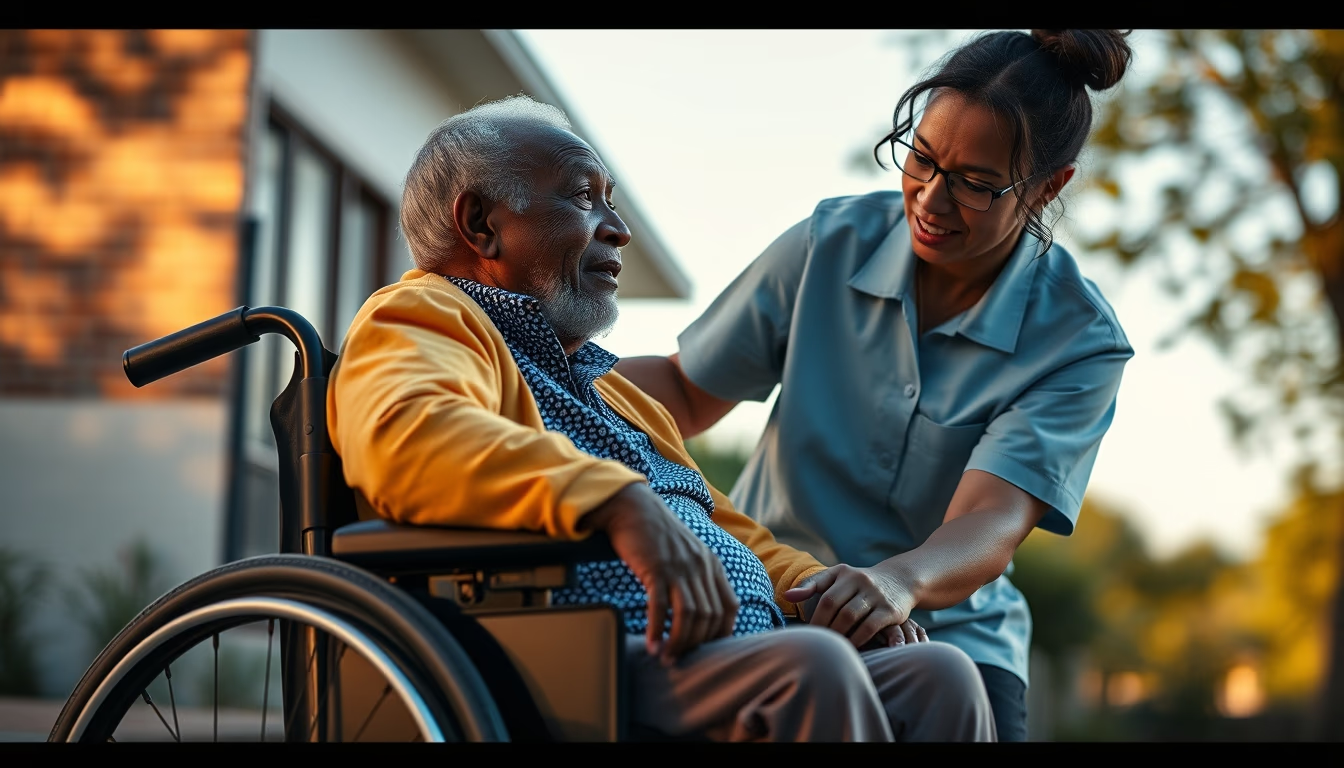
BPC beneficiary with caregiver in a wheelchair
1344×768 · AVIF · CC BY 4.0

BPC beneficiary in a wheelchair accompanied by a caregiver on an overcast day, highlighting the importance of assistive support.
About this subject
The Continuous Cash Benefit (BPC) is a Brazilian constitutional right guaranteed by the Organic Law of Social Assistance (LOAS), which ensures a monthly minimum wage to elderly people aged 65 or older and to people with disabilities of any age who prove they cannot support themselves or be supported by their families. The benefit is paid by the National Social Security Institute (INSS) and requires registration in the Single Registry for Federal Government Social Programs (CadÚnico). Unlike a retirement pension, the BPC does not require prior contributions to Social Security, but it is an assistance benefit that does not include a 13th salary or survivor's pension.
The image shows a BPC beneficiary in a wheelchair accompanied by a caregiver in an outdoor setting with an overcast sky. The presence of a caregiver is common in cases of severe dependency, whether due to physical or cognitive disability. The caregiver may be a family member or a hired professional, often also enrolled in support programs such as the Basic Social Protection Service at Home for People with Disabilities and the Elderly (BPC at School). The scene on an overcast day suggests the daily routine of these individuals, who face mobility and urban accessibility challenges, such as uneven sidewalks and lack of ramps.
In Brazil, the number of BPC beneficiaries exceeds 4.7 million (2023 INSS data), the majority being people with disabilities. The benefit is crucial for the survival and social inclusion of this population, but it faces criticism regarding delays in granting and lack of integration with other public policies, such as health and education. The role of the caregiver is essential but often undervalued, without formal recognition as a regulated profession. The Brazilian Inclusion Law (Statute of Persons with Disabilities) provides for the right to personal assistance, but in practice the supply is insufficient.
The scene also evokes the need for urban accessibility policies. The Accessibility Law (Law 10.098/2000) and Decree 5.296/2004 establish standards for removing barriers, but enforcement is poor. On overcast days, reduced visibility and wet floors increase risks for wheelchair users, making caregiver accompaniment even more crucial. Although vital, the BPC does not fully cover expenses for caregivers, equipment, or adaptations, leading many families to rely on non-governmental organizations or community solidarity.
Frequently Asked Questions
Who is entitled to the BPC?
Elderly people aged 65 or older and people with disabilities of any age who prove a per capita family income below 1/4 of the minimum wage and cannot support themselves.
Does the BPC include a 13th salary or survivor's pension?
No. The BPC is an assistance benefit, not a social security benefit, so it does not include a 13th salary or generate a survivor's pension for dependents.
How to apply for the BPC?
You must register in CadÚnico and schedule an appointment with the INSS by calling 135 or through the Meu INSS website, presenting personal documents, medical reports, and proof of income.
Direct URL
https://pub-c7d6a6ea828543ac903a74a341ccb2e1.r2.dev/imagens/bpc-beneficiary-with-caregiver-in-a-wheelchair-editorial-overcast-daytime-3.avifHow to credit
Include a visible link back to UtilizAí. Copy one of the snippets below:
<a href="https://xn--utiliza-eza.com/en/midia/imagens/bpc-beneficiary-with-caregiver-in-a-wheelchair-editorial-overcast-daytime-3">BPC beneficiary with caregiver in a wheelchair</a> by <a href="https://xn--utiliza-eza.com">UtilizAí</a>, licensed under <a href="https://creativecommons.org/licenses/by/4.0/">CC BY 4.0</a>.
[BPC beneficiary with caregiver in a wheelchair](https://xn--utiliza-eza.com/en/midia/imagens/bpc-beneficiary-with-caregiver-in-a-wheelchair-editorial-overcast-daytime-3) by [UtilizAí](https://xn--utiliza-eza.com), CC BY 4.0
License: CC-BY-4.0