Box kite vintage
1344×768 · AVIF · CC BY 4.0
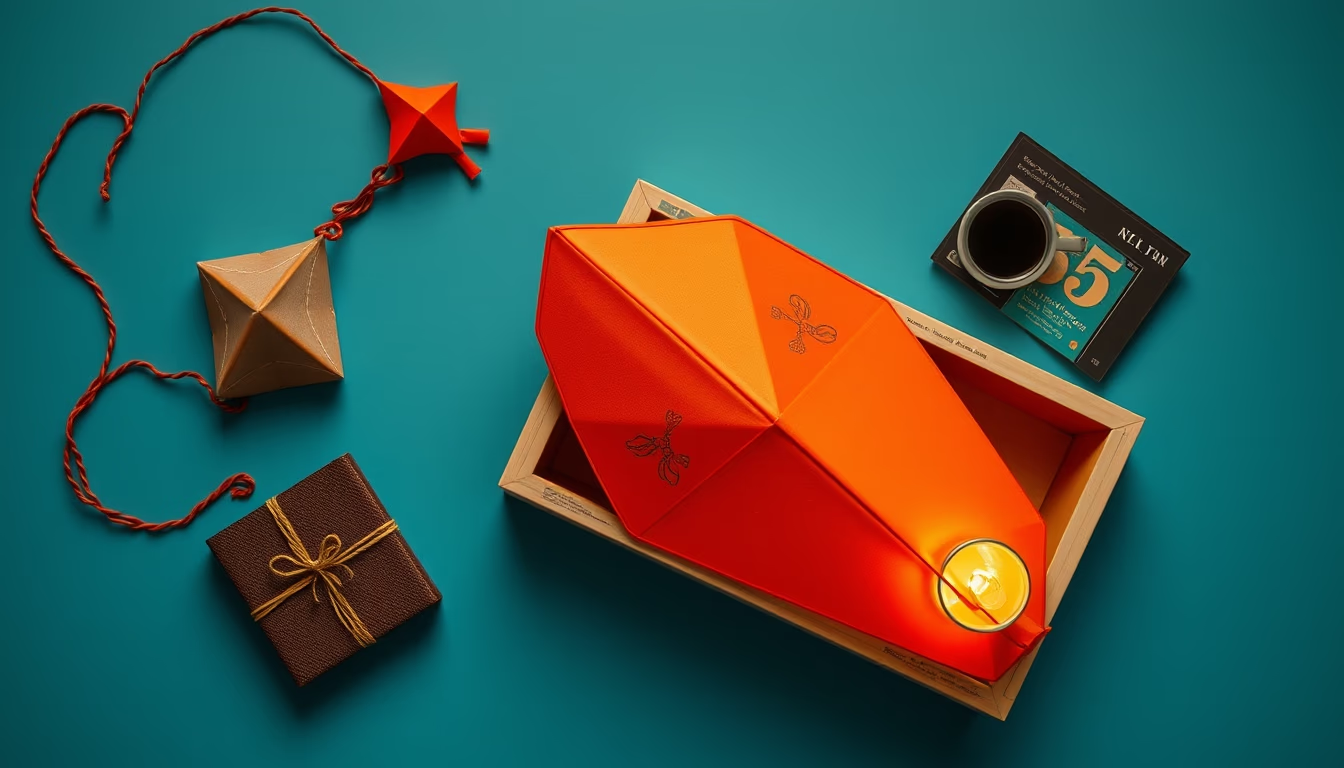
The vintage box kite, invented by Lawrence Hargrave in 1893, revolutionized aviation and continues to fascinate enthusiasts with its stability and aerodynamic design.
About this subject
The box kite is a type of kite with a three-dimensional box structure, typically featuring two open rectangular cells. It was invented by Australian engineer and explorer Lawrence Hargrave in 1893 during his experiments with flight. Hargrave sought a stable lifting surface that could withstand wind without collapsing, and the box kite proved highly efficient. Its simple construction, a lightweight wooden frame with taut fabric, allowed it to fly at steep angles, unlike traditional flat kites.
Historically, the box kite played a crucial role in aviation development. Hargrave demonstrated that heavier-than-air objects could be sustained by fixed surfaces, inspiring the Wright brothers and other pioneers. In the late 19th and early 20th centuries, box kites were used to lift meteorological instruments such as thermometers and barometers to high altitudes. In 1897, a box kite carried an instrument to 4,900 meters, a record at the time. This scientific application advanced understanding of the upper atmosphere.
Today, the vintage box kite is valued as a collector's item and nostalgic piece. It appears at kite festivals worldwide, especially events celebrating aviation history. Its iconic design, often in bright colors or geometric patterns, has also influenced art and graphic design. Notably, the box kite's stability comes from the dihedral angle of its wings and weight distribution, creating a low center of gravity. Despite modern kites and drones, the box kite remains a symbol of human ingenuity and the passion for flight.
Frequently Asked Questions
Who invented the box kite?
The box kite was invented by Australian engineer Lawrence Hargrave in 1893 during his research on flight and aerodynamic lift.
How were box kites used in meteorology?
Box kites were used to lift meteorological instruments such as thermometers and barometers to high altitudes to study the upper atmosphere. In 1897, a box kite reached 4,900 meters.
Why are box kites so stable?
Their stability comes from the box design, which creates a low center of gravity and a dihedral angle on the sides, distributing wind force evenly and preventing tipping or spinning.
Direct URL
https://pub-c7d6a6ea828543ac903a74a341ccb2e1.r2.dev/imagens/box-kite-vintage-isometric-flat-lay-fresh14.avifHow to credit
Include a visible link back to UtilizAí. Copy one of the snippets below:
<a href="https://xn--utiliza-eza.com/en/midia/imagens/box-kite-vintage-isometric-flat-lay-fresh14">Box kite vintage</a> by <a href="https://xn--utiliza-eza.com">UtilizAí</a>, licensed under <a href="https://creativecommons.org/licenses/by/4.0/">CC BY 4.0</a>.
[Box kite vintage](https://xn--utiliza-eza.com/en/midia/imagens/box-kite-vintage-isometric-flat-lay-fresh14) by [UtilizAí](https://xn--utiliza-eza.com), CC BY 4.0
License: CC-BY-4.0