Bitcoin coin in golden light
1344×768 · AVIF · CC BY 4.0
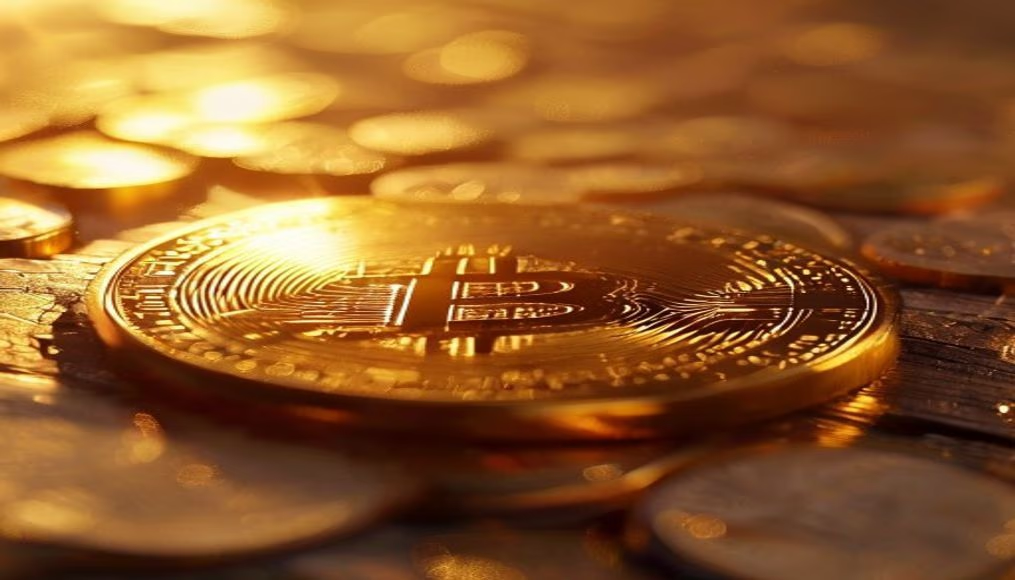
Bitcoin is the first and most valuable cryptocurrency, revolutionizing digital transactions since 2009.
About this subject
Bitcoin is a decentralized digital currency created in 2008 by an individual or group under the pseudonym Satoshi Nakamoto. The system launched in January 2009, introducing blockchain technology as a public and immutable ledger for recording transactions. Unlike fiat currencies, Bitcoin does not rely on central banks or governments for issuance; new units are generated through computational mining, solving complex mathematical problems.
Bitcoin's total supply is capped at 21 million coins, making it deflationary. As of 2025, over 19 million have been mined, with the last Bitcoin expected to be extracted around 2140. Its value is highly volatile: in 2010, it was worth less than a cent; in 2021, it reached nearly $70,000 per unit. Globally, Bitcoin is used for investment and remittances, but faces regulatory scrutiny in many countries.
The network is criticized for its high energy consumption during mining, comparable to that of small nations. Conversely, its pseudonymous and borderless nature enables international transfers without intermediaries. Every four years, a halving event reduces the block reward by half, influencing scarcity and price. Satoshi's identity remains a mystery, with estimates suggesting they hold about 1 million bitcoins.
Frequently Asked Questions
How does Bitcoin work?
Bitcoin operates on a peer-to-peer network based on blockchain. Transactions are verified by miners and recorded in blocks. Each user has a private key to authorize transfers, and the balance is maintained in a decentralized manner.
Is it safe to invest in Bitcoin?
Bitcoin is volatile and carries risks such as price fluctuations and potential loss of wallet access. However, the blockchain technology is considered secure. It is recommended to invest only what you can afford to lose and use reliable wallets.
What is Bitcoin halving?
Halving is an event that occurs every 210,000 blocks (approximately 4 years), reducing the miners' reward by half. This controls the issuance of new bitcoins and historically precedes price rally cycles.
Direct URL
https://pub-c7d6a6ea828543ac903a74a341ccb2e1.r2.dev/imagens/bitcoin-coin-in-golden-light-travel-photography-v10.avifHow to credit
Include a visible link back to UtilizAí. Copy one of the snippets below:
<a href="https://xn--utiliza-eza.com/en/midia/imagens/bitcoin-coin-in-golden-light-travel-photography-v10">Bitcoin coin in golden light</a> by <a href="https://xn--utiliza-eza.com">UtilizAí</a>, licensed under <a href="https://creativecommons.org/licenses/by/4.0/">CC BY 4.0</a>.
[Bitcoin coin in golden light](https://xn--utiliza-eza.com/en/midia/imagens/bitcoin-coin-in-golden-light-travel-photography-v10) by [UtilizAí](https://xn--utiliza-eza.com), CC BY 4.0
License: CC-BY-4.0