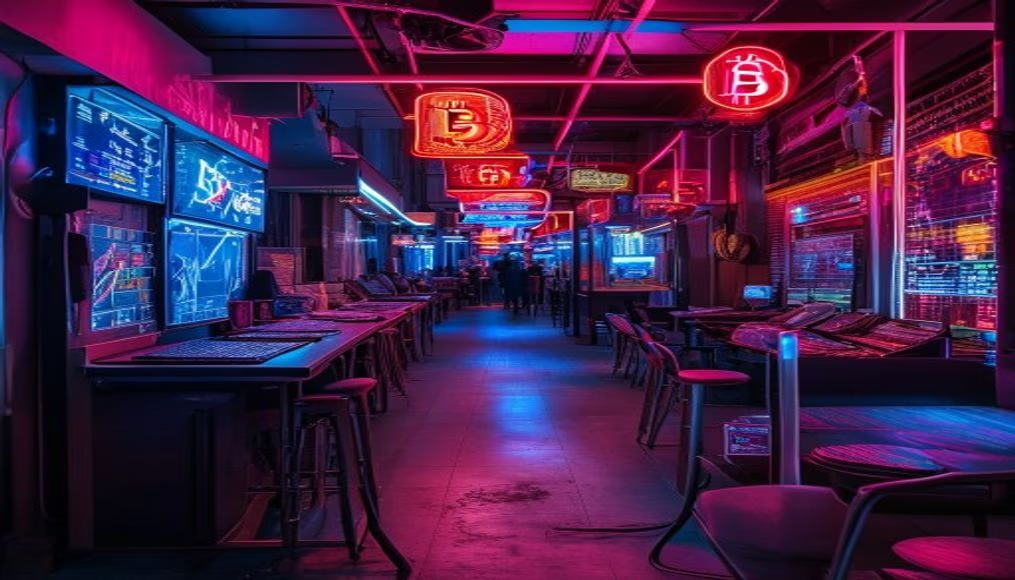
Bitcoin atm machine on city street at night
1344×768 · AVIF · CC BY 4.0
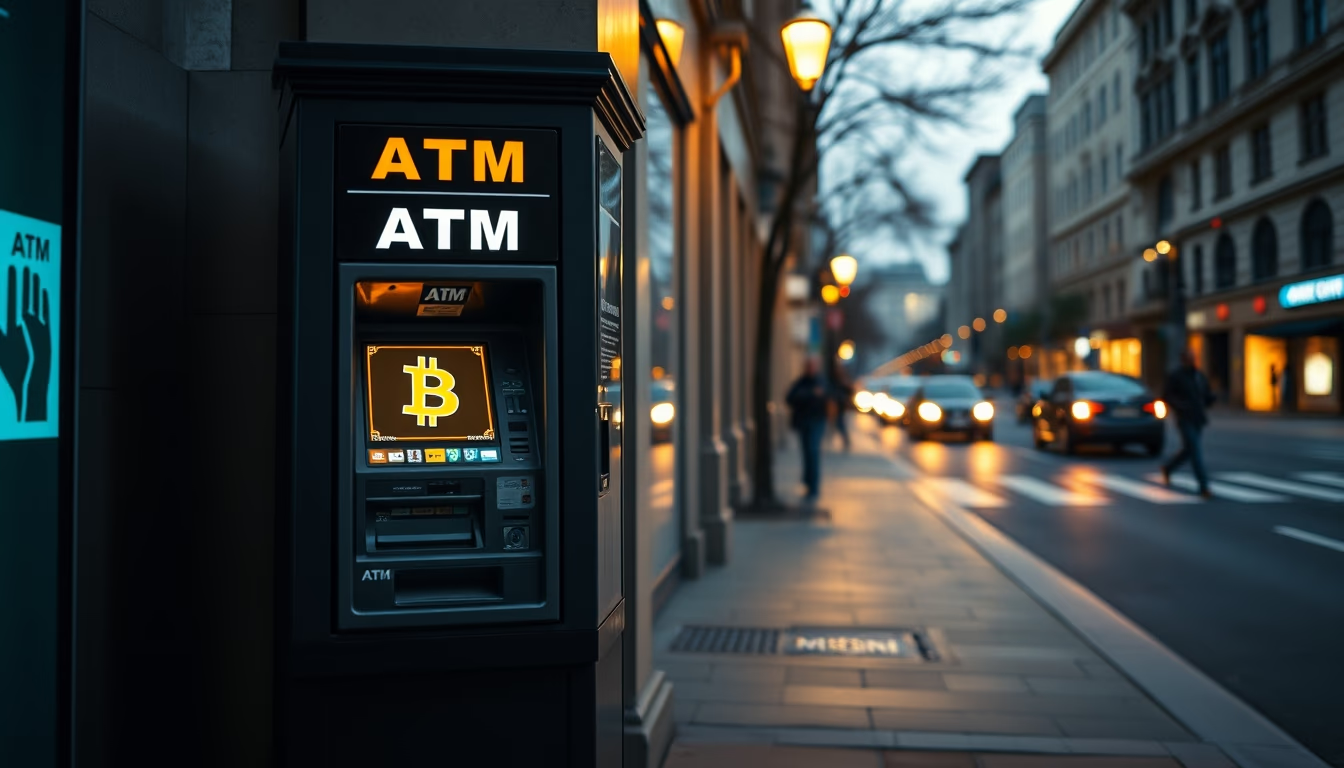
Bitcoin ATMs allow users to buy and sell cryptocurrencies with cash, operating 24/7 on public city streets.
About this subject
Bitcoin ATMs are physical terminals that bridge cryptocurrencies and traditional cash. Unlike online exchanges, these machines allow anonymous or bankless transactions: users insert banknotes, scan a QR code from their digital wallet, and receive bitcoins. The first Bitcoin ATM was installed in October 2013 at the Waves Coffee House in Vancouver, Canada. Since then, the global network has grown to over 38,000 machines as of 2024, concentrated in the United States, Canada, Europe, and Latin America.
In Brazil, the first Bitcoin ATMs appeared in 2014 in São Paulo and Rio de Janeiro. Today, hundreds of units operate in shopping malls, airports, and gas stations, run by companies like Athena, Bitcoin Banco, and CoinCloud. Regulation remains nascent: the Central Bank does not recognize cryptocurrencies as legal tender but allows ATMs as long as they comply with anti-money laundering laws, imposing transaction limits and user identification for large amounts.
Security varies across models. Many terminals feature cameras, protected keypads, and internal safes. However, scams such as QR code cloning or fake machines have been reported. To avoid fraud, users should stick to well-known operators, inspect the machine for tampering, and never share private keys. Transaction fees are typically higher than online exchanges, ranging from 5% to 15% per operation.
Nighttime street placement, as depicted in the scene, is common in urban areas. Public lighting and security cameras influence location choice. Some countries require ATMs to be in premises with 24-hour surveillance. Despite Bitcoin's volatility, demand for these terminals grows, especially in regions with low banking inclusion where access to traditional financial services is limited.
Frequently Asked Questions
How does a Bitcoin ATM work?
The user inserts cash, scans a QR code from their digital wallet, and the transaction is processed within minutes. Some models also allow selling Bitcoin for cash.
What are the risks of using a Bitcoin ATM on the street at night?
Risks include robbery, machine tampering, or fake QR codes. It is recommended to use ATMs in well-lit areas with cameras and to verify the machine's legitimacy.
How much does it cost to use a Bitcoin ATM?
Fees range from 5% to 15% of the transaction amount, depending on the operator and volume. They are generally higher than online exchanges but offer convenience and anonymity for small amounts.
Direct URL
https://pub-c7d6a6ea828543ac903a74a341ccb2e1.r2.dev/imagens/bitcoin-atm-machine-on-city-street-at-night-symmetric-composition-morning-natural-light.avifHow to credit
Include a visible link back to UtilizAí. Copy one of the snippets below:
<a href="https://xn--utiliza-eza.com/en/midia/imagens/bitcoin-atm-machine-on-city-street-at-night-symmetric-composition-morning-natural-light">Bitcoin atm machine on city street at night</a> by <a href="https://xn--utiliza-eza.com">UtilizAí</a>, licensed under <a href="https://creativecommons.org/licenses/by/4.0/">CC BY 4.0</a>.
[Bitcoin atm machine on city street at night](https://xn--utiliza-eza.com/en/midia/imagens/bitcoin-atm-machine-on-city-street-at-night-symmetric-composition-morning-natural-light) by [UtilizAí](https://xn--utiliza-eza.com), CC BY 4.0
License: CC-BY-4.0