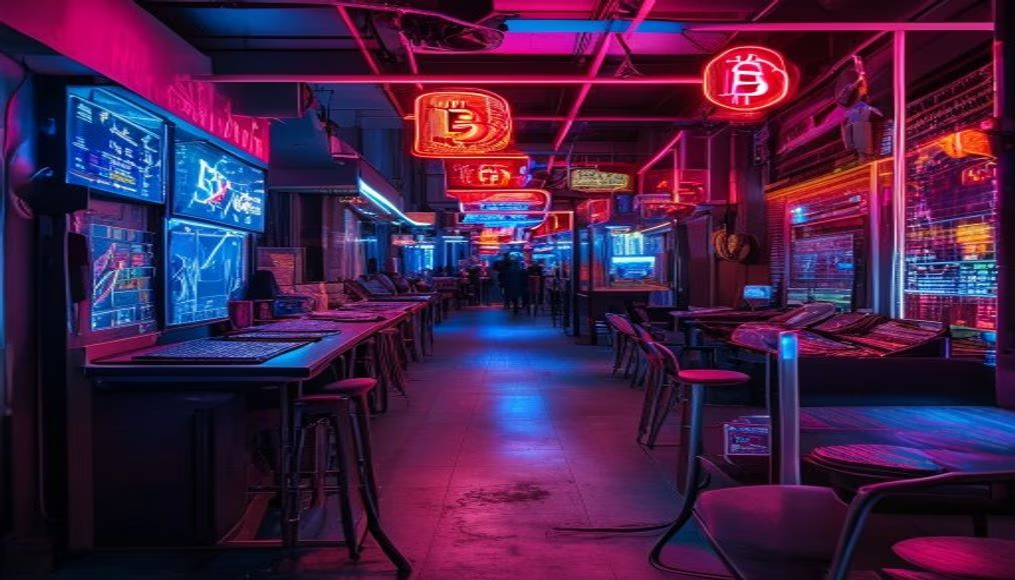
Bitcoin atm machine on city street at night
1344×768 · AVIF · CC BY 4.0
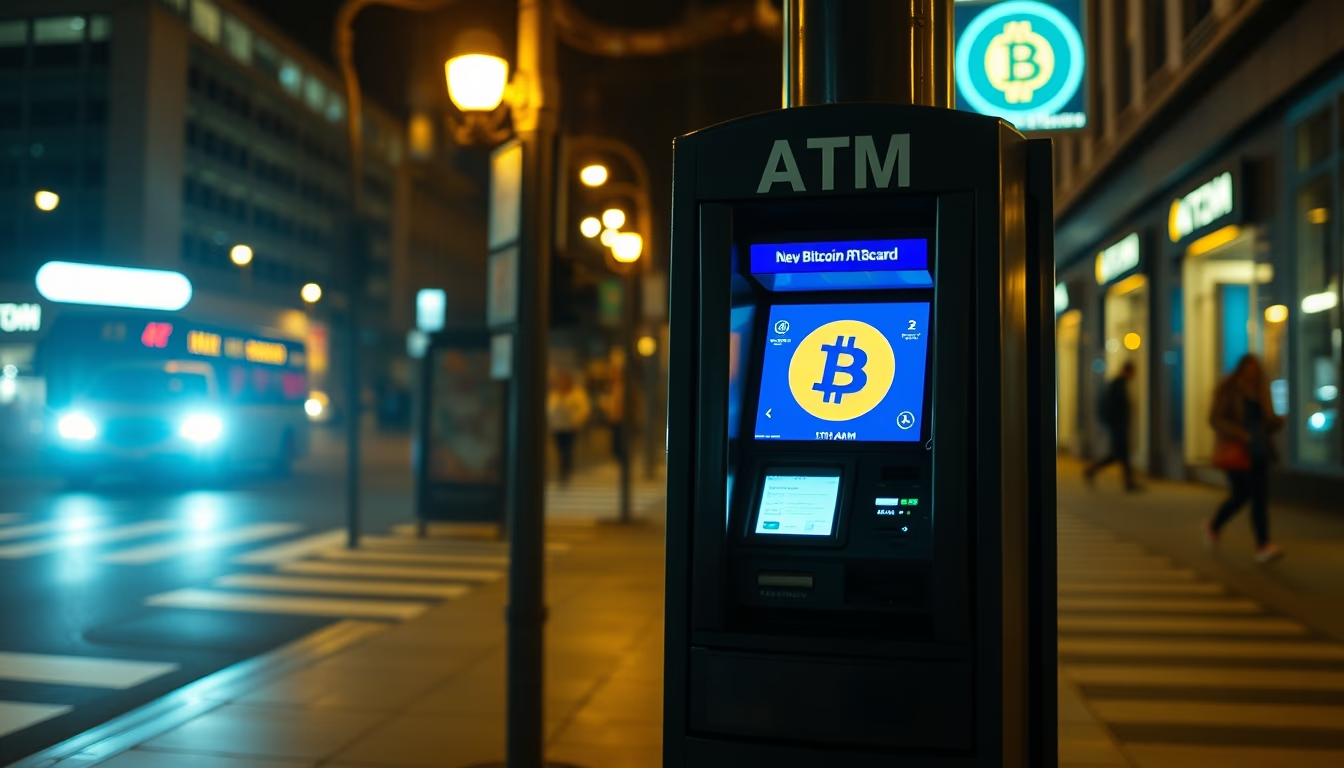
Bitcoin ATMs are spreading across Brazilian cities, offering cash purchase and sale of cryptocurrencies 24 hours a day.
About this subject
Bitcoin automated teller machines (BTMs) are physical terminals that allow users to buy and sell cryptocurrencies using cash or cards. Unlike online exchanges, these machines offer relative anonymity and instant transactions, often without prior registration. In Brazil, the adoption of BTMs grew rapidly after 2019, driven by the search for alternatives to the traditional banking system and distrust of inflation and currency controls.
Placement on busy public streets, as shown in the image, is strategic. Machines are located in high-pedestrian-traffic areas, often near conventional banks or shopping centers, to attract both curious passersby and serious investors. The most common model in the country is operated by BitcoinTrade, which runs about 20 terminals in São Paulo, Rio de Janeiro, Belo Horizonte, and other capitals.
A technical note: BTMs do not store bitcoins physically. They connect to partner exchanges to execute buy and sell orders in real time. The user inserts cash, the machine checks the current exchange rate, and credits the equivalent amount to the user's digital wallet, usually via a QR code. The reverse process is also possible: the user sends bitcoins to the machine and receives banknotes. Transaction fees range from 5% to 10%, much higher than online exchanges, but the service offers convenience and anonymity.
Despite growth, the sector faces regulatory challenges. Brazil's Central Bank has not yet regulated BTMs, creating legal uncertainty. In 2023, the Federal Revenue Service began requiring crypto operators to report all transactions, but street machines often operate in a gray area. Nevertheless, expansion is expected: experts estimate the number of BTMs in the country could double by 2025, driven by bitcoin's growing popularity as a store of value and payment method.
Frequently Asked Questions
How does a bitcoin ATM work?
The user inserts cash or a card, the machine checks the current exchange rate, and credits the equivalent amount in bitcoin to the user's digital wallet, usually via a QR code. The reverse process is also possible: sending bitcoins to the machine and receiving banknotes.
How much does it cost to use a BTM in Brazil?
Fees range from 5% to 10% per transaction, much higher than online exchanges. However, the service offers convenience and anonymity, as many machines do not require registration.
Are bitcoin ATMs regulated in Brazil?
Not yet. The Central Bank does not regulate BTMs, creating legal uncertainty. The Federal Revenue Service requires operators to report transactions, but street machines often operate in a gray area.
Direct URL
https://pub-c7d6a6ea828543ac903a74a341ccb2e1.r2.dev/imagens/bitcoin-atm-machine-on-city-street-at-night-documentary-photography-bright-midday-sun.avifHow to credit
Include a visible link back to UtilizAí. Copy one of the snippets below:
<a href="https://xn--utiliza-eza.com/en/midia/imagens/bitcoin-atm-machine-on-city-street-at-night-documentary-photography-bright-midday-sun">Bitcoin atm machine on city street at night</a> by <a href="https://xn--utiliza-eza.com">UtilizAí</a>, licensed under <a href="https://creativecommons.org/licenses/by/4.0/">CC BY 4.0</a>.
[Bitcoin atm machine on city street at night](https://xn--utiliza-eza.com/en/midia/imagens/bitcoin-atm-machine-on-city-street-at-night-documentary-photography-bright-midday-sun) by [UtilizAí](https://xn--utiliza-eza.com), CC BY 4.0
License: CC-BY-4.0