Biplane vintage barnstormer
1344×768 · JPG · CC BY 4.0
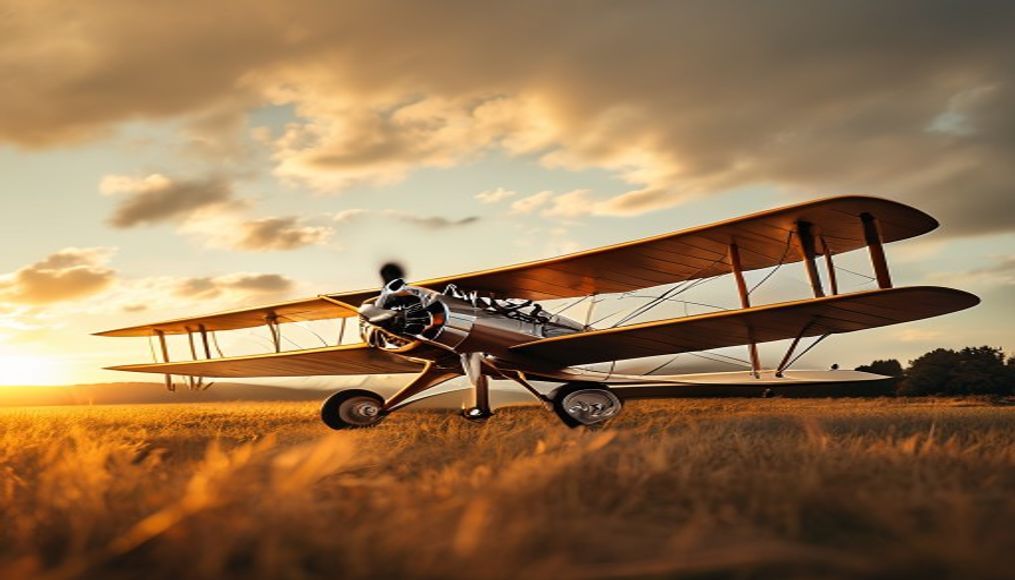
Wood-and-fabric biplanes ruled the skies during the barnstorming era, bringing aerial thrills and stunts to rural America from the 1920s to the 1930s.
About this subject
The barnstorming phenomenon emerged after World War I, when thousands of trained pilots returned home with flying skills and access to surplus military aircraft, such as the Curtiss JN-4 Jenny, a two-seat biplane. These pilots traveled from town to town, performing aerobatics, selling sightseeing rides, and promoting air shows that captivated rural audiences. The term barnstorming comes from the practice of landing in fields near barns, using any open space as an improvised runway.
Biplanes were ideal for this activity due to their robust structure and dual wings, which provided greater lift at low speeds and maneuverability for loops, spins, and dives. In addition to demonstration flights, barnstormers included acrobats who practiced wing walking, swapping planes midair or hanging from ladders. Charles Lindbergh, before his historic transatlantic flight, gained experience as a barnstormer, performing stunts and selling tickets.
The popularity of barnstorming peaked in the early 1920s but declined with the regulation of civil aviation in the United States, especially the Air Commerce Act of 1926, which required pilot licenses and aircraft inspections. However, the spirit of barnstorming survives in modern air shows and recreational aviation, keeping alive the memory of those intrepid aviators who helped popularize flight among the general public.
Interestingly, many original biplanes have been preserved and continue to fly at air shows, such as the Stearman and the Boeing-Stearman Kaydet, often used for training during World War II and later adapted for crop dusting and entertainment. The legacy of barnstorming is celebrated in films, books, and museums, such as the National Museum of the United States Air Force in Dayton, Ohio, which displays aircraft from the era.
Frequently Asked Questions
What is a barnstormer and when was this activity most popular?
A barnstormer was a pilot who traveled through rural areas performing aerial stunts and offering paid flights, especially in the United States. The activity peaked between the end of World War I and the early 1930s, when stricter regulations limited the practice.
Why were biplanes used in barnstorming?
Biplanes like the Curtiss JN-4 Jenny provided greater lift and maneuverability at low speeds, essential for loops, spins, and landings in makeshift fields. Their wood-and-fabric construction was lightweight and easy to repair.
Does barnstorming still exist today?
While original barnstorming has faded, its spirit lives on in modern air shows where pilots perform aerobatics and sightseeing flights. Many historic biplanes are preserved and fly regularly at events like EAA AirVenture in Oshkosh, Wisconsin.
Direct URL
https://pub-c7d6a6ea828543ac903a74a341ccb2e1.r2.dev/imagens/biplane-vintage-barnstormer-cinematic-wide-shot-p4.jpgHow to credit
Include a visible link back to UtilizAí. Copy one of the snippets below:
<a href="https://xn--utiliza-eza.com/en/midia/imagens/biplane-vintage-barnstormer-cinematic-wide-shot-p4">Biplane vintage barnstormer</a> by <a href="https://xn--utiliza-eza.com">UtilizAí</a>, licensed under <a href="https://creativecommons.org/licenses/by/4.0/">CC BY 4.0</a>.
[Biplane vintage barnstormer](https://xn--utiliza-eza.com/en/midia/imagens/biplane-vintage-barnstormer-cinematic-wide-shot-p4) by [UtilizAí](https://xn--utiliza-eza.com), CC BY 4.0
License: CC-BY-4.0