Biometric scan finger
1344×768 · AVIF · CC BY 4.0
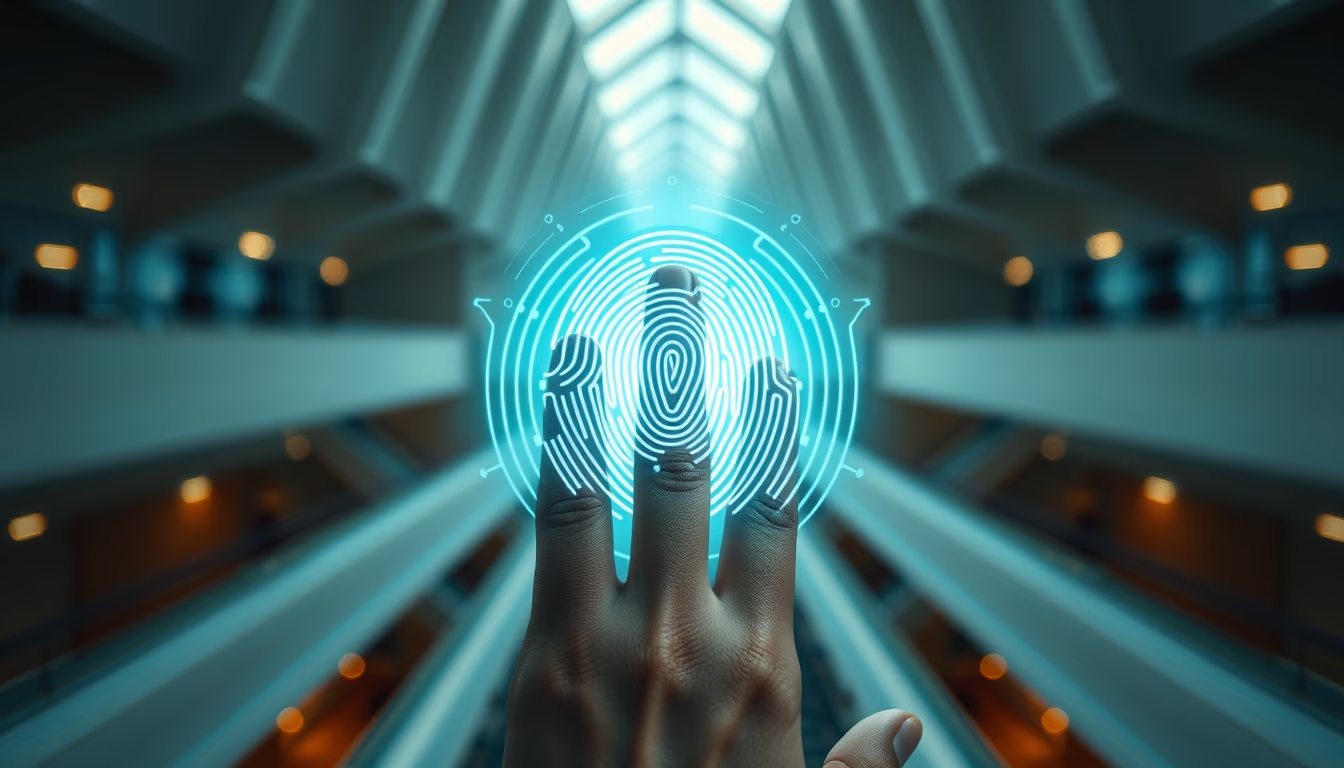
Fingerprint biometric scanners identify individuals by unique ridge patterns, used in security and mobile devices.
About this subject
Fingerprint biometrics is one of the oldest and most reliable forms of automatic identification. Since Francis Galton classified ridge patterns in the late 19th century, technology has evolved into optical, capacitive, and ultrasonic sensors. Today, fingerprint scanners are present in smartphones, building access control, and time clocks.
Each fingerprint has unique characteristics such as arches, loops, and whorls, forming minutiae, points of bifurcation and termination. Algorithms compare these minutiae against a stored template, ensuring high accuracy. False acceptance rate (FAR) and false rejection rate (FRR) vary by sensor; modern models achieve FAR below 0.001%.
The use of biometric scanners exploded after 2013 when Apple introduced Touch ID on the iPhone 5S. Since then, the technology has become standard in Android devices and Windows Hello. In corporate environments, biometrics replace passwords and badges, reducing fraud risk and increasing efficiency.
Despite convenience, privacy and security of biometric data are concerns. Unlike passwords, fingerprints cannot be changed if compromised. Therefore, modern systems store only cryptographic hashes of minutiae, never the full image, and many devices integrate the sensor with a secure enclave.
Frequently Asked Questions
How does a fingerprint biometric scanner work?
The sensor captures the fingerprint image using optical, capacitive, or ultrasonic methods, extracts minutiae (ridge bifurcations and endings), and compares them to a stored template using mathematical algorithms. Matching occurs in milliseconds.
Is fingerprint biometrics secure?
Yes, with limitations. Modern systems have low error rates and use encryption. However, fingerprints can be lifted from touched surfaces. Therefore, current sensors include liveness detection (e.g., blood flow) and secure storage.
What are the most common applications of fingerprint biometrics?
Smartphones (unlock and payments), physical access control in buildings, time clocks, civil registration (passports, ID cards), and banking authentication. Also used in devices like laptops and smart locks.
Direct URL
https://pub-c7d6a6ea828543ac903a74a341ccb2e1.r2.dev/imagens/biometric-scan-finger-architectural-photography-p1.avifHow to credit
Include a visible link back to UtilizAí. Copy one of the snippets below:
<a href="https://xn--utiliza-eza.com/en/midia/imagens/biometric-scan-finger-architectural-photography-p1">Biometric scan finger</a> by <a href="https://xn--utiliza-eza.com">UtilizAí</a>, licensed under <a href="https://creativecommons.org/licenses/by/4.0/">CC BY 4.0</a>.
[Biometric scan finger](https://xn--utiliza-eza.com/en/midia/imagens/biometric-scan-finger-architectural-photography-p1) by [UtilizAí](https://xn--utiliza-eza.com), CC BY 4.0
License: CC-BY-4.0