Bike share station
1344×768 · AVIF · CC BY 4.0

Bike share stations exist in over 2,000 cities worldwide, providing sustainable mobility and integration with public transit.
About this subject
Bike share stations are a central component of urban mobility systems in large cities. They allow users to pick up and return bicycles at fixed points, usually located near subway stations, bus stops, or high-traffic areas. In Brazil, systems like Bike Rio (Rio de Janeiro) and Itaú Bike (present in several capitals) stand out for having thousands of bicycles and stations spread across cities, operating 24/7. Globally, examples such as Citi Bike in New York and Santander Cycles in London show how the model can be adapted to different urban realities.
The adoption of bike share systems has grown exponentially in the last decade, driven by the search for sustainable alternatives to cars and integration with active mobility policies. Studies indicate that each shared bike can replace up to 10 car trips per day, reducing CO2 emissions and congestion. Modern stations feature GPS tracking, app-based payment, and solar panels to power electronic systems.
Culturally, bike share stations have become symbols of smart and sustainable cities. They encourage physical activity, reduce dependence on fossil fuels, and democratize access to mobility. In the Brazilian context, cities like São Paulo and Recife have also adopted the model, facing challenges such as vandalism and theft but reaping benefits like reduced travel time for short distances. The trend for 2026 points to the expansion of e-bike systems and full integration with multimodal transport apps like Uber and Moovit.
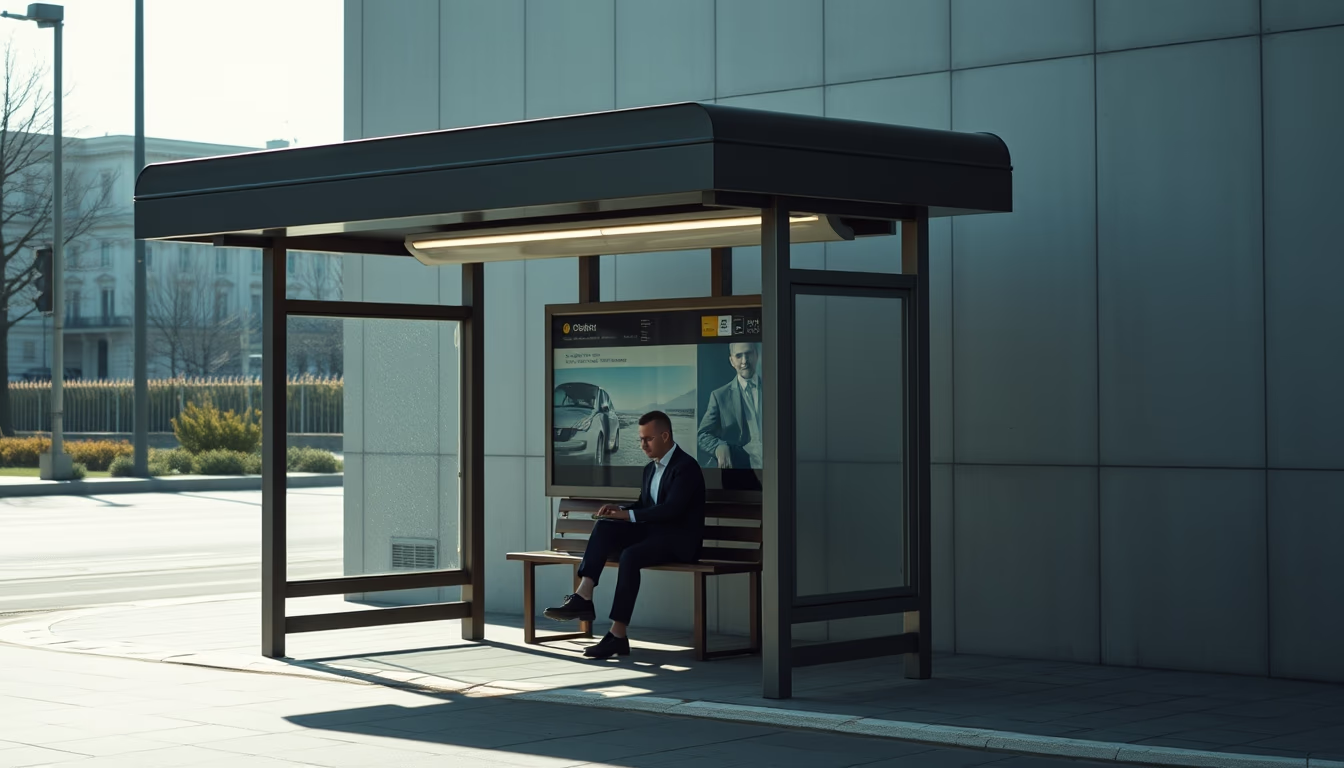
Interestingly, bike share stations also appear in fashion editorials and street photography, as in this 'high fashion editorial' themed image. This reflects how urban infrastructure becomes a backdrop for contemporary artistic expressions, merging mobility and aesthetics.
Frequently Asked Questions
How does bike rental work at shared stations?
Users typically use an app to unlock a bike, pick it up at any station, and return it to another within the service area. Payment is per minute, hour, or monthly plan.
What are the benefits of bike share stations for cities?
They reduce congestion, lower emissions, encourage physical activity, and provide a low-cost transport option for short distances.
Are shared bikes safe?
Yes, bikes undergo regular maintenance and many have anti-theft systems. Wearing a helmet and following traffic laws is recommended.
Direct URL
https://pub-c7d6a6ea828543ac903a74a341ccb2e1.r2.dev/imagens/bike-share-station-high-fashion-editorial-p5.avifHow to credit
Include a visible link back to UtilizAí. Copy one of the snippets below:
<a href="https://xn--utiliza-eza.com/en/midia/imagens/bike-share-station-high-fashion-editorial-p5">Bike share station</a> by <a href="https://xn--utiliza-eza.com">UtilizAí</a>, licensed under <a href="https://creativecommons.org/licenses/by/4.0/">CC BY 4.0</a>.
[Bike share station](https://xn--utiliza-eza.com/en/midia/imagens/bike-share-station-high-fashion-editorial-p5) by [UtilizAí](https://xn--utiliza-eza.com), CC BY 4.0
License: CC-BY-4.0