Big bang tunnel cern
1344×768 · JPG · CC BY 4.0

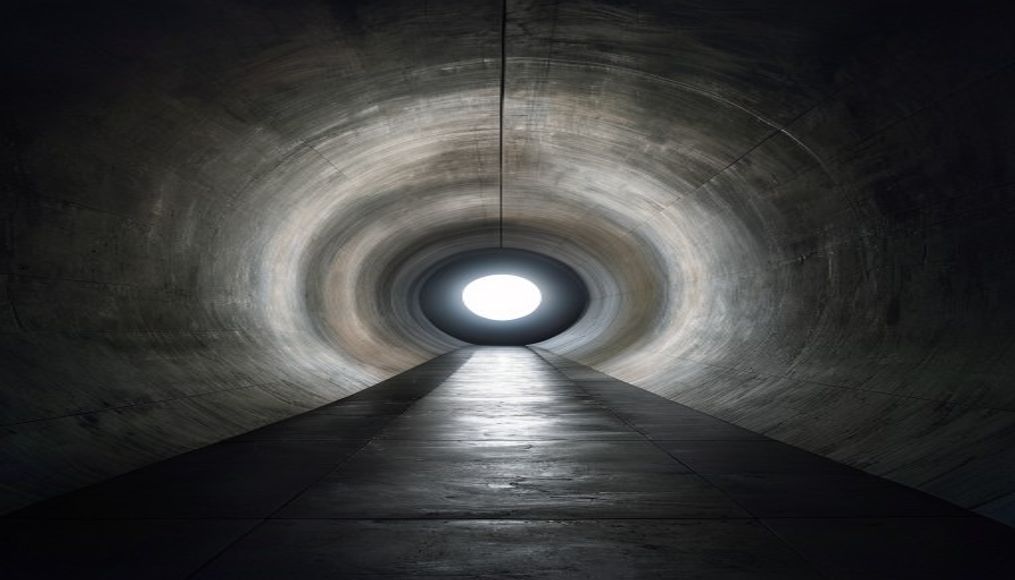
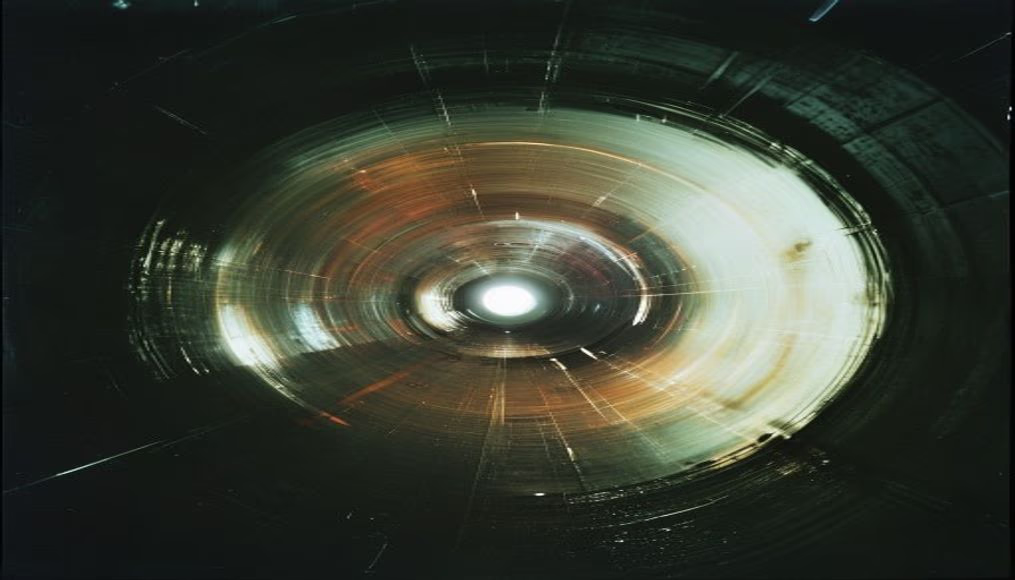
The LHC, the world's largest particle accelerator, recreates Big Bang conditions in its 27 km tunnel beneath the Franco-Swiss border.
About this subject
The Large Hadron Collider (LHC), operated by the European Organization for Nuclear Research (CERN), is a particle accelerator housed in a 27-kilometer circular tunnel buried 100 meters beneath the Franco-Swiss border, near Geneva. Completed in 2008, the LHC has been central to particle physics. The tunnel contains two particle beams traveling in opposite directions at near-light speed, colliding at four main detector points: ATLAS, CMS, ALICE, and LHCb. These collisions achieve energy levels similar to those in the first moments after the Big Bang, allowing scientists to study primordial universe conditions. A landmark discovery was the Higgs boson in 2012, confirming the mechanism giving mass to elementary particles. The LHC operates in cycles, with collision runs (runs) followed by shutdowns for upgrades. In 2024, it began its third run with higher luminosity and energy, offering insights into dark matter, antimatter, and other fundamentals. The tunnel, originally built for the LEP collider, houses superconducting magnets cooled by liquid helium near absolute zero. Safety sensors can automatically dump the beams in case of anomalies. Notably, the LHC consumes about 200 megawatts during full operation, enough to power a medium-sized town. CERN also runs other accelerators like the Proton Synchrotron and Antiproton Decelerator, all operating in coordination.
Frequently Asked Questions
What can the LHC teach us about the Big Bang?
The LHC recreates temperature and energy conditions of the early universe, enabling study of particle formation and fundamental forces. This helps understand how the universe evolved after the Big Bang.
How large is the LHC tunnel and why is it underground?
The tunnel is 27 km in circumference and lies 50 to 175 meters underground. It was built underground to reduce vibrations and costs, with natural shielding from soil.
Has the LHC found evidence of dark matter?
So far, the LHC has not directly detected dark matter, but high-energy collisions can produce candidate particles. Searches continue with data from the latest runs.
Direct URL
https://pub-c7d6a6ea828543ac903a74a341ccb2e1.r2.dev/imagens/big-bang-tunnel-cern-long-exposure-p4.jpgHow to credit
Include a visible link back to UtilizAí. Copy one of the snippets below:
<a href="https://xn--utiliza-eza.com/en/midia/imagens/big-bang-tunnel-cern-long-exposure-p4">Big bang tunnel cern</a> by <a href="https://xn--utiliza-eza.com">UtilizAí</a>, licensed under <a href="https://creativecommons.org/licenses/by/4.0/">CC BY 4.0</a>.
[Big bang tunnel cern](https://xn--utiliza-eza.com/en/midia/imagens/big-bang-tunnel-cern-long-exposure-p4) by [UtilizAí](https://xn--utiliza-eza.com), CC BY 4.0
License: CC-BY-4.0