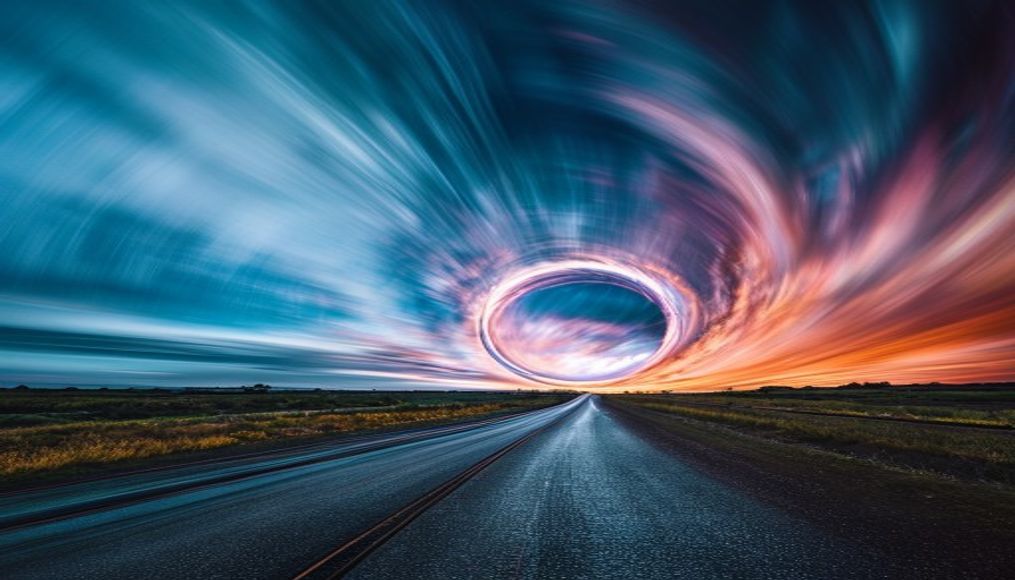
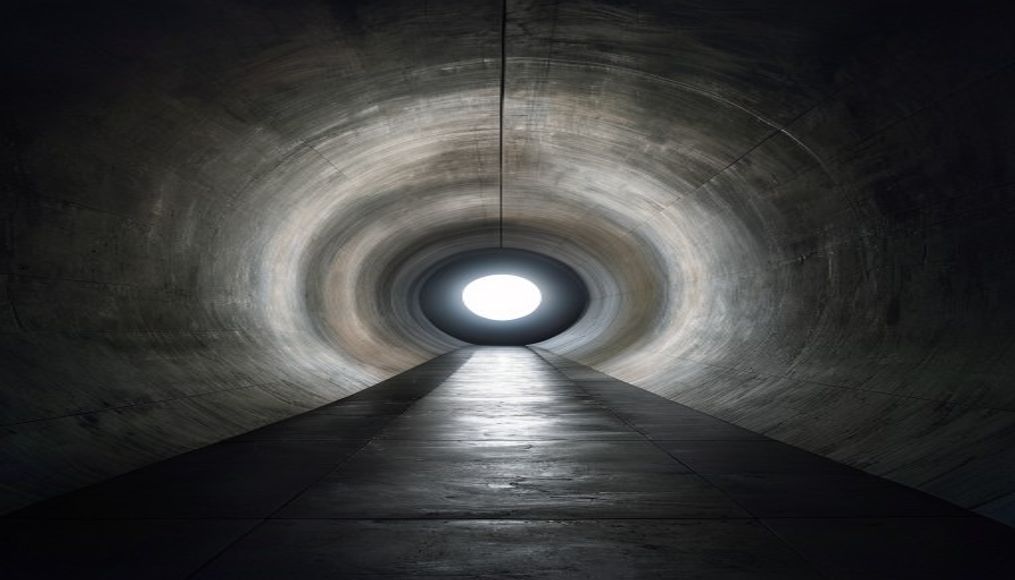
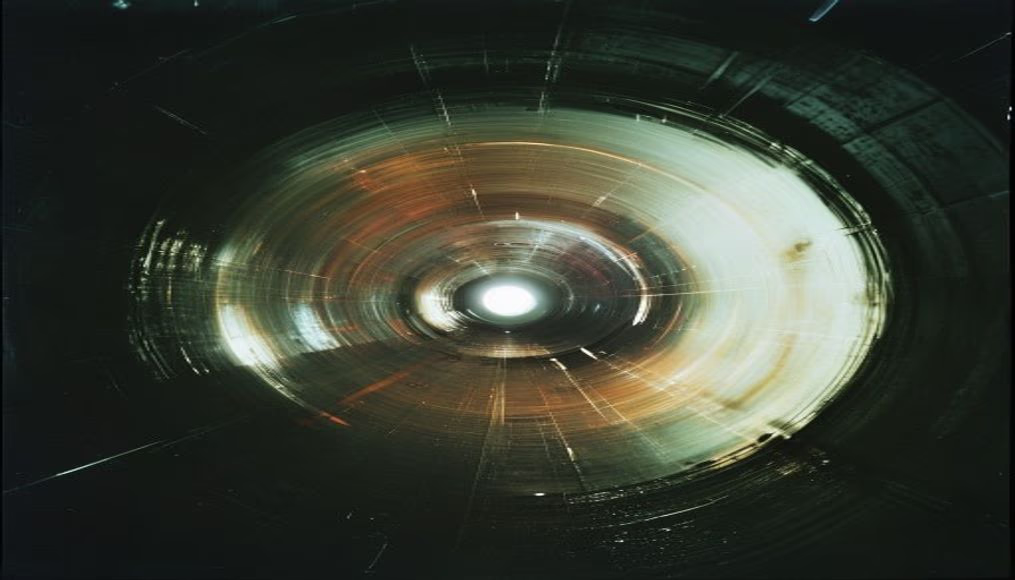
Big bang artistic concept
1344×768 · AVIF · CC BY 4.0

The Big Bang is the scientific theory describing the origin of the universe from a primordial explosion about 13.8 billion years ago.
About this subject
The Big Bang was not an explosion in space, but the expansion of space itself from an infinitely dense and hot point, known as a singularity. This theory, formulated from Edwin Hubble's observations of receding galaxies and the cosmic microwave background, is the most widely accepted cosmological model. The cosmic microwave background, discovered in 1965 by Penzias and Wilson, is considered the afterglow of the Big Bang, a microwave signature permeating the universe.
In the first moments after the Big Bang, the universe underwent an exponential expansion phase called cosmic inflation. This rapid expansion smoothed out irregularities and seeded the structures we see today, such as galaxies and clusters. Interestingly, the primordial universe composition was mainly hydrogen and helium, with traces of lithium. Heavier elements were later forged inside stars and supernovae, a process known as nucleosynthesis.
Dating the Big Bang relies on measurements of the Hubble constant and models of cosmic evolution. Observatories like the James Webb Space Telescope have been studying the first galaxies and quasars, testing the limits of the theory. While the Big Bang explains expansion and light element abundances, questions about what came before or the cause of the singularity continue to challenge theoretical physics, motivating research in quantum gravity and multiverse.
Frequently Asked Questions
What happened before the Big Bang?
The Big Bang theory does not describe what occurred before the singularity, as space and time began at that event. Some hypotheses, such as cyclic universe models or quantum gravity, speculate about a prior state, but there is no scientific consensus.
How do we know the Big Bang actually happened?
Key evidences are the expansion of the universe observed by Hubble, the cosmic microwave background radiation, and the abundance of light elements (hydrogen, helium, lithium) matching predictions from primordial nucleosynthesis.
Was the Big Bang a loud explosion?
No, the Big Bang was not an audible explosion because sound requires a medium to propagate, and the early universe was a dense, opaque plasma. The term explosion is a metaphor for rapid expansion.
Direct URL
https://pub-c7d6a6ea828543ac903a74a341ccb2e1.r2.dev/imagens/big-bang-artistic-concept-macro-closeup-p0.avifHow to credit
Include a visible link back to UtilizAí. Copy one of the snippets below:
<a href="https://xn--utiliza-eza.com/en/midia/imagens/big-bang-artistic-concept-macro-closeup-p0">Big bang artistic concept</a> by <a href="https://xn--utiliza-eza.com">UtilizAí</a>, licensed under <a href="https://creativecommons.org/licenses/by/4.0/">CC BY 4.0</a>.
[Big bang artistic concept](https://xn--utiliza-eza.com/en/midia/imagens/big-bang-artistic-concept-macro-closeup-p0) by [UtilizAí](https://xn--utiliza-eza.com), CC BY 4.0
License: CC-BY-4.0