Bee on flower pollen
1344×768 · AVIF · CC BY 4.0
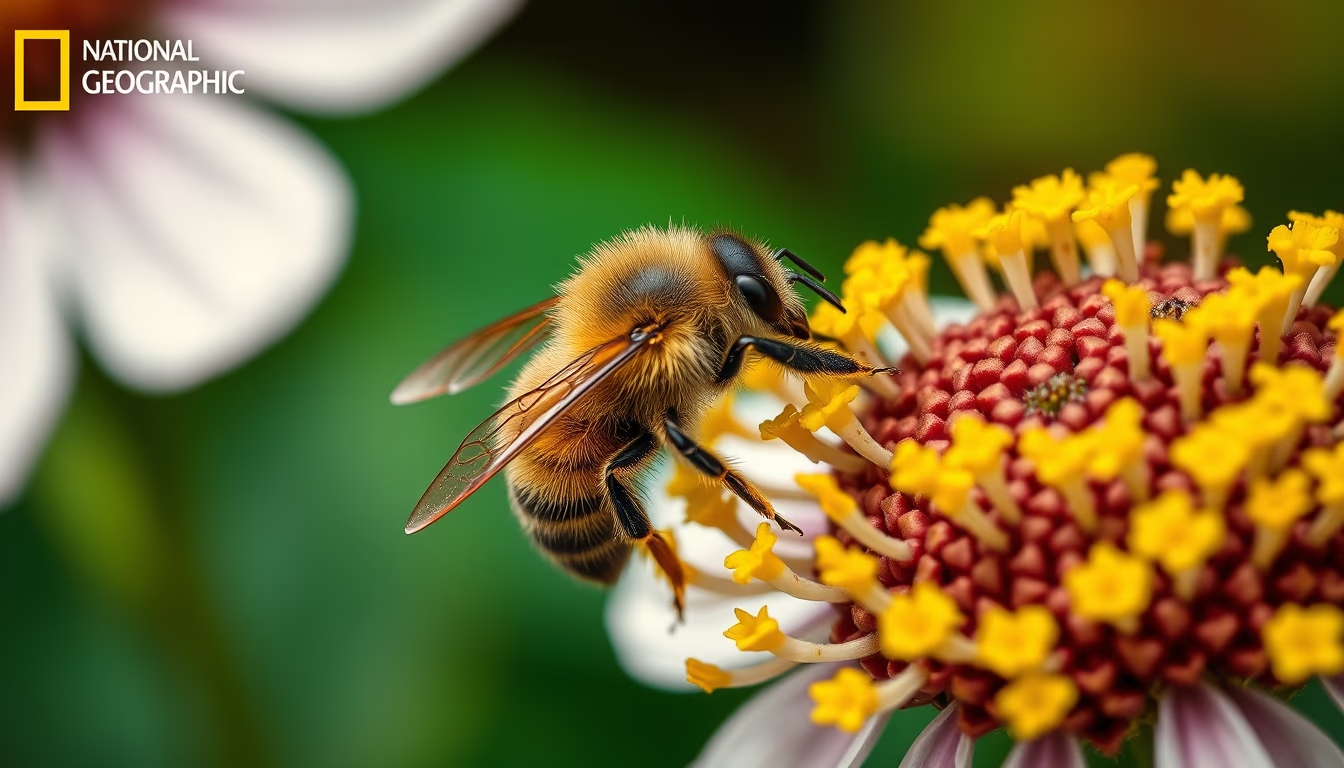
Bee collecting pollen from a flower, crucial for pollination and global food production.
About this subject
Bees are the most important pollinators on the planet. An estimated 75% of global food crops depend at least partially on animal pollination, and bees account for a large share of this ecosystem service. Without them, the production of fruits, vegetables, and nuts would be drastically reduced, impacting global food security.
During pollen collection, a worker bee visits flowers in search of nectar and pollen. Pollen sticks to its hairy body and is transported in special structures on the hind legs, called corbiculae. This behavior not only feeds the hive but also promotes cross-pollination of plants, enabling seed and fruit formation.
Unfortunately, bee populations are declining worldwide due to factors such as pesticide use, habitat loss, climate change, and diseases. Exposure to neonicotinoid pesticides, for instance, can disorient bees and reduce their foraging ability. Conservation initiatives like creating pollinator gardens and reducing chemical use are crucial to reversing this trend.
A fascinating curiosity is the bee waggle dance. When a forager finds a rich food source, it returns to the hive and performs a figure-eight dance, indicating the direction and distance of the resource. This complex communication system, discovered by Karl von Frisch, is one of the most remarkable examples of sophisticated animal behavior.
Frequently Asked Questions
Why are bees important for agriculture?
Bees pollinate about 75% of food crops, including fruits, vegetables, and nuts. Without them, agricultural productivity would plummet, raising prices and threatening food security.
How do bees collect pollen?
When landing on flowers, pollen sticks to the bee's hairy body. The bee then uses its legs to brush the pollen and store it in corbiculae (pollen baskets) on its hind legs, forming small pollen pellets.
What are the main threats to bees?
Main threats include pesticides (especially neonicotinoids), habitat loss due to urbanization and monocultures, climate change, parasites like the Varroa mite, and viral diseases.
Direct URL
https://pub-c7d6a6ea828543ac903a74a341ccb2e1.r2.dev/imagens/bee-on-flower-pollen-national-geographic-style-p1.avifHow to credit
Include a visible link back to UtilizAí. Copy one of the snippets below:
<a href="https://xn--utiliza-eza.com/en/midia/imagens/bee-on-flower-pollen-national-geographic-style-p1">Bee on flower pollen</a> by <a href="https://xn--utiliza-eza.com">UtilizAí</a>, licensed under <a href="https://creativecommons.org/licenses/by/4.0/">CC BY 4.0</a>.
[Bee on flower pollen](https://xn--utiliza-eza.com/en/midia/imagens/bee-on-flower-pollen-national-geographic-style-p1) by [UtilizAí](https://xn--utiliza-eza.com), CC BY 4.0
License: CC-BY-4.0