Bee on flower pollen
1344×768 · AVIF · CC BY 4.0
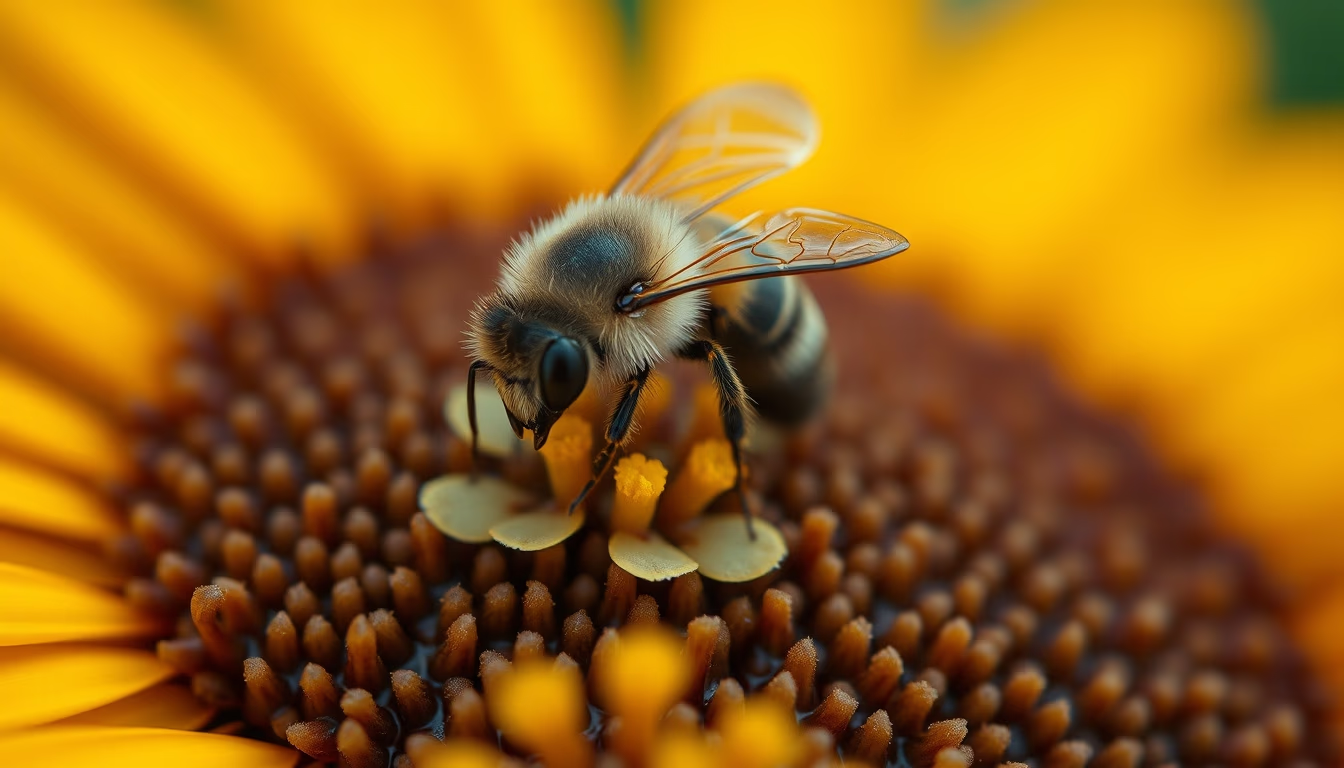
Bees are essential pollinators that collect flower pollen to feed their colonies, contributing to biodiversity and food production.
About this subject
Bees play a crucial role in pollination, a process that ensures the reproduction of about 75% of flowering plants worldwide. While visiting flowers for nectar and pollen, they transport pollen grains between flowers, fertilizing them and allowing the formation of fruits and seeds. Without bees, the production of foods like apples, almonds, coffee, and many vegetables would be drastically reduced.
The pollen collected by bees is a rich source of protein, lipids, vitamins, and minerals, essential for larval development and hive maintenance. Worker bees have specialized structures on their hind legs called corbiculae or pollen baskets, where they compact pollen grains mixed with nectar or saliva, forming small colorful balls that they carry back to the hive. Different pollen colors indicate different flowers, and bees can learn and specialize in particular sources.
There are over 20,000 bee species worldwide, with Apis mellifera (European honey bee) being the most famous for honey production. In Brazil, stingless bees (Meliponini) are native and also essential for pollinating tropical ecosystems. Unfortunately, bee populations are declining globally due to pesticide use, habitat loss, climate change, and diseases. Conservation initiatives such as planting native flowers and reducing agrochemicals are critical to protecting these pollinators.
Beyond their ecological value, bee pollen is marketed as a dietary supplement rich in antioxidants and nutrients. However, the bees' own collection is vital for the hive, and commercial extraction must be sustainable. The relationship between bees and flowers is a classic example of mutualism, where both parties benefit: the bee obtains food and the flower is pollinated, ensuring its reproduction.
Frequently Asked Questions
Why do bees collect pollen?
Bees collect pollen as their main source of proteins, lipids, vitamins, and minerals to feed larvae and adult bees, ensuring the growth and maintenance of the hive.
How do bees carry pollen?
Worker bees have specialized structures on their hind legs called corbiculae, where they compact pollen with nectar or saliva, forming balls that are carried back to the hive.
What is bee pollen and what is it used for?
Bee pollen is pollen collected by bees and sold as a dietary supplement. It is rich in antioxidants and nutrients, but its extraction must be sustainable to avoid harming the hives.
Direct URL
https://pub-c7d6a6ea828543ac903a74a341ccb2e1.r2.dev/imagens/bee-on-flower-pollen-lo-fi-disposable-camera-p5.avifHow to credit
Include a visible link back to UtilizAí. Copy one of the snippets below:
<a href="https://xn--utiliza-eza.com/en/midia/imagens/bee-on-flower-pollen-lo-fi-disposable-camera-p5">Bee on flower pollen</a> by <a href="https://xn--utiliza-eza.com">UtilizAí</a>, licensed under <a href="https://creativecommons.org/licenses/by/4.0/">CC BY 4.0</a>.
[Bee on flower pollen](https://xn--utiliza-eza.com/en/midia/imagens/bee-on-flower-pollen-lo-fi-disposable-camera-p5) by [UtilizAí](https://xn--utiliza-eza.com), CC BY 4.0
License: CC-BY-4.0