Bee on flower pollen
1344×768 · AVIF · CC BY 4.0
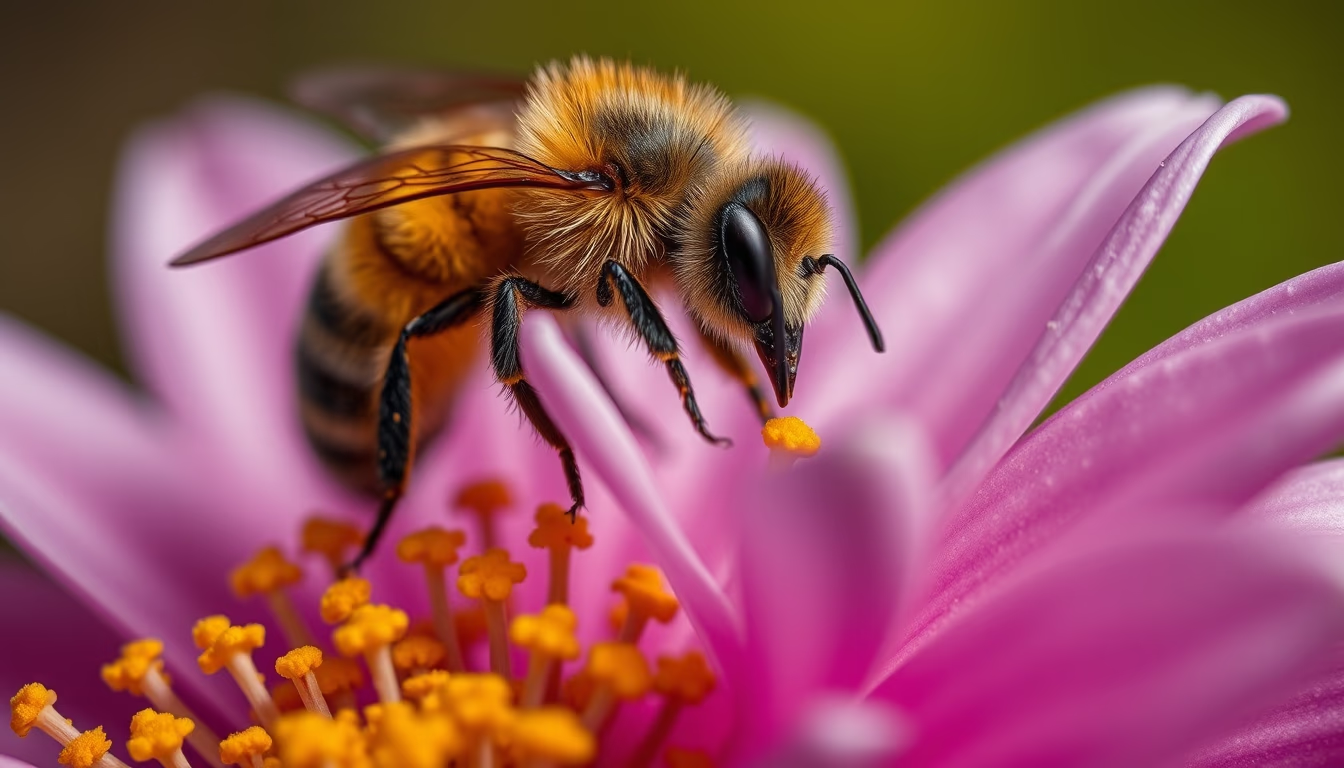
Bees collect pollen from flowers to feed their colonies, a process essential for pollinating about 75% of the world's food crops.
About this subject
Bees are social insects that play a crucial role in maintaining biodiversity and food production. When they visit flowers for nectar and pollen, they carry pollen grains attached to their hairy bodies, promoting cross-pollination. This ecological service is responsible for about one-third of the global food supply, including fruits, vegetables, and oilseeds.
Pollen is the main source of protein, lipids, vitamins, and minerals for bees. They collect it using specialized structures on their hind legs called corbiculae or pollen baskets. The pollen is mixed with nectar and saliva to form small balls that are transported back to the hive. There, it is stored in honeycomb cells and undergoes lactic fermentation, transforming into bee bread, an essential food for larvae and adult worker bees.
The relationship between bees and flowers is a classic example of coevolution. Flowers pollinated by bees often have bright colors like yellow and blue and produce nectar as a reward. The shape and opening of the flowers are adapted to the bee's body, ensuring that pollen grains are deposited on the stigma. In turn, bees have evolved to recognize floral patterns and even the electric fields emitted by flowers, optimizing their search for resources.
Unfortunately, bee populations have been declining globally due to pesticide use, habitat loss, diseases, and climate change. This decline threatens both food security and natural ecosystems. Conservation efforts, such as creating pollinator gardens and reducing agrochemical use, are essential to protect these insects and ensure the continuation of their vital ecological service.
Frequently Asked Questions
Why do bees collect pollen?
Bees collect pollen as their main source of protein, lipids, vitamins, and minerals. The pollen is mixed with nectar to form bee bread, which feeds larvae and adult workers.
How do bees transport pollen?
Bees transport pollen in corbiculae (pollen baskets) on their hind legs. They moisten the pollen with nectar and form small balls that stick to these baskets.
Why is bee pollination important?
Bee pollination is essential for about 75% of the world's food crops, including fruits, vegetables, and oilseeds. Without bees, the production of many foods would be drastically reduced.
Direct URL
https://pub-c7d6a6ea828543ac903a74a341ccb2e1.r2.dev/imagens/bee-on-flower-pollen-high-fashion-editorial-p2.avifHow to credit
Include a visible link back to UtilizAí. Copy one of the snippets below:
<a href="https://xn--utiliza-eza.com/en/midia/imagens/bee-on-flower-pollen-high-fashion-editorial-p2">Bee on flower pollen</a> by <a href="https://xn--utiliza-eza.com">UtilizAí</a>, licensed under <a href="https://creativecommons.org/licenses/by/4.0/">CC BY 4.0</a>.
[Bee on flower pollen](https://xn--utiliza-eza.com/en/midia/imagens/bee-on-flower-pollen-high-fashion-editorial-p2) by [UtilizAí](https://xn--utiliza-eza.com), CC BY 4.0
License: CC-BY-4.0