Bean to bar workshop
1344×768 · AVIF · CC BY 4.0
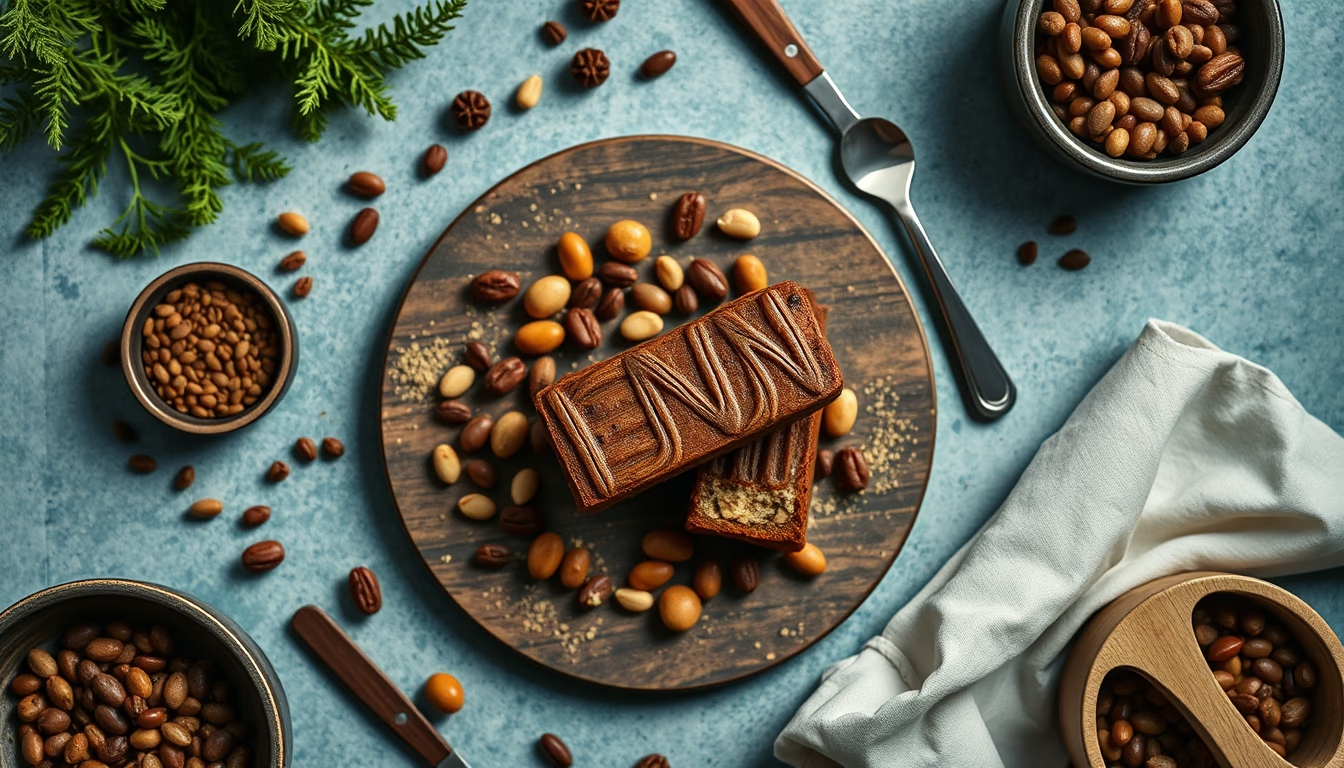
Discover how a bean to bar workshop works, where apprentices transform cacao beans into artisan chocolate, from roasting to packaging.
About this subject
The bean to bar movement began in the early 2000s in the United States, driven by chocolatiers seeking full transparency in the supply chain. Unlike industrial chocolate, which uses standardized cocoa masses, bean to bar starts with careful selection of cacao beans from specific origins, such as Criollo, Forastero, or Trinitario varieties. Each batch carries unique terroir characteristics that the artisan aims to preserve.
A typical bean to bar workshop guides participants through every stage: cleaning the beans, controlled roasting (between 120°C and 150°C), cracking and winnowing, grinding in stone mills to obtain cocoa liquor, conching for hours to refine texture and reduce acidity, tempering to stabilize cocoa butter, and finally molding into bars. Each phase requires precise adjustments of temperature and time, and students learn to identify critical points such as roast degree and viscosity during conching.
Culturally, the movement values fair trade and direct relationships with farmers. Brazil, as one of the world's largest cocoa producers (especially Bahia and Pará), has seen a rise in micro-chocolate makers offering workshops. These courses educate consumers about real chocolate flavor, contrasting with products containing vegetable fats and high sugar content. A typical bean to bar bar has 70% to 100% cocoa, highlighting fruity, floral, or earthy notes depending on origin.
Interestingly, unlike conventional chocolate that undergoes alkalization to standardize color and taste, bean to bar avoids this process to preserve natural cocoa compounds. Workshops often include guided tastings where participants compare a bean to bar chocolate with an industrial one, noticing differences in aroma, texture, and mouthfeel. For many, the experience transforms their perception of chocolate as an artisan food.
Frequently Asked Questions
What is the difference between bean to bar chocolate and industrial chocolate?
Bean to bar chocolate is made from selected cacao beans, roasted and processed artisanally, preserving natural flavors from the origin. Industrial chocolate uses standardized cocoa masses, adds vegetable fats and high sugar levels, and often undergoes alkalization, resulting in a more uniform and less complex taste.
How long does a bean to bar workshop take?
Workshops can last from 3 to 6 hours, depending on depth. The full production process is condensed, with conching and tempering adapted. Participants take home the bars they produced.
Is it possible to make bean to bar chocolate at home?
Yes, with basic equipment like an oven, food processor or home grinder, and a thermometer. However, grinding and conching require patience and adjustments. Many beginners start with kits or workshops to learn techniques.
Direct URL
https://pub-c7d6a6ea828543ac903a74a341ccb2e1.r2.dev/imagens/bean-to-bar-workshop-isometric-flat-lay-fresh6.avifHow to credit
Include a visible link back to UtilizAí. Copy one of the snippets below:
<a href="https://xn--utiliza-eza.com/en/midia/imagens/bean-to-bar-workshop-isometric-flat-lay-fresh6">Bean to bar workshop</a> by <a href="https://xn--utiliza-eza.com">UtilizAí</a>, licensed under <a href="https://creativecommons.org/licenses/by/4.0/">CC BY 4.0</a>.
[Bean to bar workshop](https://xn--utiliza-eza.com/en/midia/imagens/bean-to-bar-workshop-isometric-flat-lay-fresh6) by [UtilizAí](https://xn--utiliza-eza.com), CC BY 4.0
License: CC-BY-4.0