Baroque drama caravaggio
1344×768 · AVIF · CC BY 4.0
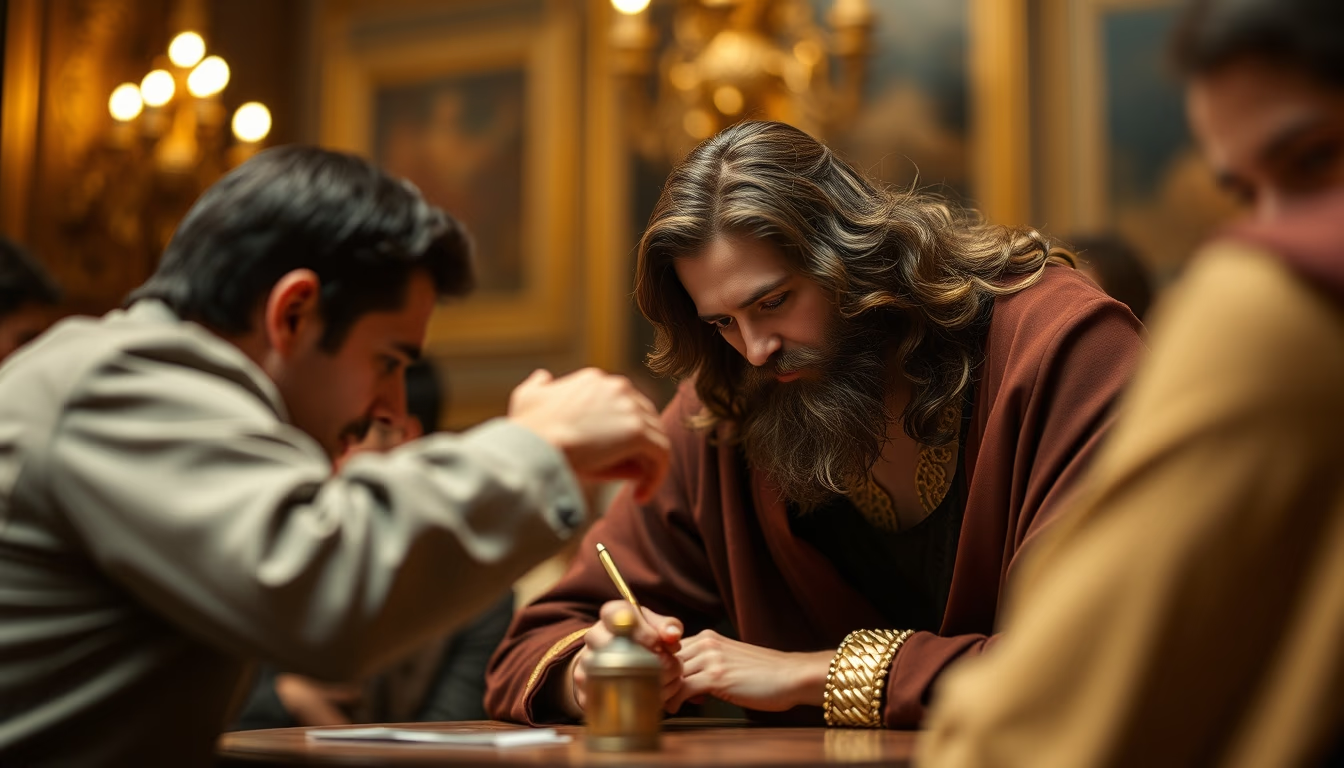
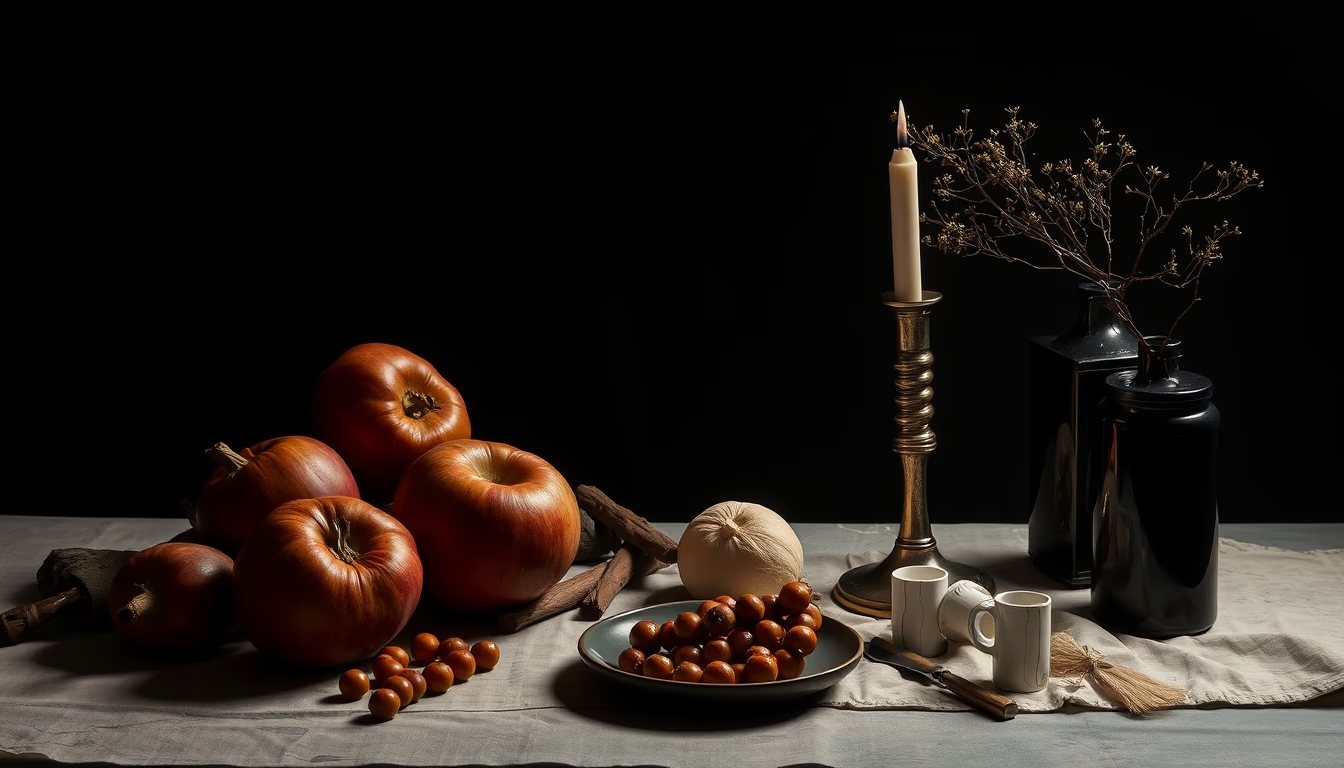
Caravaggio revolutionized Baroque painting with radical realism and dramatic chiaroscuro, creating scenes of intense emotion and theatricality.
About this subject
Michelangelo Merisi da Caravaggio, active between 1590 and 1610, transformed Baroque art by introducing stark realism and violent contrasts of light and shadow, a technique known as tenebrism. Unlike the Mannerists before him, Caravaggio painted ordinary people, dirty faces, aged bodies, as saints and martyrs, shocking contemporary audiences. His masterpiece "The Calling of Saint Matthew" exemplifies Baroque drama: a diagonal shaft of light cuts across the scene, highlighting gestures and expressions while the background remains submerged in darkness.
The artist avoided sketches and worked directly from live models, photographing reality with his brush. This naturalistic approach, combined with unstable compositions and diagonals, created tension that engaged the viewer. Paintings like "Judith Beheading Holofernes" show explicit violence, where every muscle and drop of blood is meticulously rendered, elevating human suffering into a sacred spectacle.
Though controversial and a fugitive from the law, Caravaggio influenced generations of artists, from Rembrandt to Velázquez, and his dramatic style became synonymous with the Baroque. His short career produced fewer than 80 works, but each is a study in contrasts: light that reveals and hides, beauty and ugliness, divine and human. Even today, "Caravaggism" remains a reference for those seeking impactful visual storytelling.
The tilt-shift technique, applied to miniature reproductions of his works, offers a new perspective, but the essence of Baroque drama remains: the struggle between light and darkness, the frozen instant of a story that echoes through the centuries.
Frequently Asked Questions
What characterizes Caravaggio's tenebrism?
Tenebrism is the extreme use of chiaroscuro, where dark backgrounds contrast with figures illuminated by a directional light source. Caravaggio used this technique to heighten drama and direct focus to gestures and emotions.
Why is Caravaggio considered a revolutionary painter?
He abandoned Renaissance idealism and portrayed biblical figures with brutal realism, using ordinary models and everyday scenes. This shocked the church but brought new emotional intensity to sacred art.
Which are the most iconic works of Caravaggio's Baroque drama?
Among them are 'The Calling of Saint Matthew', 'Judith Beheading Holofernes', 'The Entombment of Christ', and 'The Supper at Emmaus'. All exploit dramatic light and intense human expressions.
Direct URL
https://pub-c7d6a6ea828543ac903a74a341ccb2e1.r2.dev/imagens/baroque-drama-caravaggio-tilt-shift-miniature-fresh1.avifHow to credit
Include a visible link back to UtilizAí. Copy one of the snippets below:
<a href="https://xn--utiliza-eza.com/en/midia/imagens/baroque-drama-caravaggio-tilt-shift-miniature-fresh1">Baroque drama caravaggio</a> by <a href="https://xn--utiliza-eza.com">UtilizAí</a>, licensed under <a href="https://creativecommons.org/licenses/by/4.0/">CC BY 4.0</a>.
[Baroque drama caravaggio](https://xn--utiliza-eza.com/en/midia/imagens/baroque-drama-caravaggio-tilt-shift-miniature-fresh1) by [UtilizAí](https://xn--utiliza-eza.com), CC BY 4.0
License: CC-BY-4.0