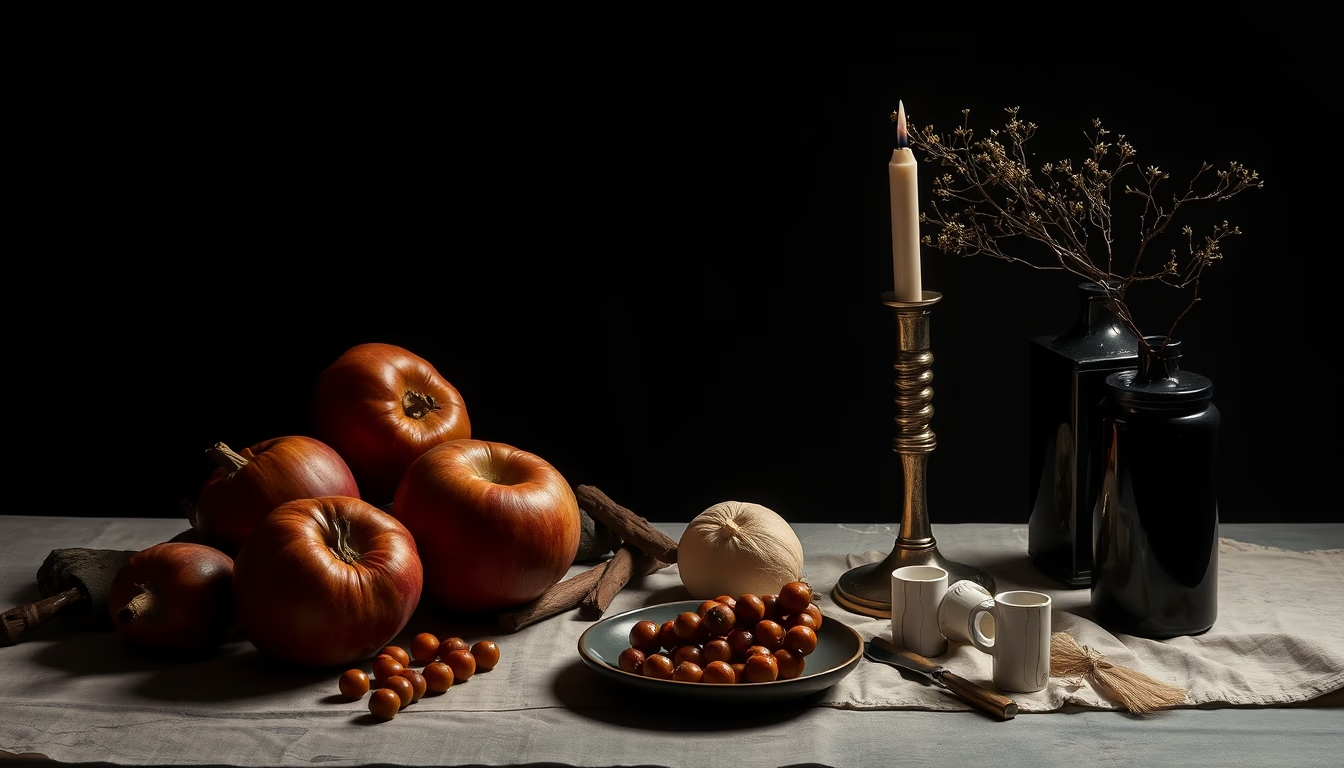
Baroque drama caravaggio
1344×768 · AVIF · CC BY 4.0
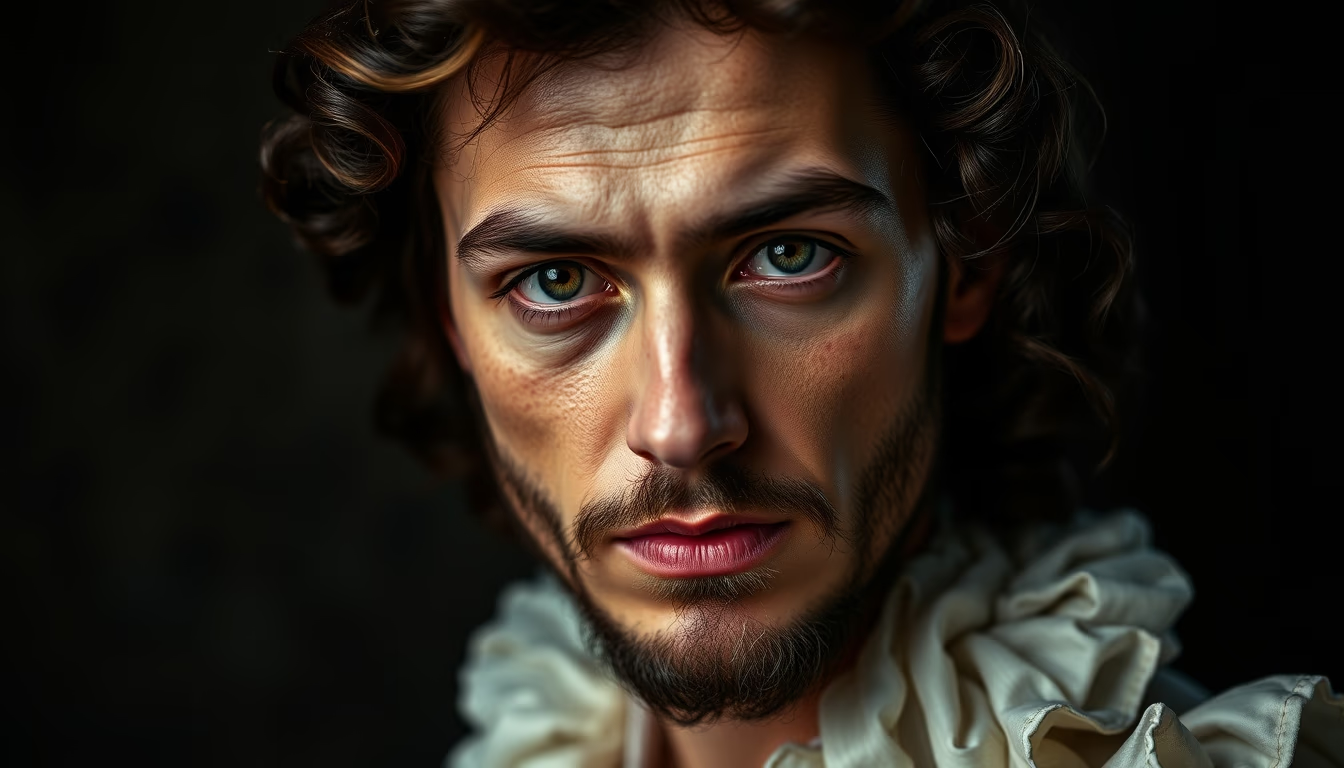
Caravaggio's Baroque drama revolutionized painting with light, shadow, and intense realism in the 17th century.
About this subject
Michelangelo Merisi da Caravaggio (1571-1610) transformed Baroque art by introducing stark realism and dramatic lighting known as tenebrism. Unlike Mannerists, he abandoned idealization, portraying biblical and mythological figures with common people's faces in dark settings illuminated by a focused directional light. This technique, an evolution of Renaissance chiaroscuro, created violent contrasts that heightened emotion and movement.
Works such as "The Calling of Saint Matthew" (1599-1600) exemplify his style: a diagonal light beam crosses the scene, highlighting Christ's finger and the surprised face of the tax collector. In "Judith Beheading Holofernes" (1598-1599), Caravaggio captures the exact moment of violence with grotesque facial expressions and spurting blood, shocking contemporary audiences. This visceral realism led some to accuse him of copying nature without idealization, yet it earned him powerful patrons.
Caravaggio's influence spread across Europe, inspiring the Caravaggisti like Artemisia Gentileschi and the Dutch Utrecht school. His use of chiaroscuro not only defined the Baroque but also anticipated film noir and expressionist photography. The drama in his compositions came not just from light but from psychological tension between characters and theatrical framing that froze biblical narratives in moments of peak intensity.
Interestingly, Caravaggio lived a tumultuous life, with records of brawls and even a homicide, echoing in his brutal portrayals. He died at 38, but his legacy endures in museums like the Galleria Borghese and the Contarelli Chapel. Understanding Caravaggio's Baroque drama is to delve into a visual revolution that questioned the boundaries between sacred and profane.
Frequently Asked Questions
What is Caravaggio's tenebrism?
Tenebrism is a painting style using extreme contrasts of light and shadow, with dark backgrounds and figures illuminated by a directional light source, creating a dramatic, theatrical effect. Caravaggio was its leading proponent in the Baroque.
Why are Caravaggio's works considered so dramatic?
They capture moments of high emotional tension, using strong light to highlight realistic facial expressions, gestures, and unstable compositions, often depicting scenes of violence or biblical miracles with brutal realism.
How did Caravaggio influence the Baroque movement?
He inspired a generation of artists in Italy and Northern Europe with his use of chiaroscuro and realism. Painters like Gentileschi, Rembrandt, and Georges de La Tour adopted similar techniques, spreading the style across the continent.
Direct URL
https://pub-c7d6a6ea828543ac903a74a341ccb2e1.r2.dev/imagens/baroque-drama-caravaggio-studio-editorial-portrait-fresh5.avifHow to credit
Include a visible link back to UtilizAí. Copy one of the snippets below:
<a href="https://xn--utiliza-eza.com/en/midia/imagens/baroque-drama-caravaggio-studio-editorial-portrait-fresh5">Baroque drama caravaggio</a> by <a href="https://xn--utiliza-eza.com">UtilizAí</a>, licensed under <a href="https://creativecommons.org/licenses/by/4.0/">CC BY 4.0</a>.
[Baroque drama caravaggio](https://xn--utiliza-eza.com/en/midia/imagens/baroque-drama-caravaggio-studio-editorial-portrait-fresh5) by [UtilizAí](https://xn--utiliza-eza.com), CC BY 4.0
License: CC-BY-4.0