Banker explaining interest rate to a client
1344×768 · AVIF · CC BY 4.0

A banker explains the Selic rate to a client in a late afternoon meeting, highlighting its impact on investments and the Brazilian economy.
About this subject
The Selic rate, officially known as the Special System for Settlement and Custody, is Brazil's benchmark interest rate. Set by the Monetary Policy Committee (Copom) of the Central Bank, it directly influences returns on investments such as CDBs, fixed-income funds, and government bonds. In a typical meeting, the banker details how the Selic affects credit costs and consumption, impacting everything from mortgage loans to supermarket prices. The rate is adjusted periodically to control inflation, following the government's inflation targeting regime. In 2023, for instance, the Selic reached 13.75% per year, one of the highest levels globally, reflecting a tight monetary policy to curb price increases. The client, often a retail investor, seeks to understand how these changes can optimize their portfolio. The banker may explain that with a high Selic, conservative investments like Tesouro Selic become attractive, while in a falling rate scenario, it is advisable to extend investment maturities to lock in higher yields. The conversation may also cover the relationship between the Selic and the exchange rate, as high interest rates attract foreign capital, strengthening the Brazilian real. This personalized guidance is crucial for financial planning, especially in a country with a history of economic instability. The late afternoon meeting suggests dedicated service, common in bank branches or financial consultancies that prioritize investor education.
Frequently Asked Questions
What is the Selic rate and how is it determined?
The Selic is Brazil's benchmark interest rate, set by the Central Bank's Monetary Policy Committee (Copom) every 45 days based on the inflation target.
How does the Selic affect fixed-income investments?
The Selic directly influences yields on instruments like CDBs, Tesouro Selic, and DI funds. When the Selic rises, these investments become more attractive; when it falls, returns decrease.
Why is the Selic important for controlling inflation?
A high Selic makes credit more expensive and reduces consumption, helping to curb inflation. The Copom adjusts the rate to keep inflation within the government's target range.
Direct URL
https://pub-c7d6a6ea828543ac903a74a341ccb2e1.r2.dev/imagens/banker-explaining-selic-rate-to-a-client-wide-late-afternoon-4.avifHow to credit
Include a visible link back to UtilizAí. Copy one of the snippets below:
<a href="https://xn--utiliza-eza.com/en/midia/imagens/banker-explaining-selic-rate-to-a-client-wide-late-afternoon-4">Banker explaining interest rate to a client</a> by <a href="https://xn--utiliza-eza.com">UtilizAí</a>, licensed under <a href="https://creativecommons.org/licenses/by/4.0/">CC BY 4.0</a>.
[Banker explaining interest rate to a client](https://xn--utiliza-eza.com/en/midia/imagens/banker-explaining-selic-rate-to-a-client-wide-late-afternoon-4) by [UtilizAí](https://xn--utiliza-eza.com), CC BY 4.0
License: CC-BY-4.0
Tags
Related images
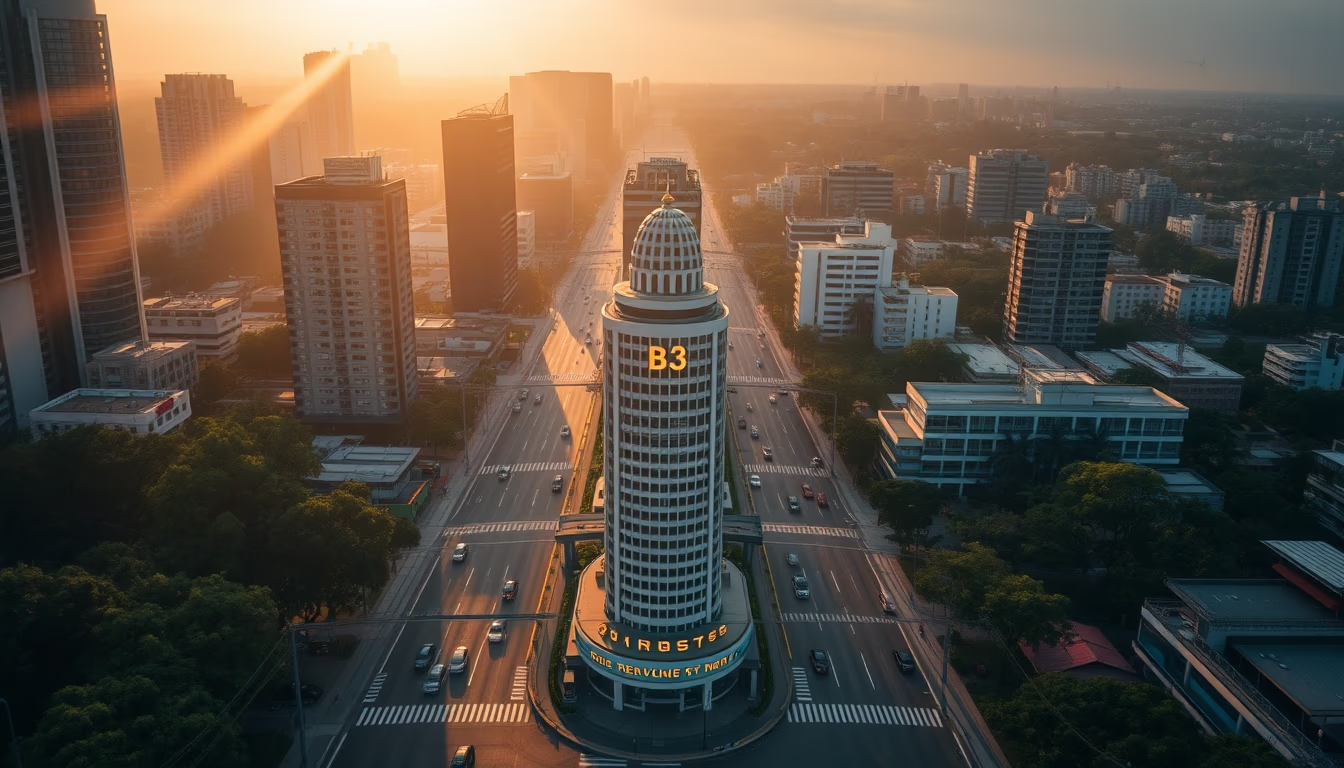 Aerial view of São Paulo financial district at golden hour with B3 building
 Aerial view of São Paulo financial district at golden hour with B3 building
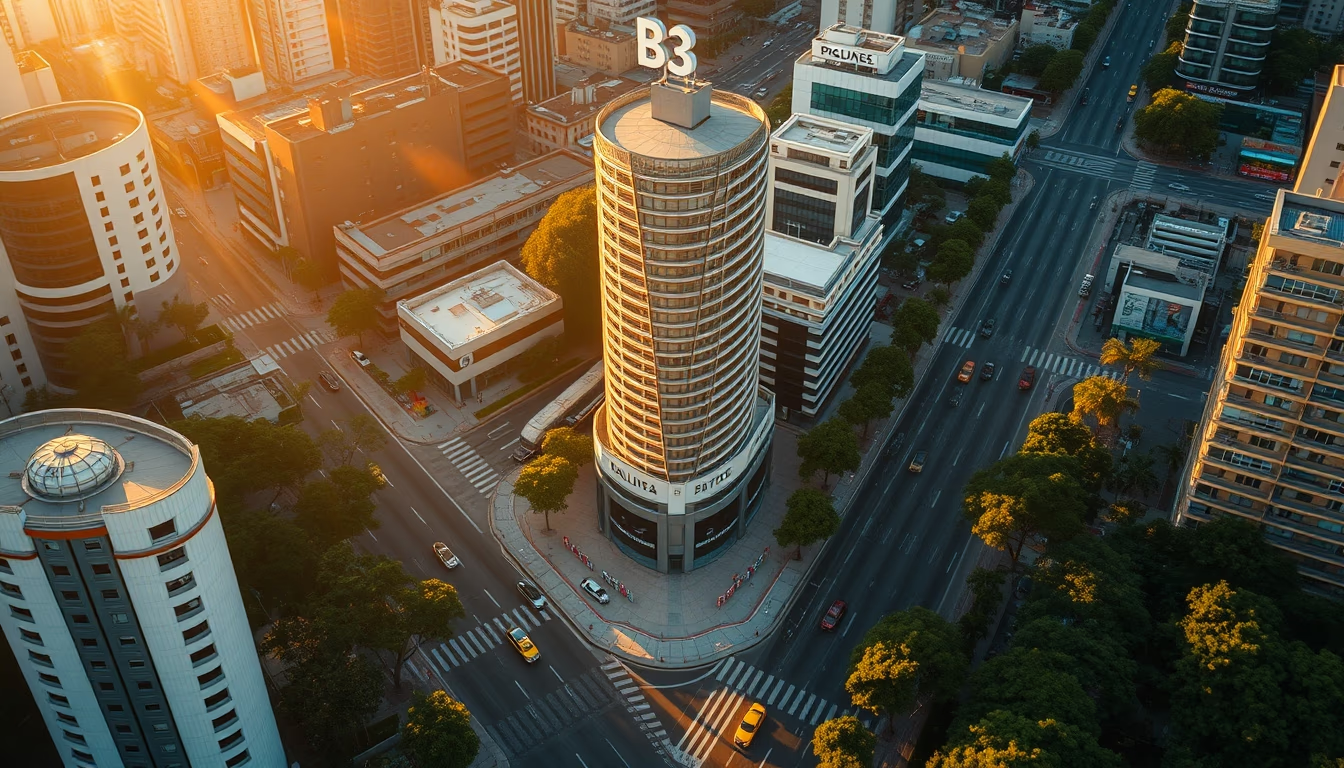 Aerial view of São Paulo financial district at golden hour with B3 building
 Aerial view of São Paulo financial district at golden hour with B3 building
 Aerial view of São Paulo financial district at golden hour with B3 building
 Aerial view of São Paulo financial district at golden hour with B3 building