Banker explaining interest rate to a client
1344×768 · AVIF · CC BY 4.0

A banker explains the Selic rate to a client, detailing its impact on investments and credit.
About this subject
The Selic rate is Brazil's benchmark interest rate, set by the Monetary Policy Committee (Copom) of the Central Bank. It directly influences credit costs, investment returns, and inflation control. When Copom raises the Selic, loan and financing rates tend to increase, while fixed-income investments like Tesouro Direto and CDBs become more attractive. Conversely, a Selic cut stimulates consumption and productive investment but reduces returns on conservative investments.
In 2023 and 2024, the Selic underwent a cutting cycle, dropping from 13.75% per year in August 2023 to 10.50% per year in May 2024, with expectations of further reductions. This movement directly impacts the stock market, as lower rates make equities more appealing relative to fixed income. For the average client, understanding the Selic is crucial for financial decisions such as choosing between savings accounts, CDBs, or investment funds.
A banker or investment advisor's explanation typically covers the link between the Selic and inflation, as the rate is the Central Bank's main tool to meet the inflation target. Historically, the Selic has peaked at 14.25% per year (2015) and bottomed at 2% per year (2020, during the pandemic), highlighting its volatility. For the client, grasping these cycles helps plan for the short and long term, whether for taking credit or investing.
Frequently Asked Questions
What is the Selic rate and how does it affect my investments?
The Selic is Brazil's benchmark interest rate. It influences the returns of fixed-income investments like CDBs and Tesouro Direto, as well as credit costs. When the Selic rises, conservative investments tend to yield more.
What is the relationship between the Selic and inflation?
The Central Bank uses the Selic to control inflation. If inflation is high, Copom may raise the Selic to cool the economy and reduce prices. If inflation is low, it may lower the Selic to stimulate economic activity.
How does the Selic impact the stock market?
Lower interest rates make equities more attractive, as the opportunity cost of fixed income decreases. High rates, on the other hand, can devalue stocks, as investors prefer the safety of fixed income.
Direct URL
https://pub-c7d6a6ea828543ac903a74a341ccb2e1.r2.dev/imagens/banker-explaining-selic-rate-to-a-client-wide-late-afternoon-3.avifHow to credit
Include a visible link back to UtilizAí. Copy one of the snippets below:
<a href="https://xn--utiliza-eza.com/en/midia/imagens/banker-explaining-selic-rate-to-a-client-wide-late-afternoon-3">Banker explaining interest rate to a client</a> by <a href="https://xn--utiliza-eza.com">UtilizAí</a>, licensed under <a href="https://creativecommons.org/licenses/by/4.0/">CC BY 4.0</a>.
[Banker explaining interest rate to a client](https://xn--utiliza-eza.com/en/midia/imagens/banker-explaining-selic-rate-to-a-client-wide-late-afternoon-3) by [UtilizAí](https://xn--utiliza-eza.com), CC BY 4.0
License: CC-BY-4.0
Tags
Related images
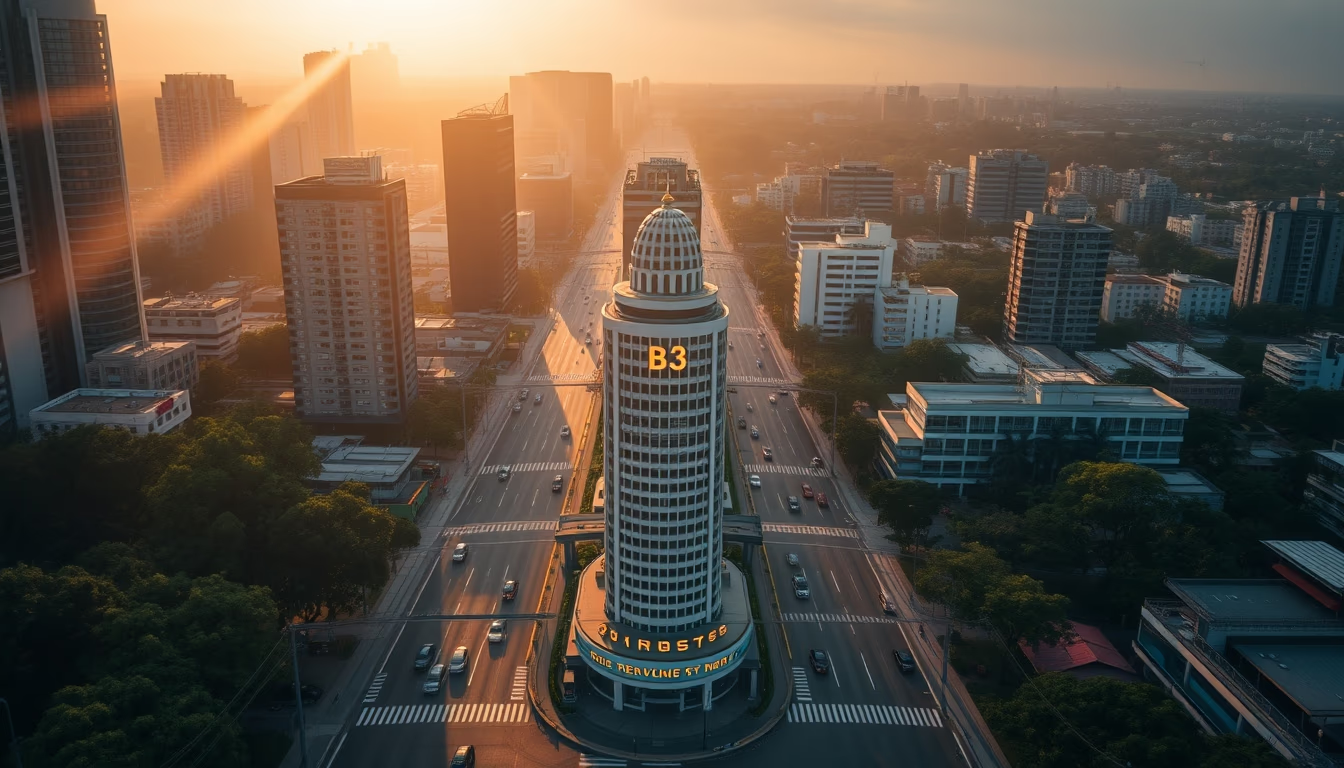 Aerial view of São Paulo financial district at golden hour with B3 building
 Aerial view of São Paulo financial district at golden hour with B3 building
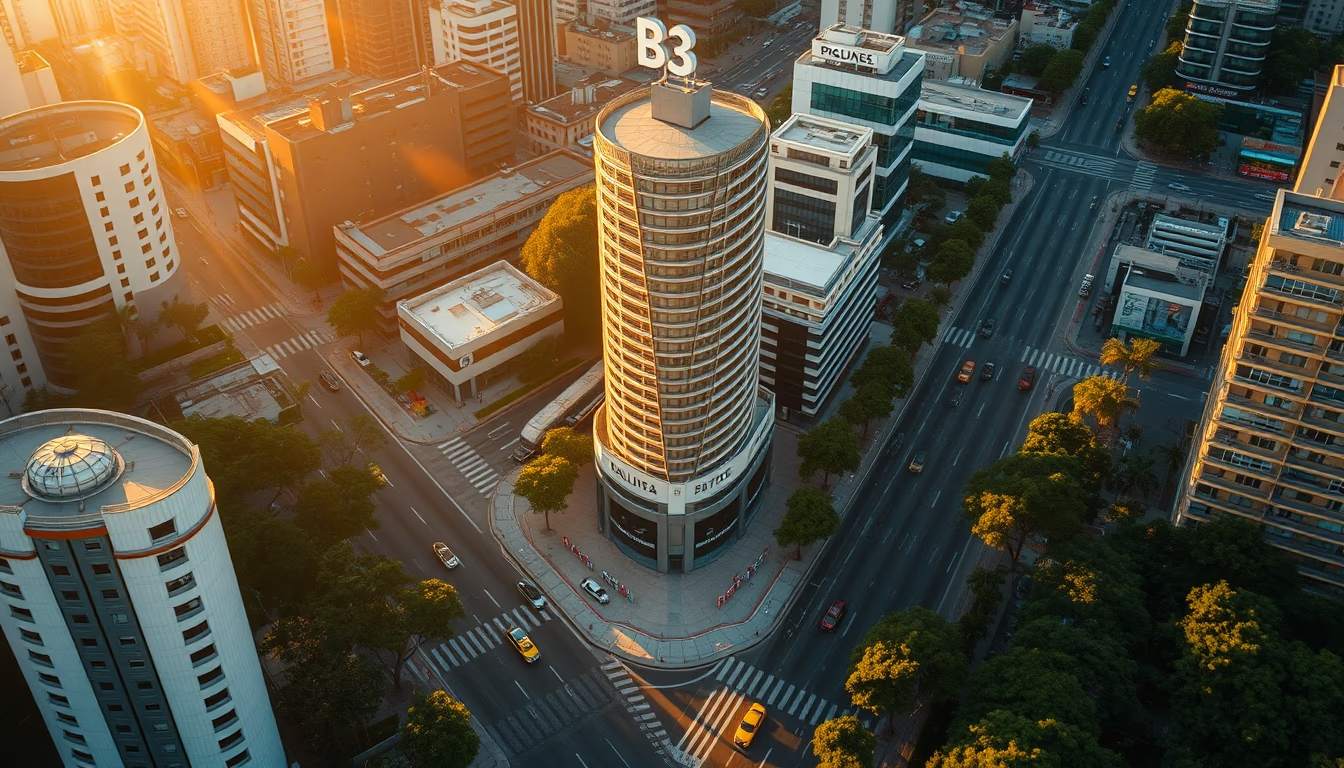 Aerial view of São Paulo financial district at golden hour with B3 building
 Aerial view of São Paulo financial district at golden hour with B3 building
 Aerial view of São Paulo financial district at golden hour with B3 building
 Aerial view of São Paulo financial district at golden hour with B3 building