Banker explaining interest rate to a client
1344×768 · AVIF · CC BY 4.0

A banker explains the Selic rate to a client, showing how monetary policy affects investments and credit costs in Brazil.
About this subject
The Selic rate is Brazil's benchmark interest rate, set by the Monetary Policy Committee (Copom) of the Central Bank. It influences all other interest rates in the country, from savings account yields to loan costs. When Copom raises the Selic, the goal is to curb inflation by making credit more expensive and discouraging consumption. Conversely, lowering it aims to stimulate the economy by cheapening loans and encouraging investments.
In the scene depicted, the banker is guiding the client on how Selic fluctuations affect fixed-income investments such as CDBs, government bonds (Tesouro Direto), and DI funds. For instance, with a high Selic, floating-rate securities tend to yield more, while fixed-rate bonds may lose value if the rate rises. The professional may also explain the impact on credit: loans and financing become costlier when the Selic increases, as banks pass on the higher cost to consumers.
The Selic is a key monetary policy tool in Brazil, closely monitored by investors, companies, and households. In 2024, the rate went through tightening and loosening cycles, reflecting inflationary pressures and economic expectations. Understanding this mechanism is essential for making more informed financial decisions, whether for investing money or taking on debt.
Frequently Asked Questions
What is the Selic rate?
The Selic rate is Brazil's benchmark interest rate, set by the Copom of the Central Bank. It serves as a reference for all other interest rates in the country.
How does the Selic affect my investments?
The Selic influences the return on fixed-income investments such as CDBs, government bonds, and DI funds. When the Selic rises, these investments tend to yield more, and when it falls, they yield less.
Why does the Central Bank change the Selic?
The Central Bank changes the Selic to control inflation and stimulate or cool down the economy. Increases in the Selic combat inflation, while reductions stimulate economic growth.
Direct URL
https://pub-c7d6a6ea828543ac903a74a341ccb2e1.r2.dev/imagens/banker-explaining-selic-rate-to-a-client-wide-late-afternoon.avifHow to credit
Include a visible link back to UtilizAí. Copy one of the snippets below:
<a href="https://xn--utiliza-eza.com/en/midia/imagens/banker-explaining-selic-rate-to-a-client-wide-late-afternoon">Banker explaining interest rate to a client</a> by <a href="https://xn--utiliza-eza.com">UtilizAí</a>, licensed under <a href="https://creativecommons.org/licenses/by/4.0/">CC BY 4.0</a>.
[Banker explaining interest rate to a client](https://xn--utiliza-eza.com/en/midia/imagens/banker-explaining-selic-rate-to-a-client-wide-late-afternoon) by [UtilizAí](https://xn--utiliza-eza.com), CC BY 4.0
License: CC-BY-4.0
Tags
Related images
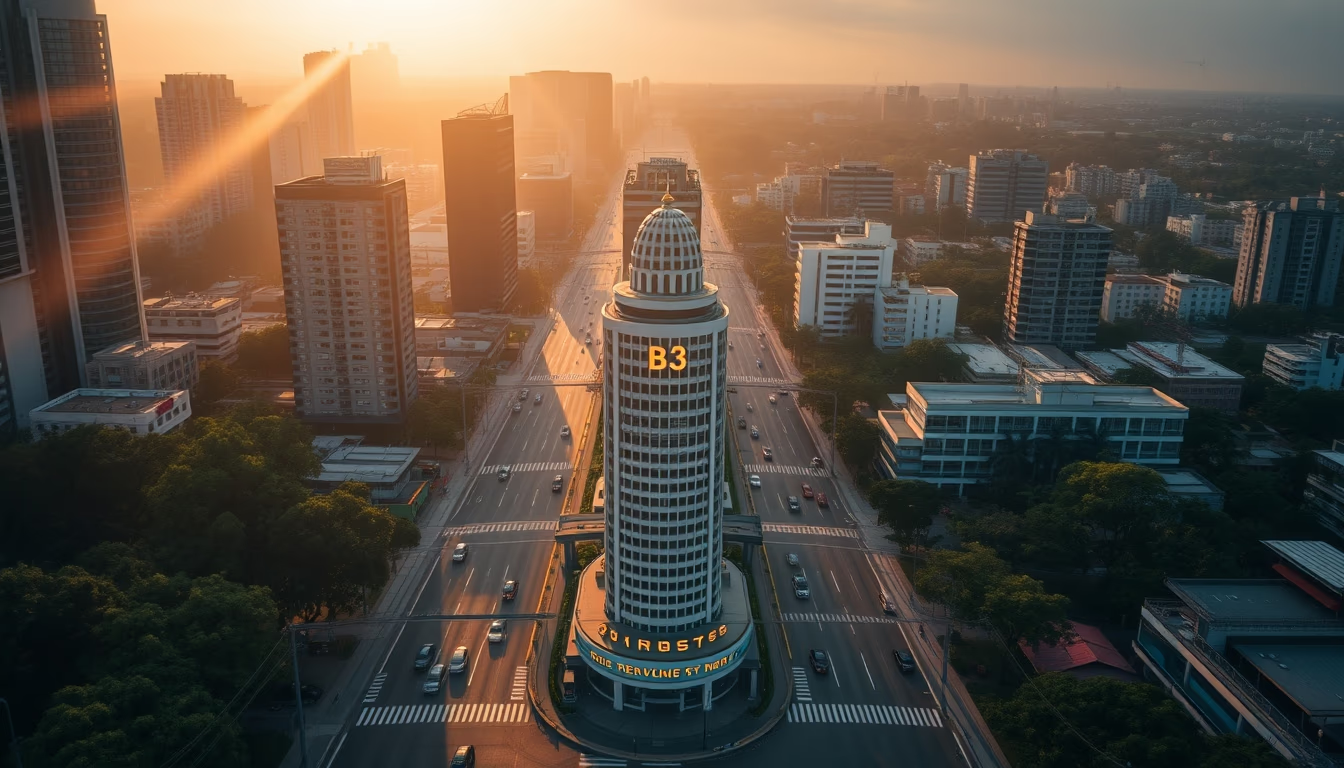 Aerial view of São Paulo financial district at golden hour with B3 building
 Aerial view of São Paulo financial district at golden hour with B3 building
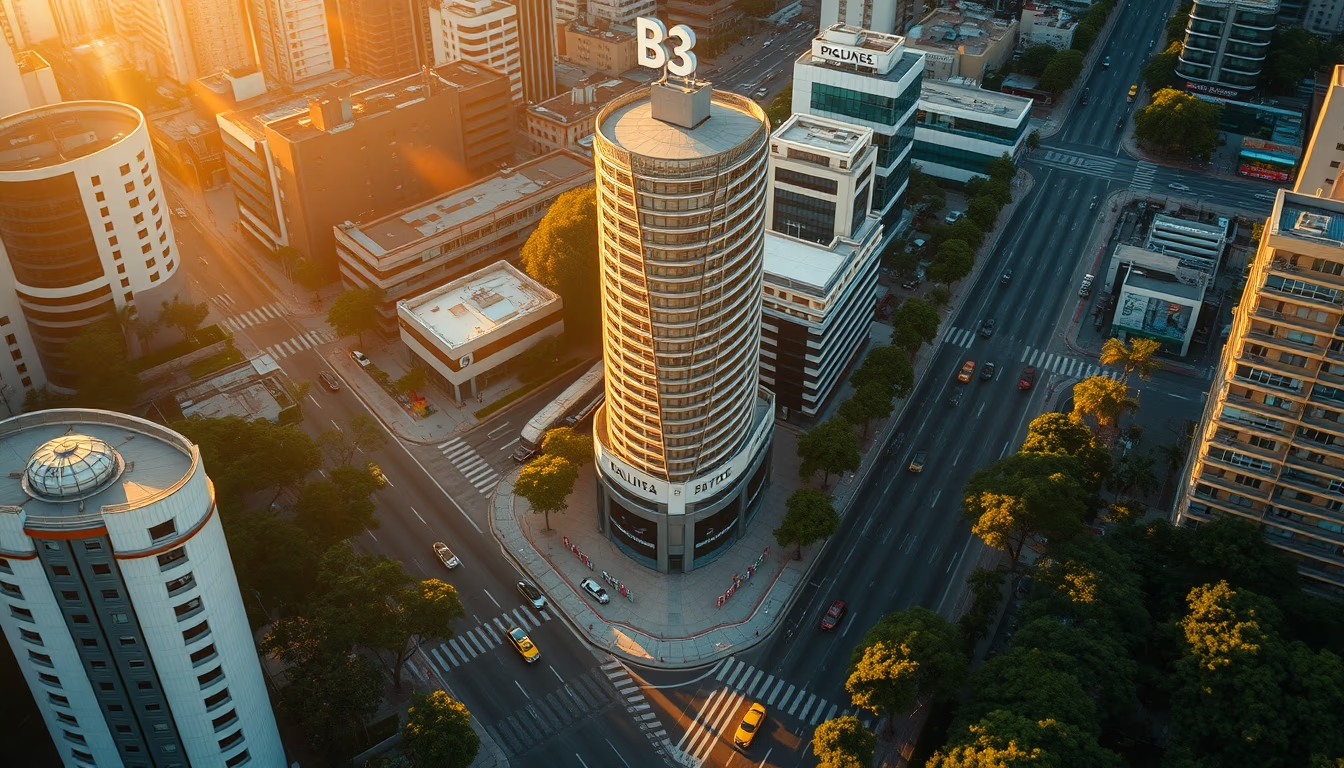 Aerial view of São Paulo financial district at golden hour with B3 building
 Aerial view of São Paulo financial district at golden hour with B3 building
 Aerial view of São Paulo financial district at golden hour with B3 building
 Aerial view of São Paulo financial district at golden hour with B3 building