Banker explaining interest rate to a client
1344×768 · AVIF · CC BY 4.0

Understand how the Selic rate works and its impact on investments and the Brazilian economy.
About this subject
The Selic rate is Brazil's benchmark interest rate, set by the Monetary Policy Committee (Copom) of the Central Bank. It directly influences credit costs, consumption, and inflation. When Copom raises the Selic, loan and financing interest rates increase, discouraging consumption and controlling inflation. Conversely, a lower Selic rate makes credit cheaper and stimulates economic activity.
For investors, the Selic is a critical reference. Fixed-income securities such as Tesouro Selic (LFT) track this rate, offering safety and liquidity. In rising Selic scenarios, these investments become more attractive, while in falling ones, investors may seek alternatives like stocks or real estate funds. The rate also impacts savings account yields, which earn 70% of the Selic when it is below 8.5% per year, or 0.5% per month when above.
Historically, Brazil has seen very high Selic rates, such as in 2015-2016, when it reached 14.25% per year to curb inflation. In 2020, during the pandemic, it was reduced to 2% per year, the lowest on record, to stimulate the economy. The current rate (2024) is around 13.75% per year, reflecting the Central Bank's efforts to control post-pandemic inflation. Copom's decisions are closely monitored by analysts and investors as they signal economic expectations for the coming months.
Frequently Asked Questions
What is the Selic rate and who sets it?
The Selic is Brazil's benchmark interest rate, set by the Monetary Policy Committee (Copom) of the Central Bank every 45 days.
How does Selic variation affect my investments?
The Selic impacts the profitability of fixed-income investments like Tesouro Selic and post-fixed CDBs, which track the rate. When it rises, these investments yield more; when it falls, they become less attractive.
What is the relationship between Selic and inflation?
The Central Bank uses the Selic to control inflation: when inflation rises, it increases the Selic to discourage consumption; when it falls, it reduces the rate to stimulate the economy.
Direct URL
https://pub-c7d6a6ea828543ac903a74a341ccb2e1.r2.dev/imagens/banker-explaining-selic-rate-to-a-client-symmetric-bright-midday-4.avifHow to credit
Include a visible link back to UtilizAí. Copy one of the snippets below:
<a href="https://xn--utiliza-eza.com/en/midia/imagens/banker-explaining-selic-rate-to-a-client-symmetric-bright-midday-4">Banker explaining interest rate to a client</a> by <a href="https://xn--utiliza-eza.com">UtilizAí</a>, licensed under <a href="https://creativecommons.org/licenses/by/4.0/">CC BY 4.0</a>.
[Banker explaining interest rate to a client](https://xn--utiliza-eza.com/en/midia/imagens/banker-explaining-selic-rate-to-a-client-symmetric-bright-midday-4) by [UtilizAí](https://xn--utiliza-eza.com), CC BY 4.0
License: CC-BY-4.0
Tags
Related images
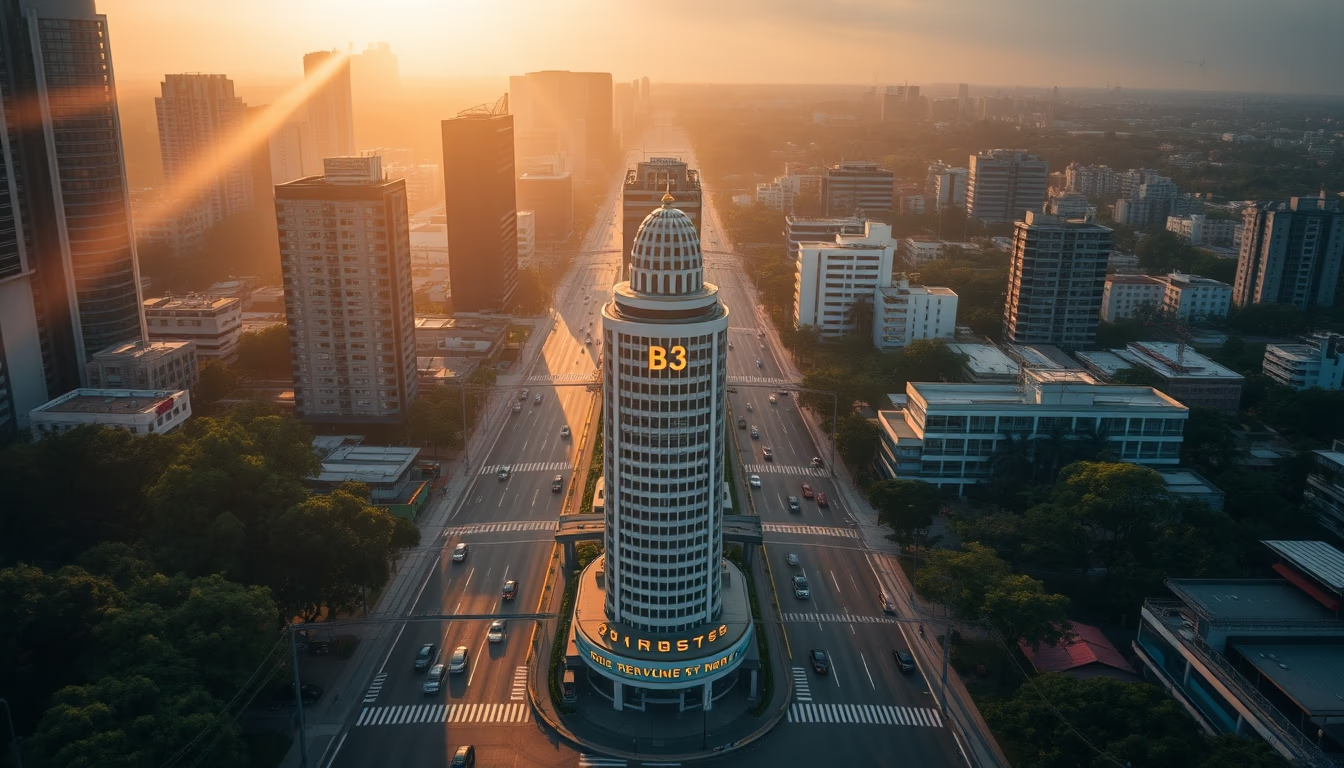 Aerial view of São Paulo financial district at golden hour with B3 building
 Aerial view of São Paulo financial district at golden hour with B3 building
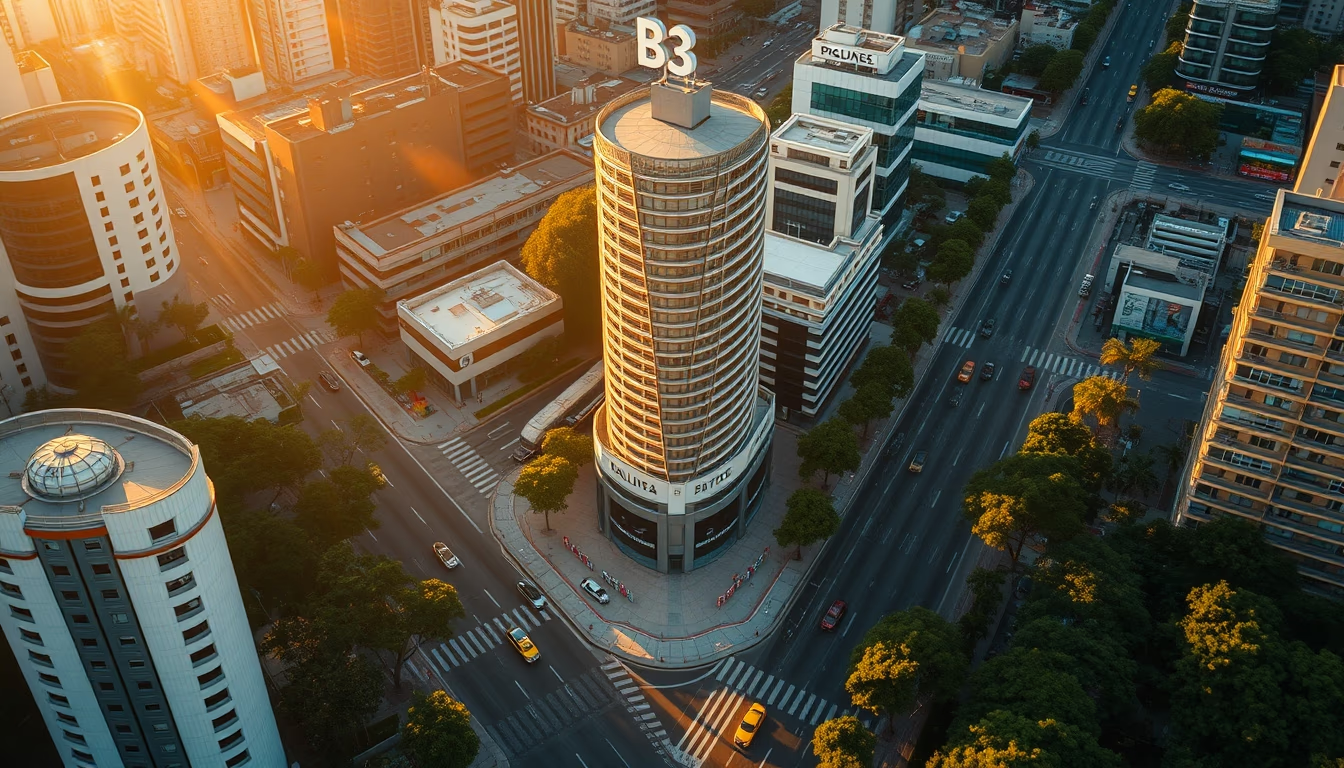 Aerial view of São Paulo financial district at golden hour with B3 building
 Aerial view of São Paulo financial district at golden hour with B3 building
 Aerial view of São Paulo financial district at golden hour with B3 building
 Aerial view of São Paulo financial district at golden hour with B3 building