Banker explaining interest rate to a client
1344×768 · AVIF · CC BY 4.0

A banker explains the Selic rate to a client in a bright office, highlighting its impact on investments and the Brazilian economy.
About this subject
The Selic rate, set by the Monetary Policy Committee (Copom) of the Central Bank of Brazil, is the benchmark interest rate of the Brazilian economy. It directly influences the cost of credit, the yield of financial investments, and inflation control. When Copom raises the Selic, the goal is to curb inflation by making credit more expensive and discouraging consumption. Conversely, a reduction in the Selic stimulates the economy by cheapening loans and encouraging investments.
In the context of the financial market, the Selic serves as a reference for the yield of government bonds, such as Tesouro Selic, and also impacts the profitability of investment funds, CDBs, and other fixed-income instruments. For individual investors, understanding the Selic is essential for making decisions on where to allocate resources, especially during periods of economic volatility.
Historically, the Selic has reached high levels, such as in 2015 and 2016, when it exceeded 14% per year, and has also gone through periods of historic lows, such as in 2020, when it was reduced to 2% per year during the pandemic. These variations reflect the country's macroeconomic conditions and the Central Bank's strategies to maintain price stability.
The image portrays a banking professional explaining these concepts to a client, in an environment that suggests trust and transparency. The scene is common in bank branches or investment advisory offices, where financial education is a fundamental part of the service.
Frequently Asked Questions
What is the Selic rate and how does it affect my investments?
The Selic rate is Brazil's benchmark interest rate. It influences the yield of fixed-income investments such as Tesouro Selic, CDBs, and DI funds. When the Selic rises, these investments tend to yield more; when it falls, the yield decreases.
Who sets the Selic rate and how often?
The Selic rate is set by the Monetary Policy Committee (Copom) of the Central Bank of Brazil, which meets every 45 days to assess the economy and decide whether to maintain, raise, or lower the rate.
Why is the Selic important for inflation control?
The Selic is the Central Bank's main tool for controlling inflation. By raising the rate, credit becomes more expensive, reducing consumption and demand, which helps curb price increases. Lowering the Selic has the opposite effect.
Direct URL
https://pub-c7d6a6ea828543ac903a74a341ccb2e1.r2.dev/imagens/banker-explaining-selic-rate-to-a-client-symmetric-bright-midday-2.avifHow to credit
Include a visible link back to UtilizAí. Copy one of the snippets below:
<a href="https://xn--utiliza-eza.com/en/midia/imagens/banker-explaining-selic-rate-to-a-client-symmetric-bright-midday-2">Banker explaining interest rate to a client</a> by <a href="https://xn--utiliza-eza.com">UtilizAí</a>, licensed under <a href="https://creativecommons.org/licenses/by/4.0/">CC BY 4.0</a>.
[Banker explaining interest rate to a client](https://xn--utiliza-eza.com/en/midia/imagens/banker-explaining-selic-rate-to-a-client-symmetric-bright-midday-2) by [UtilizAí](https://xn--utiliza-eza.com), CC BY 4.0
License: CC-BY-4.0
Tags
Related images
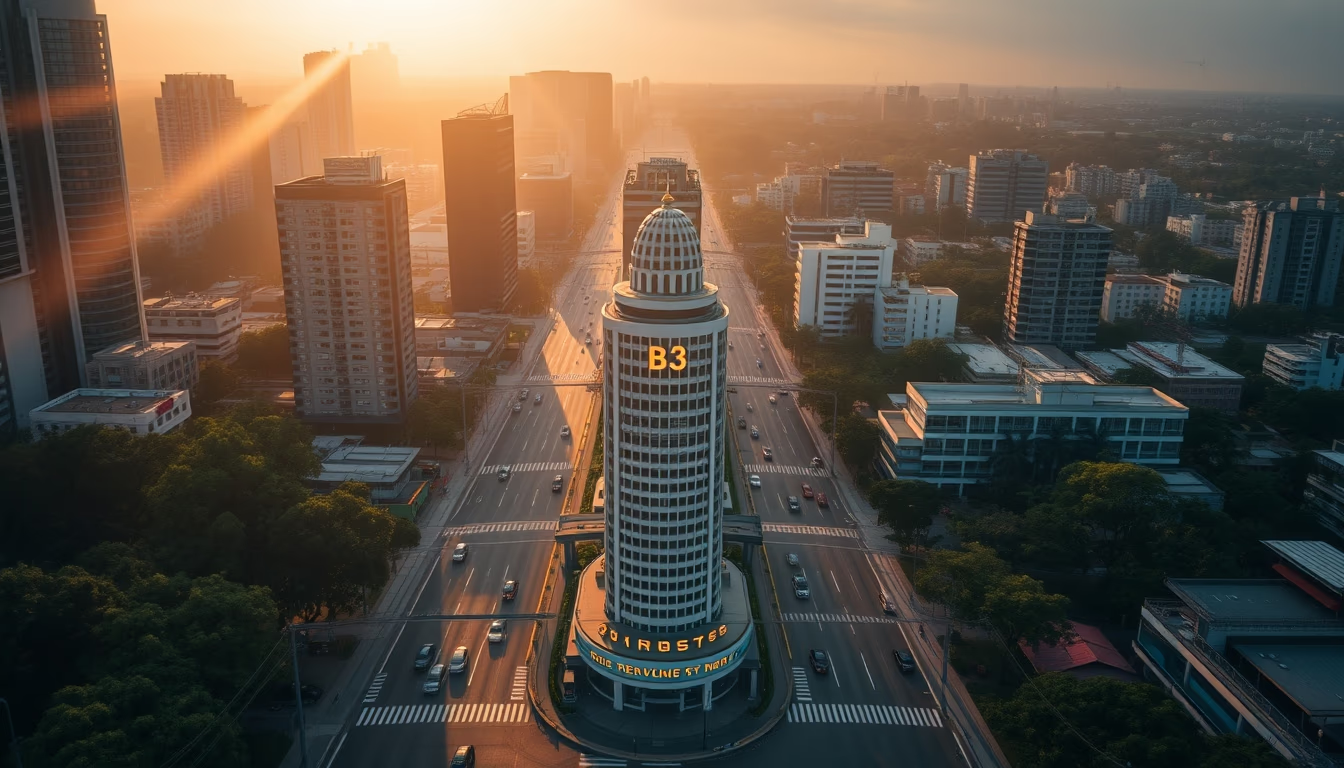 Aerial view of São Paulo financial district at golden hour with B3 building
 Aerial view of São Paulo financial district at golden hour with B3 building
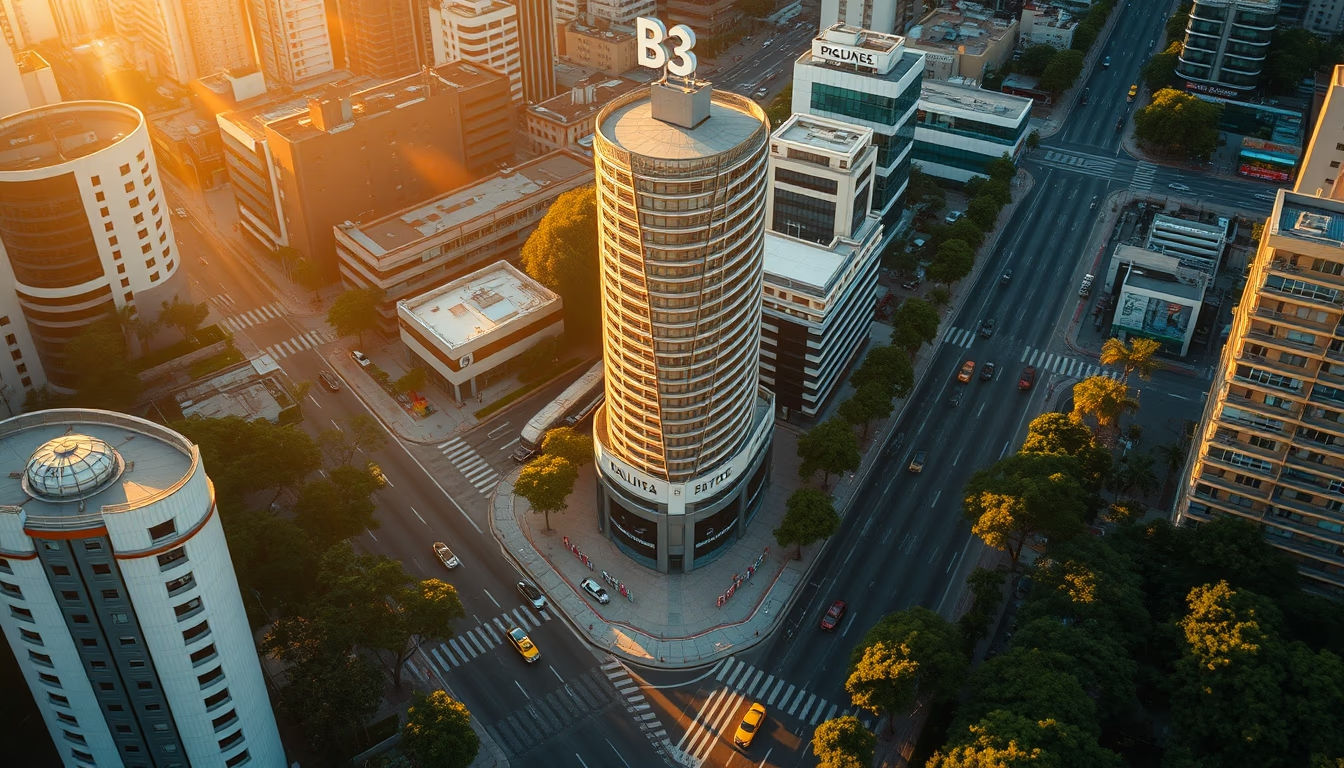 Aerial view of São Paulo financial district at golden hour with B3 building
 Aerial view of São Paulo financial district at golden hour with B3 building
 Aerial view of São Paulo financial district at golden hour with B3 building
 Aerial view of São Paulo financial district at golden hour with B3 building