Banker explaining interest rate to a client
1344×768 · AVIF · CC BY 4.0

The Selic rate is Brazil's key monetary policy tool, influencing interest rates, inflation, and investments.
About this subject
The Selic rate, set by the Monetary Policy Committee (Copom) of the Central Bank of Brazil, is the benchmark interest rate for the Brazilian economy. It serves as a reference for all other interest rates in the country, from bank loans to fixed-income investment returns. When Copom raises the Selic, the goal is to curb inflation, as higher interest rates make credit more expensive and discourage consumption. Conversely, by lowering the Selic, the Central Bank aims to stimulate economic activity, making credit cheaper and encouraging investments.
Copom meetings occur every 45 days, and the decision on the Selic is closely watched by investors, economists, and the general public. The current rate (2025) reflects the Central Bank's effort to balance inflation and growth amid fiscal and external challenges. Historically, the Selic has peaked at over 14% per year during inflationary crises, such as in 2015-2016, and reached an all-time low of 2% per year during the COVID-19 pandemic, when economic stimulus was needed.
For investors, understanding the Selic is essential for making financial decisions. Products like Tesouro Selic, post-fixed CDBs, and DI funds have their returns tied to the benchmark rate. Moreover, the Selic directly impacts the cost of mortgages, car loans, and even credit card revolving credit. Therefore, bankers and financial advisors often explain to clients how Selic fluctuations affect their finances, whether in savings returns or loan installments.
Fun fact: the name Selic comes from the Special System for Settlement and Custody, the system where federal government bonds are traded. The Selic rate is the weighted average of overnight financing operations in this system, representing an effective annual rate. Following Selic projections is a common practice among analysts, who use indicators like the Focus Bulletin to anticipate Copom decisions.
Frequently Asked Questions
What is the Selic rate and how does it work?
The Selic rate is Brazil's benchmark interest rate, set by Copom. It influences all other interest rates and is used to control inflation and stimulate economic growth.
How does the Selic affect investments?
Fixed-income investments like Tesouro Selic and post-fixed CDBs have returns tied to the Selic. When the Selic rises, these investments yield more; when it falls, they yield less.
What is the relationship between the Selic and inflation?
Copom raises the Selic to curb inflation, as higher interest rates reduce consumption and demand. It lowers the Selic to stimulate the economy when inflation is low.
Direct URL
https://pub-c7d6a6ea828543ac903a74a341ccb2e1.r2.dev/imagens/banker-explaining-selic-rate-to-a-client-editorial-overcast-daytime-5.avifHow to credit
Include a visible link back to UtilizAí. Copy one of the snippets below:
<a href="https://xn--utiliza-eza.com/en/midia/imagens/banker-explaining-selic-rate-to-a-client-editorial-overcast-daytime-5">Banker explaining interest rate to a client</a> by <a href="https://xn--utiliza-eza.com">UtilizAí</a>, licensed under <a href="https://creativecommons.org/licenses/by/4.0/">CC BY 4.0</a>.
[Banker explaining interest rate to a client](https://xn--utiliza-eza.com/en/midia/imagens/banker-explaining-selic-rate-to-a-client-editorial-overcast-daytime-5) by [UtilizAí](https://xn--utiliza-eza.com), CC BY 4.0
License: CC-BY-4.0
Tags
Related images
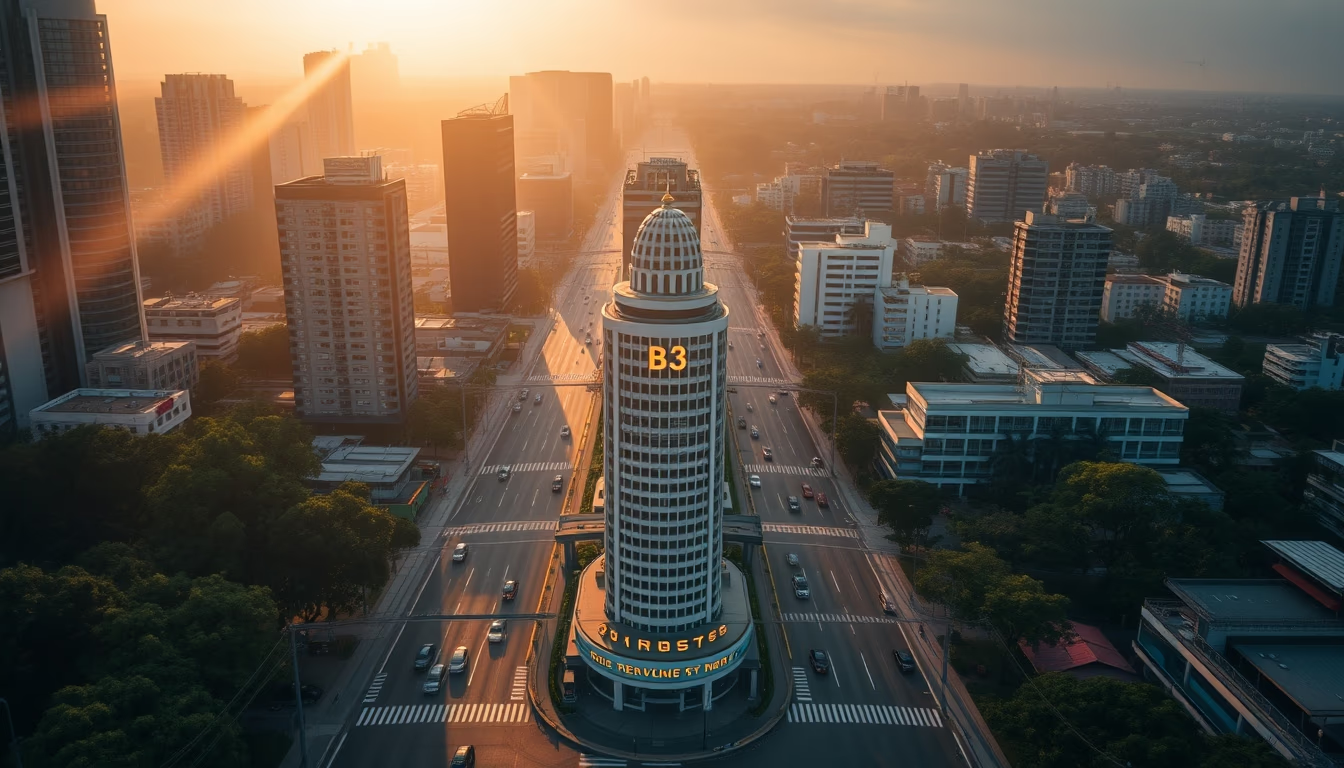 Aerial view of São Paulo financial district at golden hour with B3 building
 Aerial view of São Paulo financial district at golden hour with B3 building
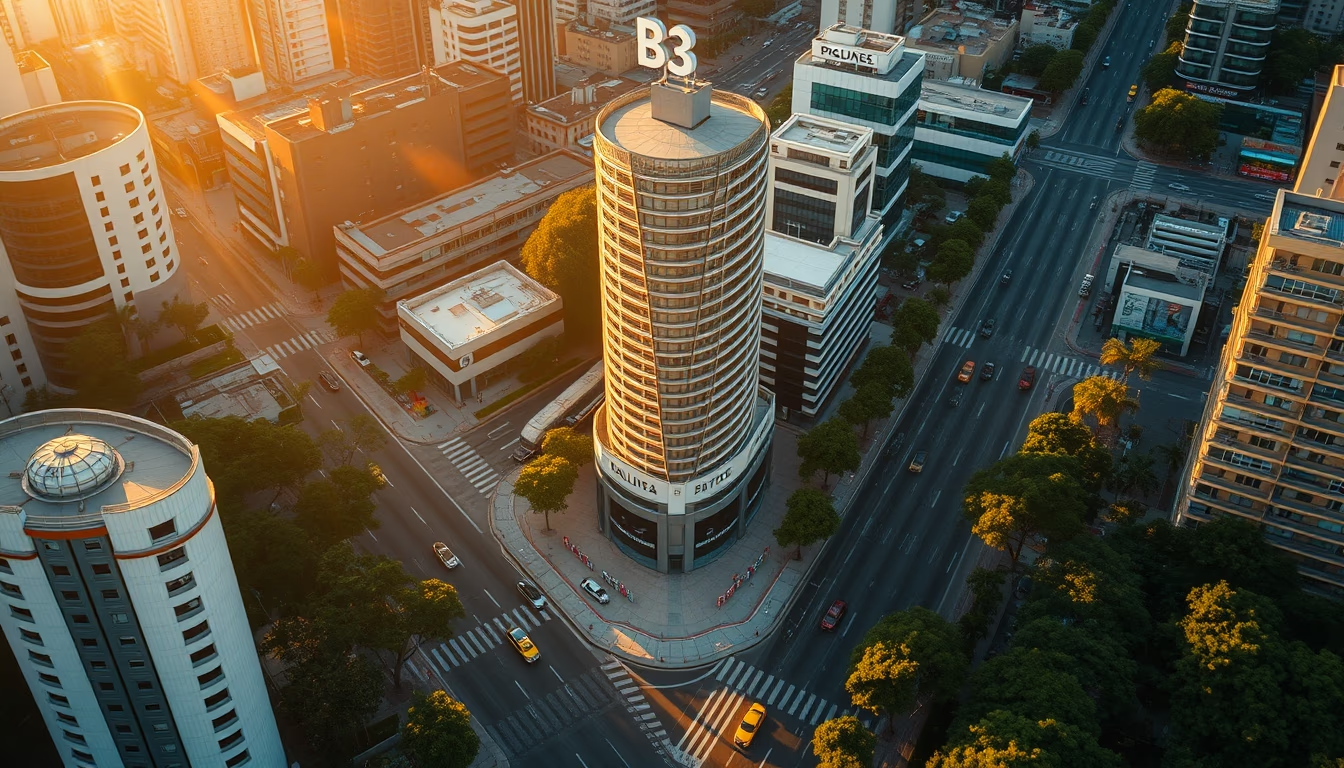 Aerial view of São Paulo financial district at golden hour with B3 building
 Aerial view of São Paulo financial district at golden hour with B3 building
 Aerial view of São Paulo financial district at golden hour with B3 building
 Aerial view of São Paulo financial district at golden hour with B3 building