Banker explaining interest rate to a client
1344×768 · AVIF · CC BY 4.0

Understand how the Selic rate affects your investments with a banker explaining it to a client.
About this subject
The Selic rate, an acronym for Special System for Settlement and Custody, is Brazil's benchmark interest rate. Set by the Monetary Policy Committee (Copom) of the Central Bank, it directly influences the cost of credit and the return on financial investments. When Copom raises the Selic, loan and financing interest rates tend to increase, while fixed-income investments such as Treasury bonds and bank certificates of deposit (CDBs) become more attractive. Conversely, a low Selic rate stimulates consumption and productive investment but reduces the profitability of savings accounts and post-fixed securities.
In Brazil, the Selic is one of the main tools for controlling inflation. In high inflation scenarios, the Central Bank raises the rate to curb consumption and prevent economic overheating. During recessions, the tendency is to lower the Selic to make credit cheaper and encourage recovery. For example, during the COVID-19 pandemic, the Selic hit a historic low of 2% per year, but later rose to combat inflation, reaching 13.75% in 2023.
For investors, understanding the Selic is essential for building a portfolio aligned with their goals. Investments tied to the Selic, such as DI funds and post-fixed bonds, benefit from high rates. In periods of decline, pre-fixed or inflation-linked assets may be more advantageous. A banker's explanation helps clients navigate these variables, considering their risk profile and investment horizon. This dialogue between professional and client is common in bank branches and financial advisory offices, especially during periods of economic volatility.
Interestingly, the Selic gets its name from being the rate used in very short-term operations in the interbank market. It serves as a reference for all other interest rates in the country, from overdraft fees to investment fund returns. Therefore, following Copom meetings and Selic variations is crucial for making more informed financial decisions.
Frequently Asked Questions
What is the Selic rate and who sets it?
The Selic rate is Brazil's benchmark interest rate, set by the Monetary Policy Committee (Copom) of the Central Bank every 45 days.
How does the Selic affect my investments?
The Selic directly impacts fixed-income investment returns. When it rises, post-fixed bonds and DI funds yield more. When it falls, pre-fixed or inflation-linked investments may be better.
What is the relationship between Selic and inflation?
Copom uses the Selic to control inflation: raising the rate to curb consumption and lowering it to stimulate the economy. A high Selic makes credit more expensive and slows inflation.
Direct URL
https://pub-c7d6a6ea828543ac903a74a341ccb2e1.r2.dev/imagens/banker-explaining-selic-rate-to-a-client-closeup-twilight-5.avifHow to credit
Include a visible link back to UtilizAí. Copy one of the snippets below:
<a href="https://xn--utiliza-eza.com/en/midia/imagens/banker-explaining-selic-rate-to-a-client-closeup-twilight-5">Banker explaining interest rate to a client</a> by <a href="https://xn--utiliza-eza.com">UtilizAí</a>, licensed under <a href="https://creativecommons.org/licenses/by/4.0/">CC BY 4.0</a>.
[Banker explaining interest rate to a client](https://xn--utiliza-eza.com/en/midia/imagens/banker-explaining-selic-rate-to-a-client-closeup-twilight-5) by [UtilizAí](https://xn--utiliza-eza.com), CC BY 4.0
License: CC-BY-4.0
Tags
Related images
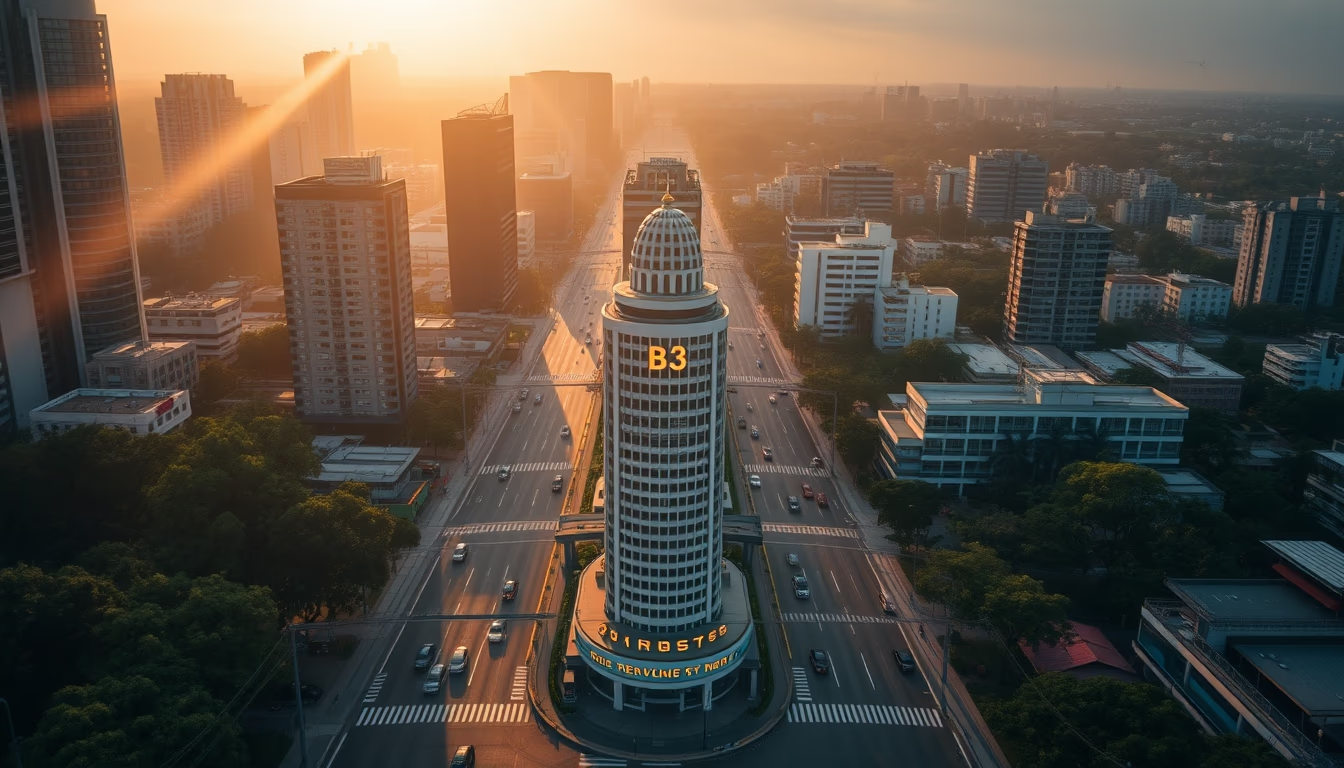 Aerial view of São Paulo financial district at golden hour with B3 building
 Aerial view of São Paulo financial district at golden hour with B3 building
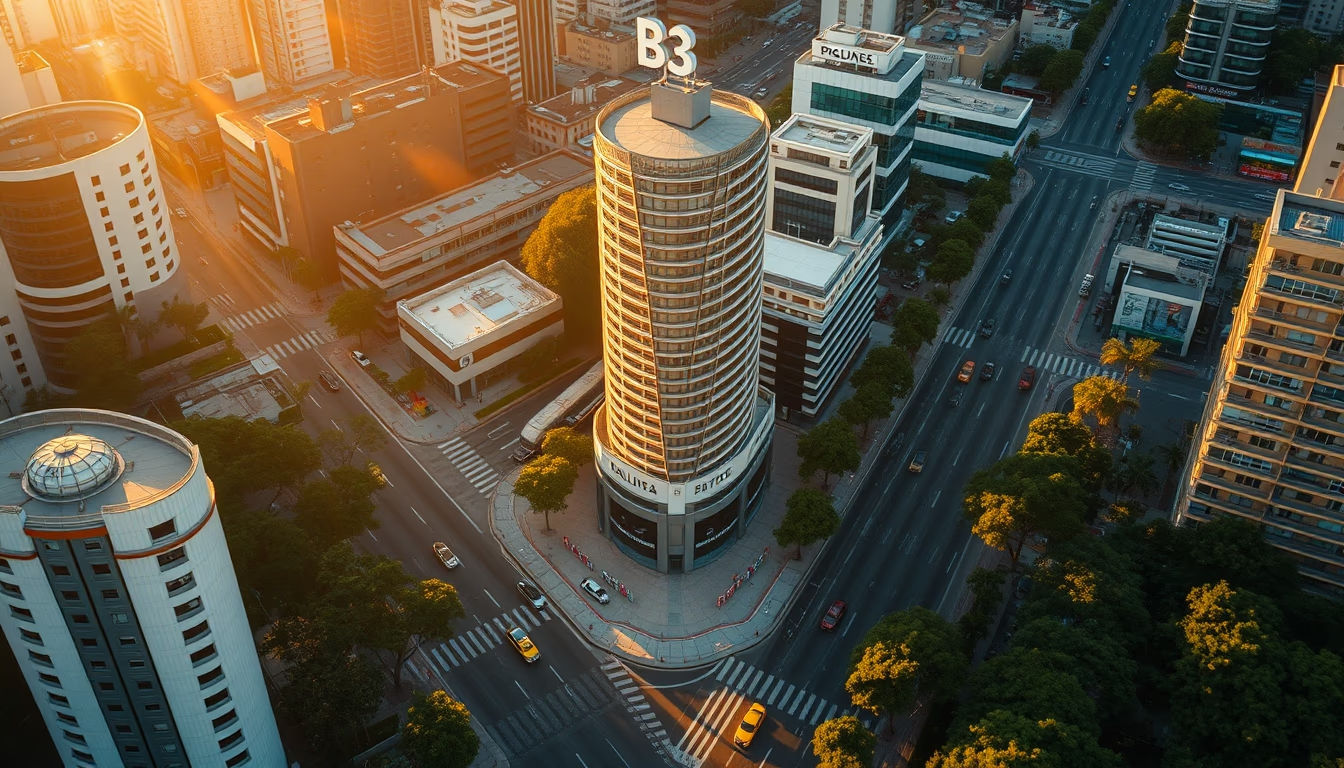 Aerial view of São Paulo financial district at golden hour with B3 building
 Aerial view of São Paulo financial district at golden hour with B3 building
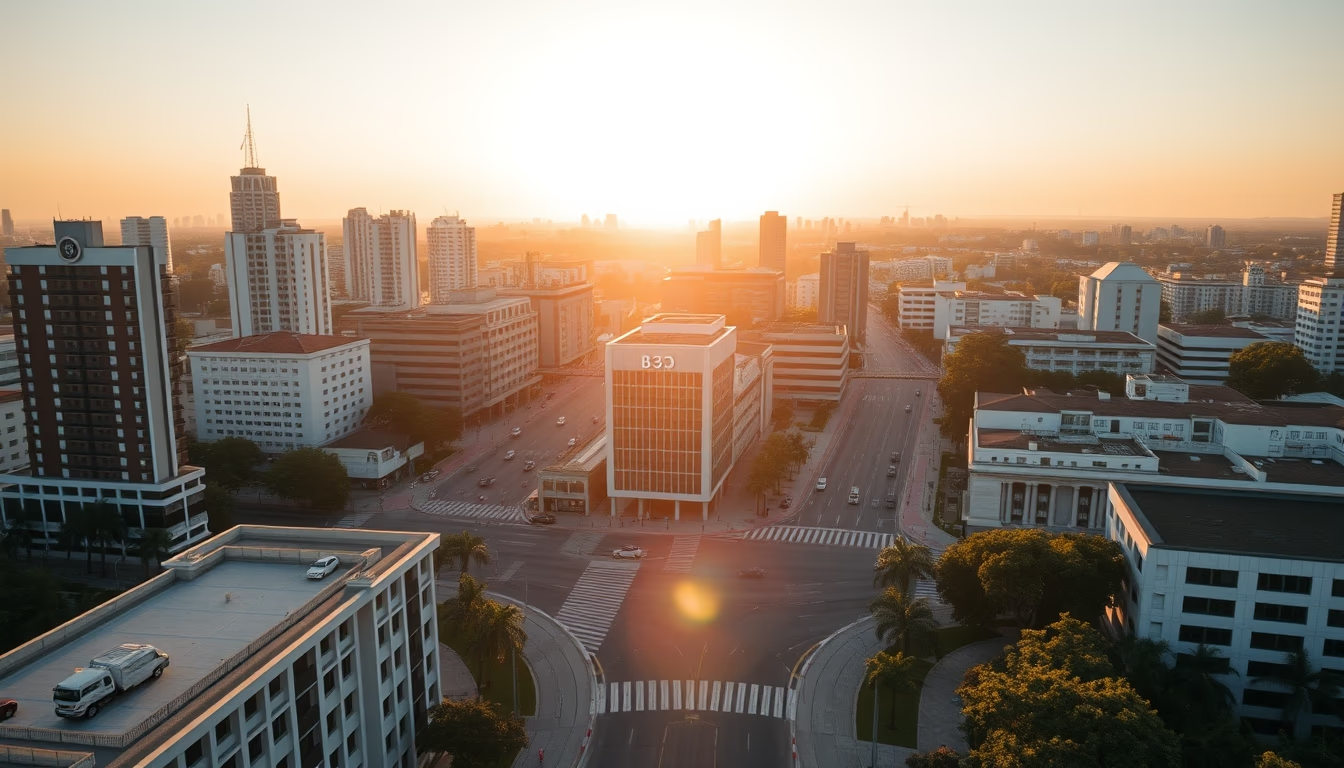 Aerial view of São Paulo financial district at golden hour with B3 building
 Aerial view of São Paulo financial district at golden hour with B3 building