Balloons colorful sky
1344×768 · AVIF · CC BY 4.0

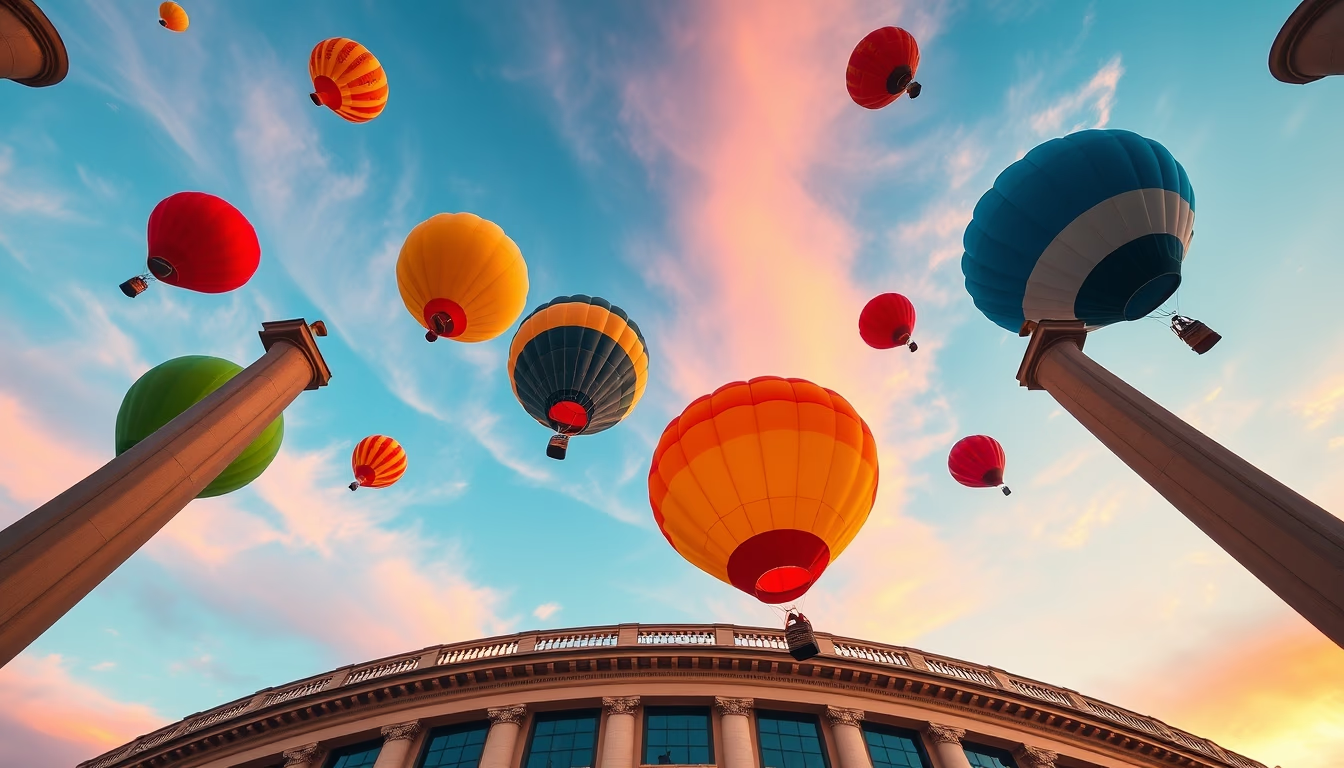
Colorful balloons adorn the sky in global celebrations, a symbol of festivity and hope since the 18th century.
About this subject
Colorful balloons in the sky are one of the most recognizable icons of festivities around the world. Their origin dates back to 1783, when the Montgolfier brothers launched the first hot air balloon in Annonay, France. Initially used for scientific experiments, balloons quickly became decorative items at events, especially after the invention of the latex balloon in 1847 by J.G. Ingram. Today, balloons are ubiquitous at birthdays, weddings, festivals, and major celebrations like New Year's Eve, Carnival, and Mardi Gras.
In Brazil, colorful balloons are prominent at June festivals and birthday parties, but it's worth noting that hot air balloons with fire are banned due to fire risk. Helium-filled balloons, safely tied, are common at corporate and sporting events. The colors carry meanings: red for passion, blue for calm, yellow for joy, and green for hope, combining into festive rainbows.
Globally, simultaneous balloon releases are a visual spectacle, as seen at the Albuquerque International Balloon Fiesta in the USA, which gathers hundreds of hot air balloons. In South Korea, the Seoul Balloon Festival attracts thousands of tourists. The tradition of releasing balloons into the air also occurs during New Year's celebrations in various cultures, symbolizing the release of wishes and the renewal of hope. However, environmental concerns over latex waste have led to alternatives like biodegradable balloons and paper lanterns.
Frequently Asked Questions
Do colorful balloons represent something specific in different cultures?
Yes, balloon colors carry symbolic meanings: red for love and passion, blue for calm and trust, yellow for happiness and optimism, green for hope and renewal. In New Year's Eve celebrations, white balloons are common for peace, while red dominates Chinese New Year as a symbol of luck.
What is the historical origin of party balloons?
The origin traces back to the Montgolfier brothers' first hot air balloon in 1783. The modern latex balloon was invented in 1847 by J.G. Ingram, but mass production began in the 20th century, popularizing them at parties and events.
Are there environmental concerns related to balloon use?
Yes, latex balloons can take years to decompose and pose risks to wildlife through ingestion or entanglement. Many regions now ban mass releases. Alternatives include biodegradable balloons and paper lanterns.
Direct URL
https://pub-c7d6a6ea828543ac903a74a341ccb2e1.r2.dev/imagens/balloons-colorful-sky-magazine-editorial-p1.avifHow to credit
Include a visible link back to UtilizAí. Copy one of the snippets below:
<a href="https://xn--utiliza-eza.com/en/midia/imagens/balloons-colorful-sky-magazine-editorial-p1">Balloons colorful sky</a> by <a href="https://xn--utiliza-eza.com">UtilizAí</a>, licensed under <a href="https://creativecommons.org/licenses/by/4.0/">CC BY 4.0</a>.
[Balloons colorful sky](https://xn--utiliza-eza.com/en/midia/imagens/balloons-colorful-sky-magazine-editorial-p1) by [UtilizAí](https://xn--utiliza-eza.com), CC BY 4.0
License: CC-BY-4.0