Azurite blue mineral
1344×768 · AVIF · CC BY 4.0
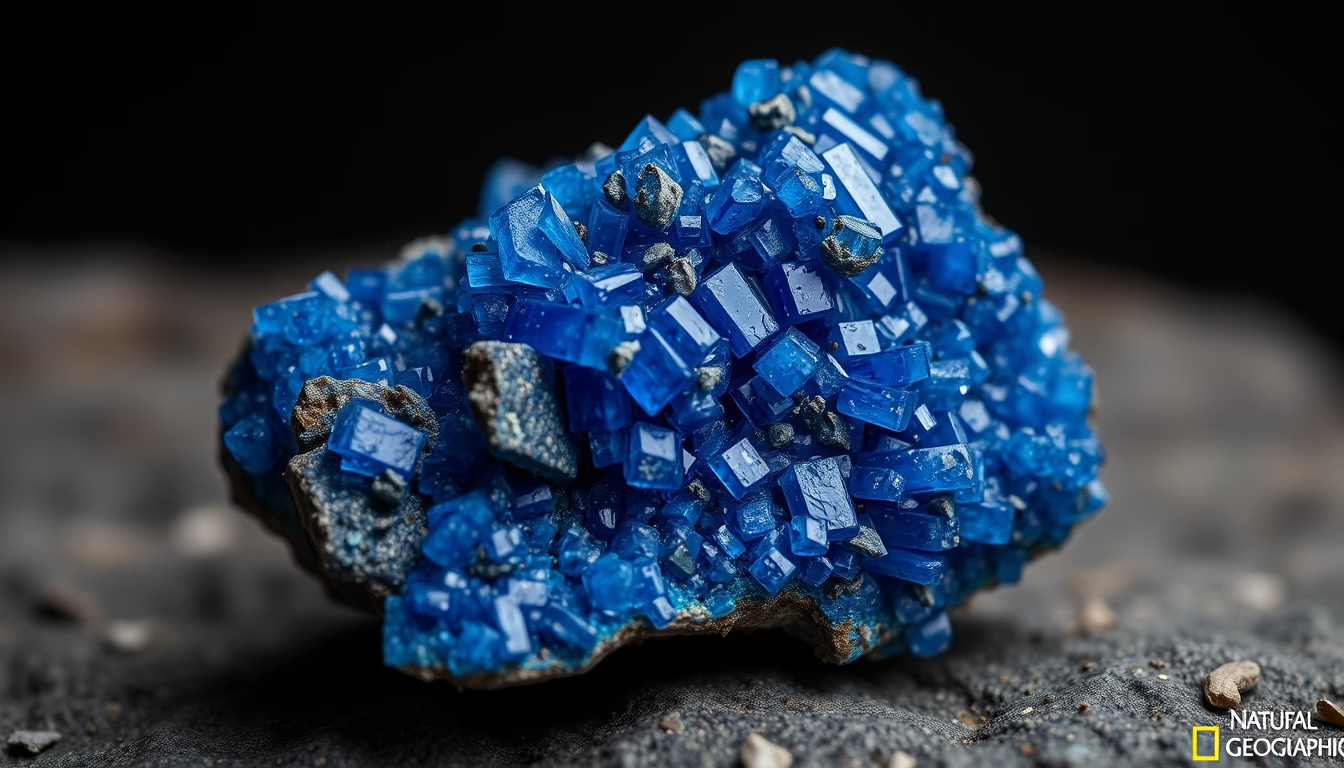
Azurite is an intense blue copper carbonate mineral formed in oxidation zones of copper deposits.
About this subject
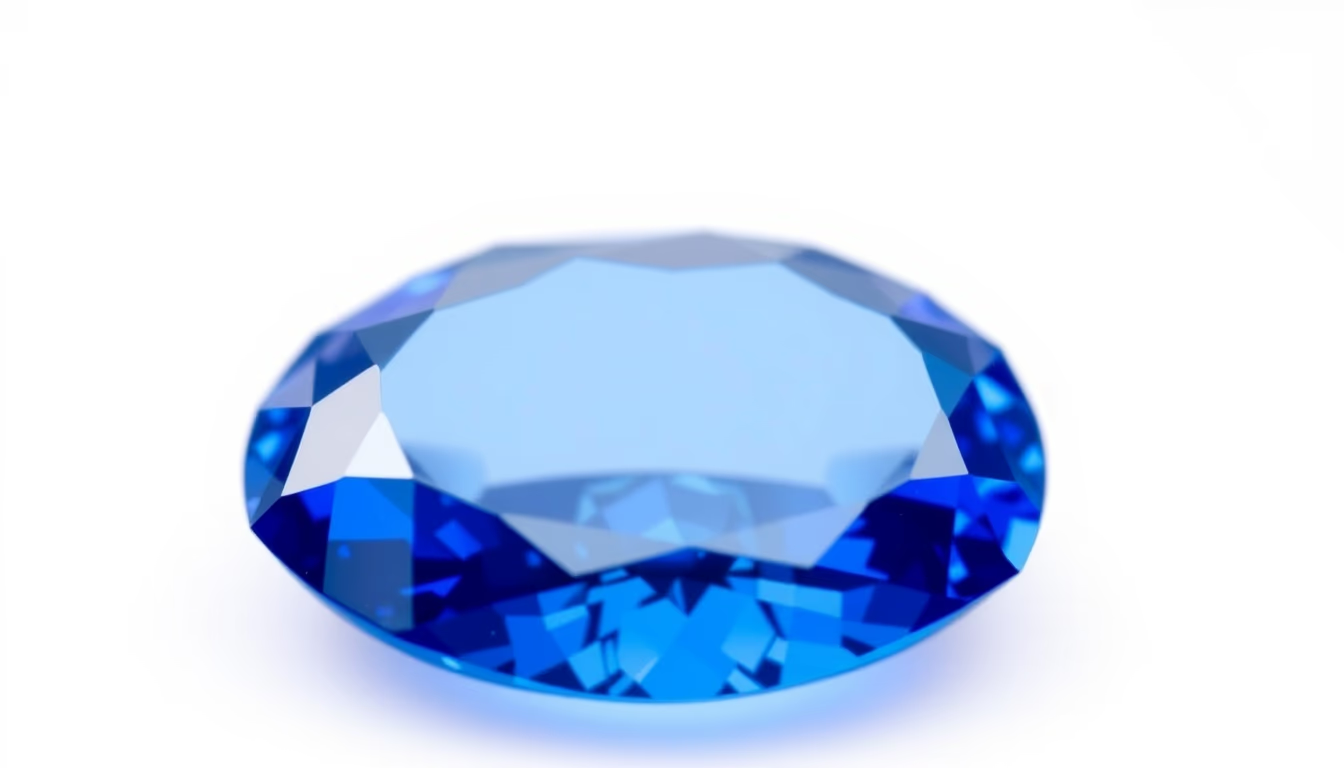
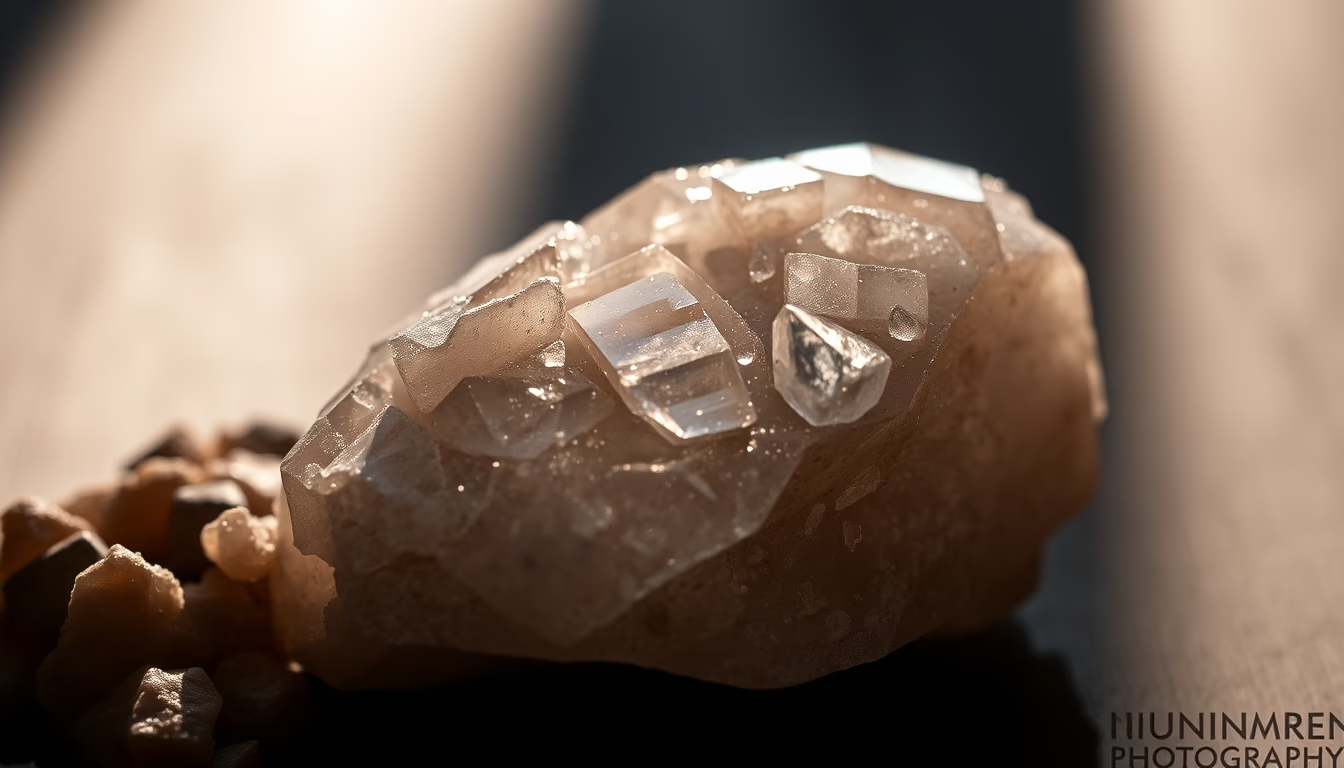
Azurite (Cu3(CO3)2(OH)2) is a secondary copper mineral renowned for its distinctive blue color, ranging from light sky blue to deep dark blue. It forms primarily in oxidation zones of copper deposits, where carbonate-rich solutions react with primary copper minerals. It is often associated with malachite, another green copper carbonate mineral, and can occur as prismatic crystals, drusy aggregates, or earthy masses.
Major azurite deposits are found in Arizona (USA), Namibia, Chile, France, and Australia. In Brazil, it occurs in Minas Gerais, especially in copper mining areas such as Carajás and the Brumado region. Azurite has a hardness of 3.5 to 4 on the Mohs scale, making it relatively soft, with perfect cleavage in one direction.
Historically, azurite was used as a blue pigment in paintings and frescoes during the Middle Ages and Renaissance. However, over time it tends to transform into malachite due to reaction with moisture and carbon dioxide, limiting its use in artworks. Today, azurite is valued as a collector's gem and in jewelry, though it is fragile and sensitive to heat and chemicals.
Azurite is also used as a minor copper ore due to its high copper content (about 55%). Its intense blue color makes it of interest for geological studies and for producing natural dyes, although synthetic pigments have largely replaced it.
Frequently Asked Questions
Where is azurite found in Brazil?
In Brazil, azurite occurs mainly in Minas Gerais, in copper mining areas such as Carajás (PA) and Brumado (BA). There are also records in other copper deposit regions.
Can azurite be used as a gemstone?
Yes, azurite is cut as a collector's gem, but it is fragile (hardness 3.5-4) and sensitive to heat and chemicals, requiring special care.
What is the difference between azurite and malachite?
Azurite is blue and malachite is green. Azurite can transform into malachite when reacting with moisture and CO2. Both are copper carbonates.
Direct URL
https://pub-c7d6a6ea828543ac903a74a341ccb2e1.r2.dev/imagens/azurite-blue-mineral-national-geographic-style-p7.avifHow to credit
Include a visible link back to UtilizAí. Copy one of the snippets below:
<a href="https://xn--utiliza-eza.com/en/midia/imagens/azurite-blue-mineral-national-geographic-style-p7">Azurite blue mineral</a> by <a href="https://xn--utiliza-eza.com">UtilizAí</a>, licensed under <a href="https://creativecommons.org/licenses/by/4.0/">CC BY 4.0</a>.
[Azurite blue mineral](https://xn--utiliza-eza.com/en/midia/imagens/azurite-blue-mineral-national-geographic-style-p7) by [UtilizAí](https://xn--utiliza-eza.com), CC BY 4.0
License: CC-BY-4.0