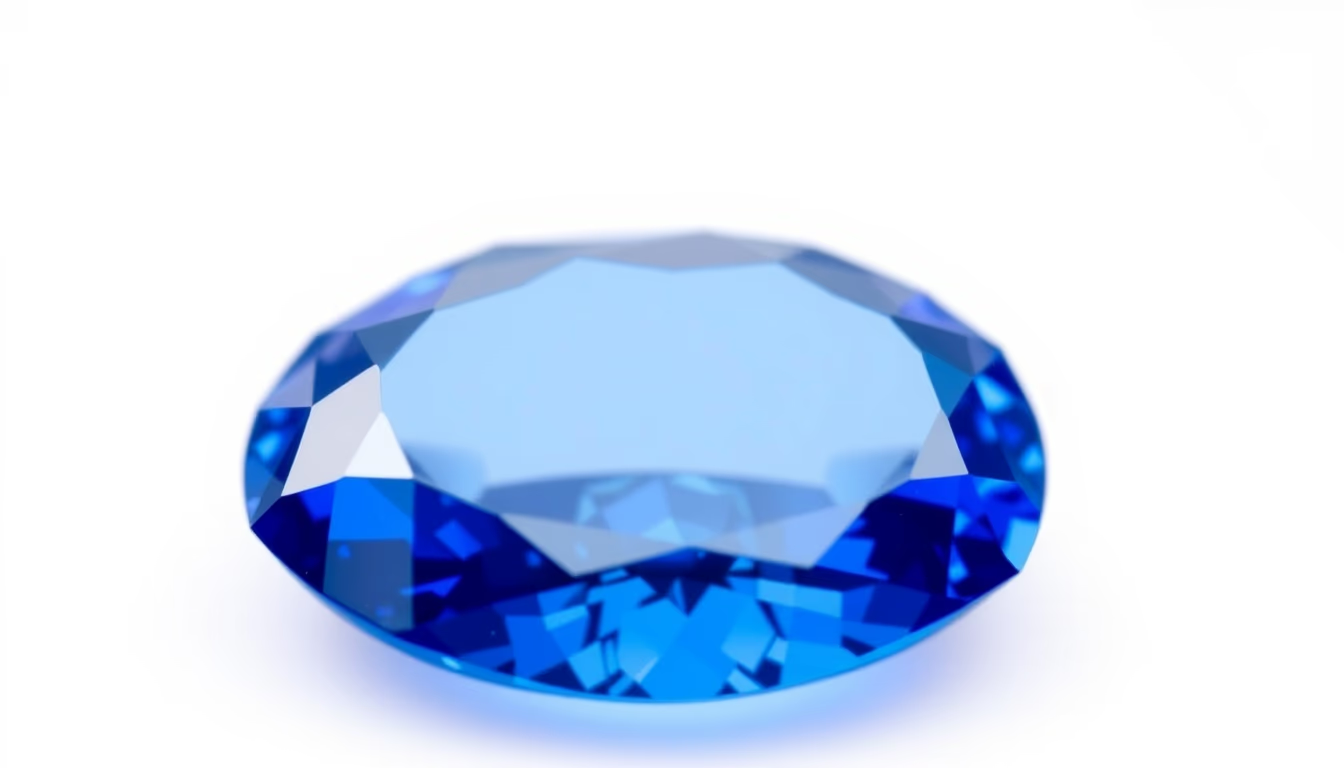
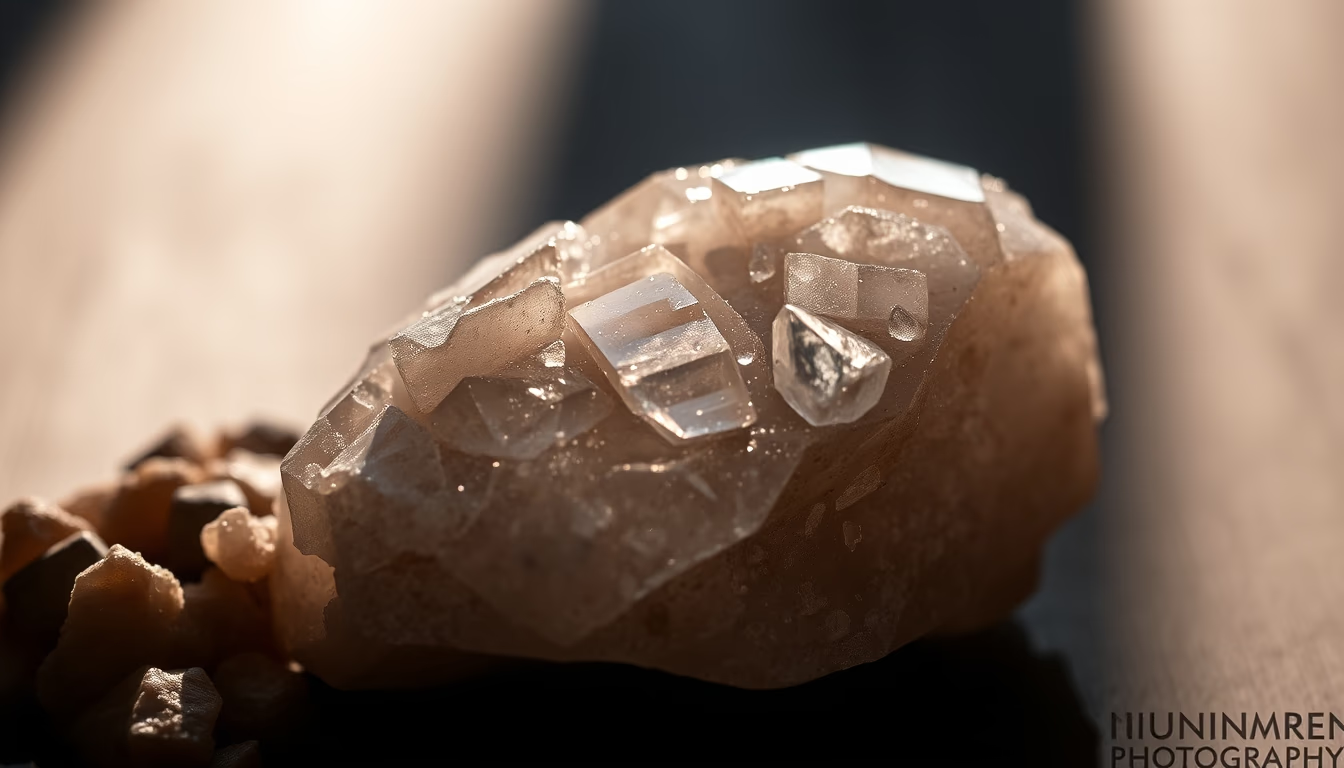
Azurite blue mineral
1344×768 · AVIF · CC BY 4.0
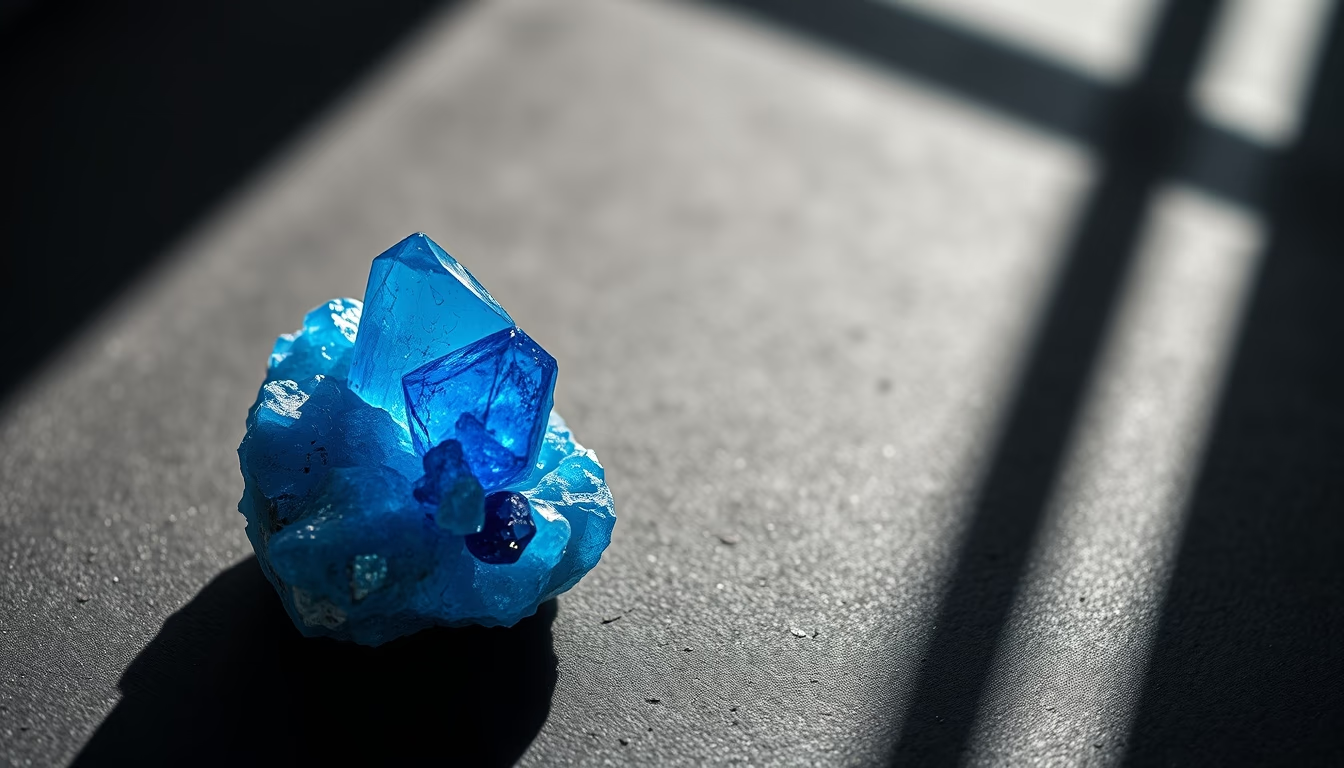
Azurite is an intense blue mineral, a copper carbonate, renowned for its vibrant color and historical use as a pigment in Renaissance paintings.
About this subject
Azurite is a secondary copper mineral with the chemical formula Cu3(CO3)2(OH)2. It forms in the oxidation zones of copper deposits, often associated with green malachite. Its deep blue color comes from copper, and well-formed crystals are highly prized by collectors. The name derives from the Persian 'lazhward', meaning intense blue, the same root as lapis lazuli.
Historically, azurite was ground to produce the pigment 'mountain blue', widely used in European painting from the 15th to 17th centuries. Artists such as Michelangelo and Vermeer employed the pigment, though it is unstable in air and tends to darken or convert to malachite over time. Notable azurite deposits include the Chessy mines in France, which produced famous specimens; significant occurrences are also found in Arizona (USA), Namibia, Morocco, Chile, and Australia.
Beyond artistic use, azurite is a minor copper ore, but its economic importance is limited due to the abundance of other ores like chalcopyrite. In jewelry, faceted stones are rare because azurite is soft (hardness 3.5-4 on Mohs scale) and brittle. Azurite is sometimes confused with lazurite, though their chemical compositions are entirely different.
A curiosity: when exposed to light and moisture, azurite can slowly transform into green malachite, a process that intrigues museum conservators. A simple test to distinguish azurite from similar blue minerals is effervescence with dilute hydrochloric acid: azurite releases bubbles of carbon dioxide.
Frequently Asked Questions
Where can I find azurite?
Azurite is found in the oxidation zones of copper deposits worldwide. Famous locations include the Chessy mines in France, Bisbee in Arizona (USA), and Tsumeb in Namibia.
Is azurite used as a pigment today?
Not on a large scale. Synthetic pigments have replaced azurite, but it is still used by artists seeking historical pigments, although it is unstable and may darken.
What is the difference between azurite and malachite?
Azurite is blue and malachite is green; both are copper carbonates. Azurite naturally transforms into malachite when exposed to moisture and air.
Direct URL
https://pub-c7d6a6ea828543ac903a74a341ccb2e1.r2.dev/imagens/azurite-blue-mineral-magazine-editorial-p4.avifHow to credit
Include a visible link back to UtilizAí. Copy one of the snippets below:
<a href="https://xn--utiliza-eza.com/en/midia/imagens/azurite-blue-mineral-magazine-editorial-p4">Azurite blue mineral</a> by <a href="https://xn--utiliza-eza.com">UtilizAí</a>, licensed under <a href="https://creativecommons.org/licenses/by/4.0/">CC BY 4.0</a>.
[Azurite blue mineral](https://xn--utiliza-eza.com/en/midia/imagens/azurite-blue-mineral-magazine-editorial-p4) by [UtilizAí](https://xn--utiliza-eza.com), CC BY 4.0
License: CC-BY-4.0