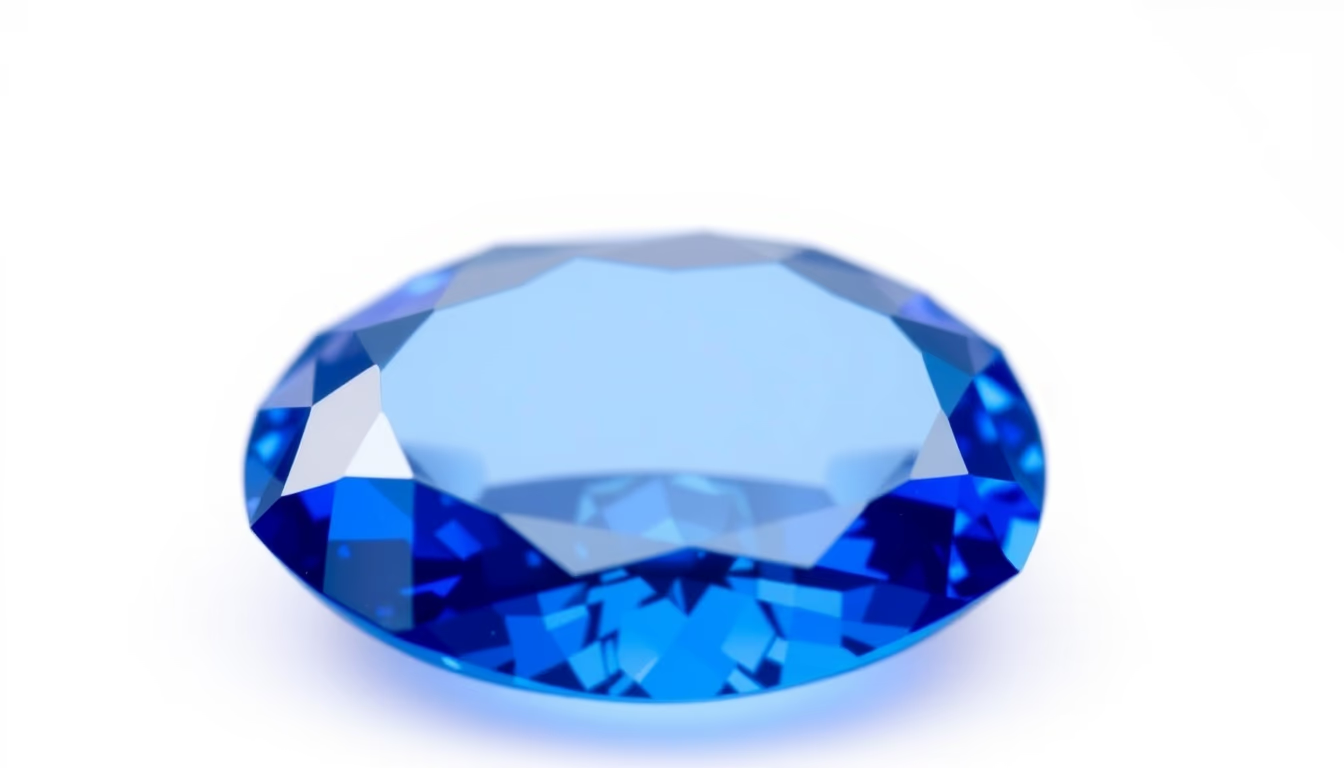
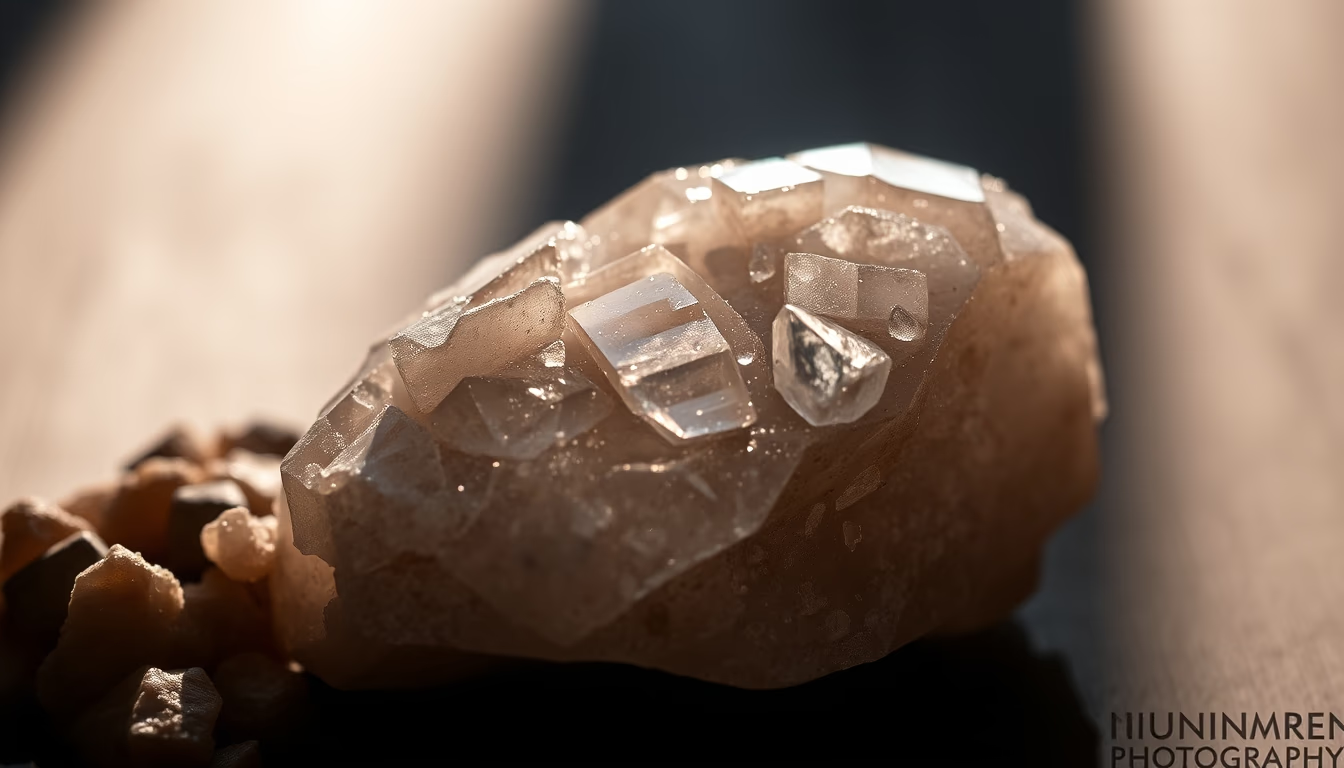
Azurite blue mineral
1344×768 · AVIF · CC BY 4.0
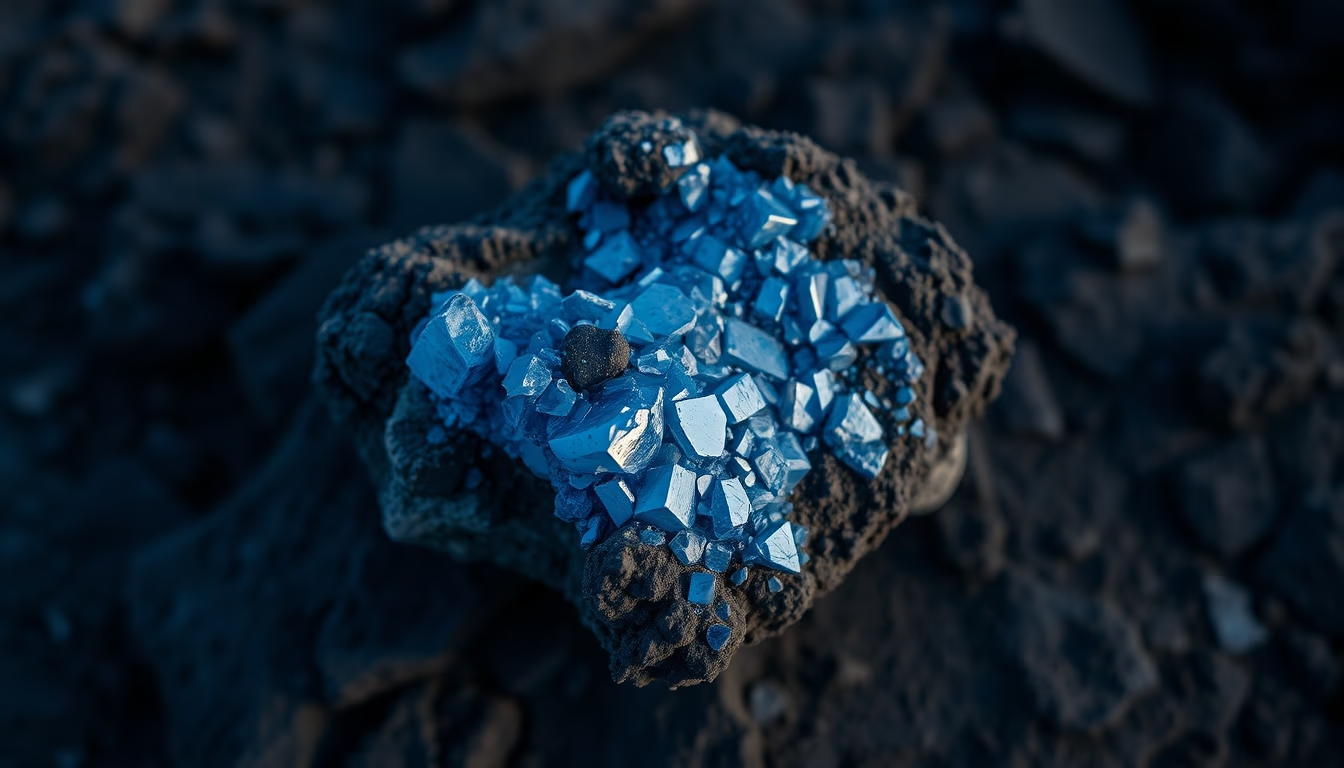
Azurite is an intense blue copper carbonate mineral, prized as a historical pigment and collector's item.
About this subject
Azurite is a secondary copper mineral with the chemical formula Cu3(CO3)2(OH)2, known for its distinctive deep blue color. It forms in the oxidation zones of copper deposits, often associated with malachite, a green mineral equally famous. Its vibrant blue hue comes from the copper content in its crystal structure.
Historically, azurite was ground and used as a blue pigment in paintings from ancient Egypt through the European Renaissance. The synthetic ultramarine blue later replaced it, but azurite is still used in art restoration. Major deposits are found in Mexico, Namibia, the United States (Arizona), and France.
In mineralogy, azurite is prized for its well-formed crystals, which can reach considerable sizes and exhibit a vitreous luster. However, it is relatively soft (hardness 3.5 to 4 on the Mohs scale) and sensitive to acids and heat, potentially decomposing into malachite when exposed to prolonged humidity.
Collectors value azurite for its beauty and rarity. Specimens with well-defined crystals are highly sought after in mineral shows. Besides ornamental use, azurite also serves as a copper ore, though it is not a primary source of the metal.
Frequently Asked Questions
What is the difference between azurite and malachite?
Azurite is blue and malachite is green, but both are copper carbonate minerals. The color difference occurs because azurite has more copper in its structure (Cu3) while malachite has less (Cu2). They often occur together in copper deposits.
Where is azurite found in Brazil?
In Brazil, azurite is mainly found in Minas Gerais, in the Iron Quadrangle, and in some copper mines in Bahia. Brazilian crystals tend to be smaller than those from other regions but are still valued by collectors.
Is azurite used as a gemstone?
Yes, azurite is cut as a gemstone, but it is fragile and soft, limiting its use in jewelry. Display pieces or cabochons are more common, always with care to avoid scratches and chemical exposure.
Direct URL
https://pub-c7d6a6ea828543ac903a74a341ccb2e1.r2.dev/imagens/azurite-blue-mineral-aerial-drone-shot-p0.avifHow to credit
Include a visible link back to UtilizAí. Copy one of the snippets below:
<a href="https://xn--utiliza-eza.com/en/midia/imagens/azurite-blue-mineral-aerial-drone-shot-p0">Azurite blue mineral</a> by <a href="https://xn--utiliza-eza.com">UtilizAí</a>, licensed under <a href="https://creativecommons.org/licenses/by/4.0/">CC BY 4.0</a>.
[Azurite blue mineral](https://xn--utiliza-eza.com/en/midia/imagens/azurite-blue-mineral-aerial-drone-shot-p0) by [UtilizAí](https://xn--utiliza-eza.com), CC BY 4.0
License: CC-BY-4.0