Aztec calendar stone
1344×768 · AVIF · CC BY 4.0
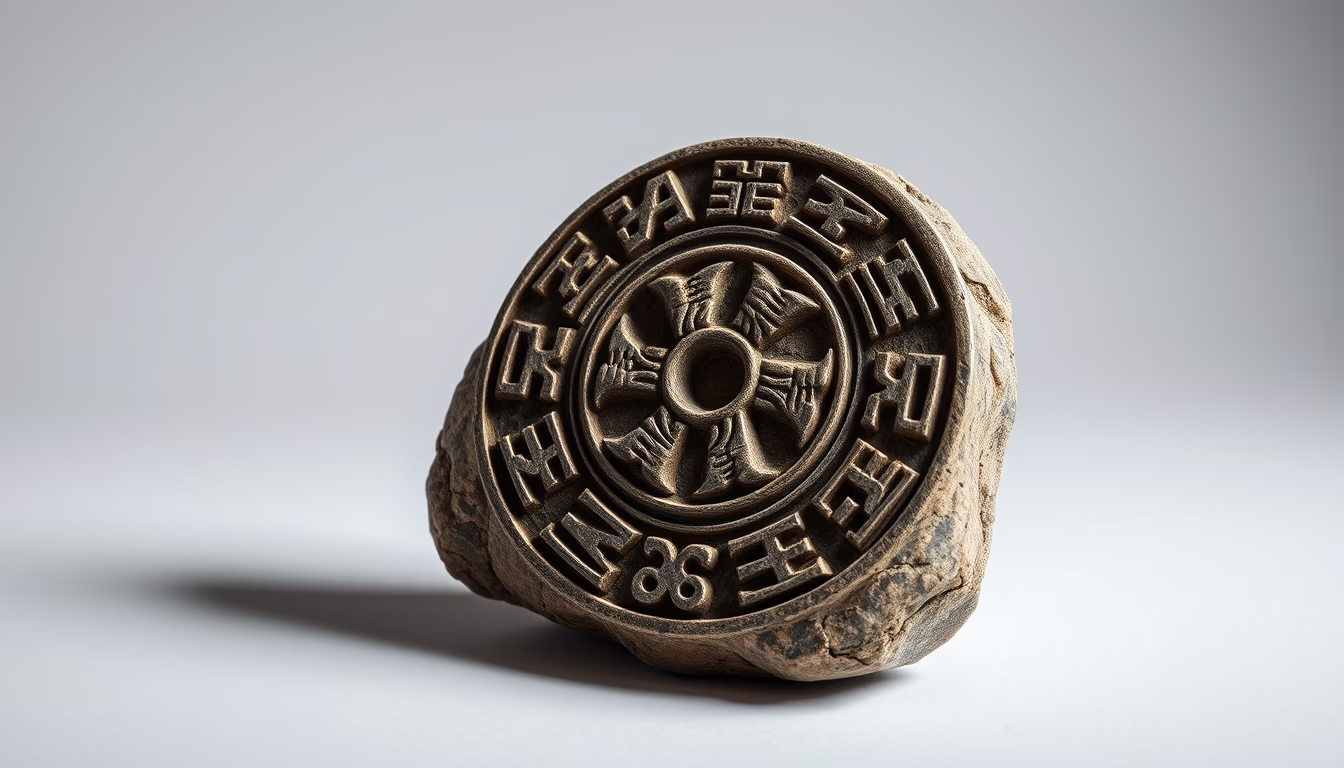
The Aztec Sun Stone is a basalt monolith carved in the 15th century, depicting Mexica cosmology and calendar cycles.
About this subject
The Sun Stone, also known as the Aztec Calendar Stone, is a massive basalt monolith carved during the reign of Emperor Axayácatl between 1469 and 1481 AD. Measuring about 3.6 meters in diameter and weighing approximately 24 tons, the monument originally stood at the Templo Mayor of the Aztec capital, Tenochtitlan (modern-day Mexico City). After the Spanish conquest in 1521, the stone was buried in the Plaza Mayor, only to be rediscovered on December 17, 1790 during leveling work. Since then, it has become one of the most emblematic symbols of Mexica culture.
The iconography of the Sun Stone is rich in symbolism. At the center, the god Tonatiuh (the Sun) appears with a flint knife in his mouth, representing the fifth sun in Aztec cosmology. Surrounding it, four squares depict the previous suns, each corresponding to an era that ended in catastrophe. The stone functions as a 365-day solar calendar but also incorporates ritual cycles of 260 days (tonalpohualli) and 52-year cycles (xiuhmolpilli). Carved glyphs include representations of the 20 days of the Aztec month, along with symbols of cardinal directions and natural elements.
Interestingly, the Sun Stone was not used as a practical daily calendar but rather as a ceremonial altar for sacrifices, possibly gladiatorial. Recent studies suggest it may have served as an astronomical marker for equinoxes and solstices, aligned with the main temple. Currently, the monument is displayed at the National Museum of Anthropology in Mexico City, attracting millions of visitors annually. Its preservation is challenging due to pollution and heavy tourism, but it remains a testament to the mathematical and astronomical sophistication of the Aztecs.
Frequently Asked Questions
What is the difference between the Sun Stone and the Aztec Calendar?
The Sun Stone is a carved monolith representing Aztec cosmology and includes calendar elements, but it was not a functional calendar. The actual Aztec calendar was a day-counting system based on two cycles: the tonalpohualli (260 days) and the xiuhpohualli (365 days).
Where is the Sun Stone currently located?
The Sun Stone is displayed at the National Museum of Anthropology in Mexico City, in the Mexica Hall, since 1964. Previously, it was housed in the Metropolitan Cathedral and later the National Museum.
How much does the Sun Stone weigh and what material is it made of?
The Sun Stone weighs approximately 24 tons and is carved from basalt, a volcanic rock. Its surface was carefully polished and engraved with glyphs and figures.
Direct URL
https://pub-c7d6a6ea828543ac903a74a341ccb2e1.r2.dev/imagens/aztec-calendar-stone-studio-still-life-p2.avifHow to credit
Include a visible link back to UtilizAí. Copy one of the snippets below:
<a href="https://xn--utiliza-eza.com/en/midia/imagens/aztec-calendar-stone-studio-still-life-p2">Aztec calendar stone</a> by <a href="https://xn--utiliza-eza.com">UtilizAí</a>, licensed under <a href="https://creativecommons.org/licenses/by/4.0/">CC BY 4.0</a>.
[Aztec calendar stone](https://xn--utiliza-eza.com/en/midia/imagens/aztec-calendar-stone-studio-still-life-p2) by [UtilizAí](https://xn--utiliza-eza.com), CC BY 4.0
License: CC-BY-4.0