Aztec calendar stone
1344×768 · AVIF · CC BY 4.0
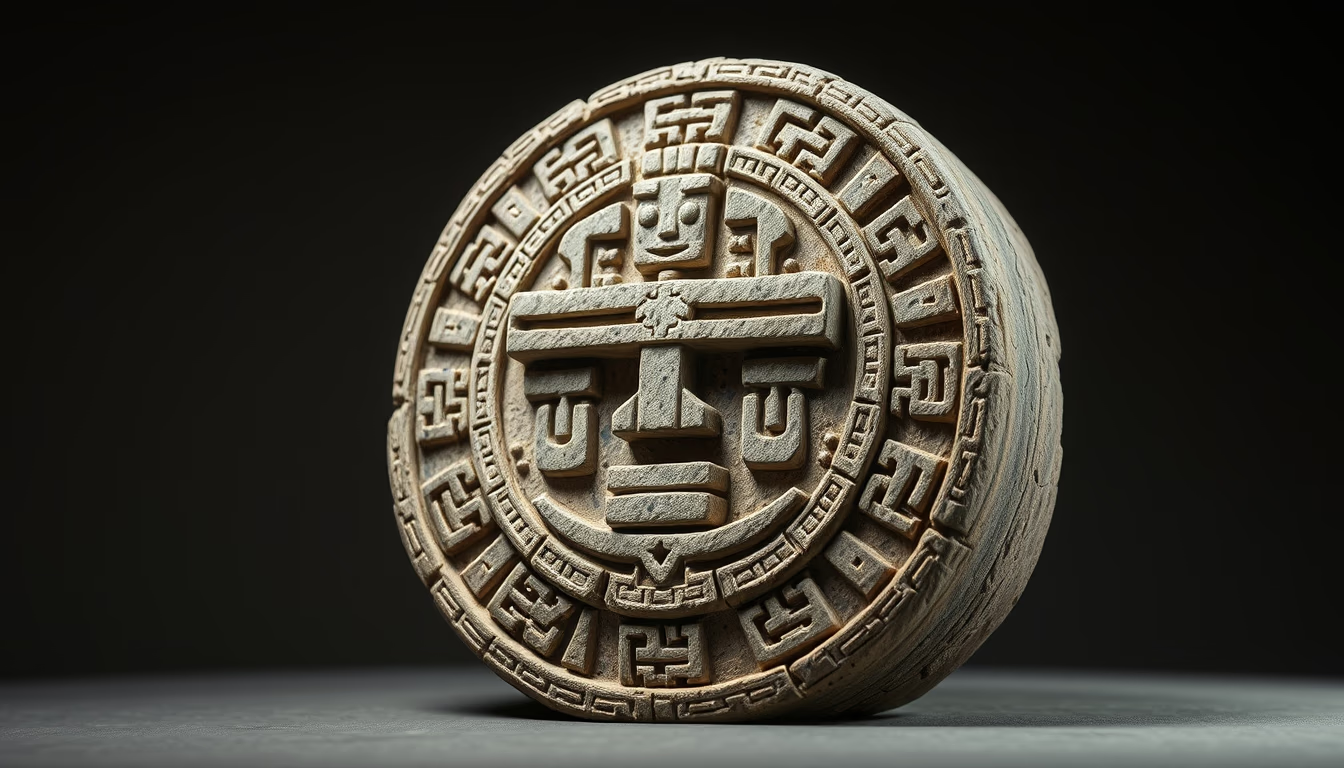
The Aztec Sun Stone, also known as the Aztec Calendar Stone, is a circular monolithic sculpture that represents Aztec cosmology and calendrical systems.
About this subject
The Aztec Sun Stone, often mistakenly called the Aztec Calendar Stone, is one of the most iconic artifacts of the Aztec civilization. Carved from basalt, it measures approximately 3.6 meters in diameter and weighs about 24 tons. It was discovered in 1790 during excavations in Mexico City's main square, the Zócalo. The stone is believed to have been created between 1502 and 1521, during the reign of Moctezuma II, though its exact original purpose is still debated. It likely once stood at the Templo Mayor, the main temple of the Aztec capital, Tenochtitlan.
The disc is richly decorated with symbols representing the five suns or eras of Aztec mythology. At the center, the face of Tonatiuh, the sun god, appears with an obsidian knife in his mouth, demanding sacrifices to ensure the sun's movement. Surrounding the center, four squares depict the four previous eras, each destroyed by a different catastrophe: jaguars, winds, rain of fire, and floods. The outer ring contains 20 glyphs representing the days of the 260-day Aztec calendar, the tonalpohualli. Two fire serpents border the stone, symbolizing the cycle of time.
The Sun Stone was not a functional calendar in the modern sense but a ceremonial monument integrating the Aztec view of time and the cosmos. It is now housed in the National Museum of Anthropology in Mexico City, one of the most visited pieces. Its discovery in the 18th century sparked great scholarly interest and even influenced Mexican nationalist movements. Unfortunately, the stone has suffered damage over the centuries, including cracks and loss of relief, but it remains a powerful symbol of Mexica heritage.
Frequently Asked Questions
What does the Aztec Sun Stone represent?
The Sun Stone represents Aztec cosmology, including the five world eras, solar deities, and the 260-day ritual calendar.
Where is the Aztec Sun Stone currently located?
It is displayed at the National Museum of Anthropology in Mexico City, one of the museum's main attractions.
Was the Sun Stone actually used as a calendar?
No. Although it contains calendrical elements, its primary function is believed to be ceremonial and symbolic, related to sacrificial rituals and the solar cycle.
Direct URL
https://pub-c7d6a6ea828543ac903a74a341ccb2e1.r2.dev/imagens/aztec-calendar-stone-studio-editorial-portrait-p9.avifHow to credit
Include a visible link back to UtilizAí. Copy one of the snippets below:
<a href="https://xn--utiliza-eza.com/en/midia/imagens/aztec-calendar-stone-studio-editorial-portrait-p9">Aztec calendar stone</a> by <a href="https://xn--utiliza-eza.com">UtilizAí</a>, licensed under <a href="https://creativecommons.org/licenses/by/4.0/">CC BY 4.0</a>.
[Aztec calendar stone](https://xn--utiliza-eza.com/en/midia/imagens/aztec-calendar-stone-studio-editorial-portrait-p9) by [UtilizAí](https://xn--utiliza-eza.com), CC BY 4.0
License: CC-BY-4.0