Aztec calendar stone
1344×768 · AVIF · CC BY 4.0
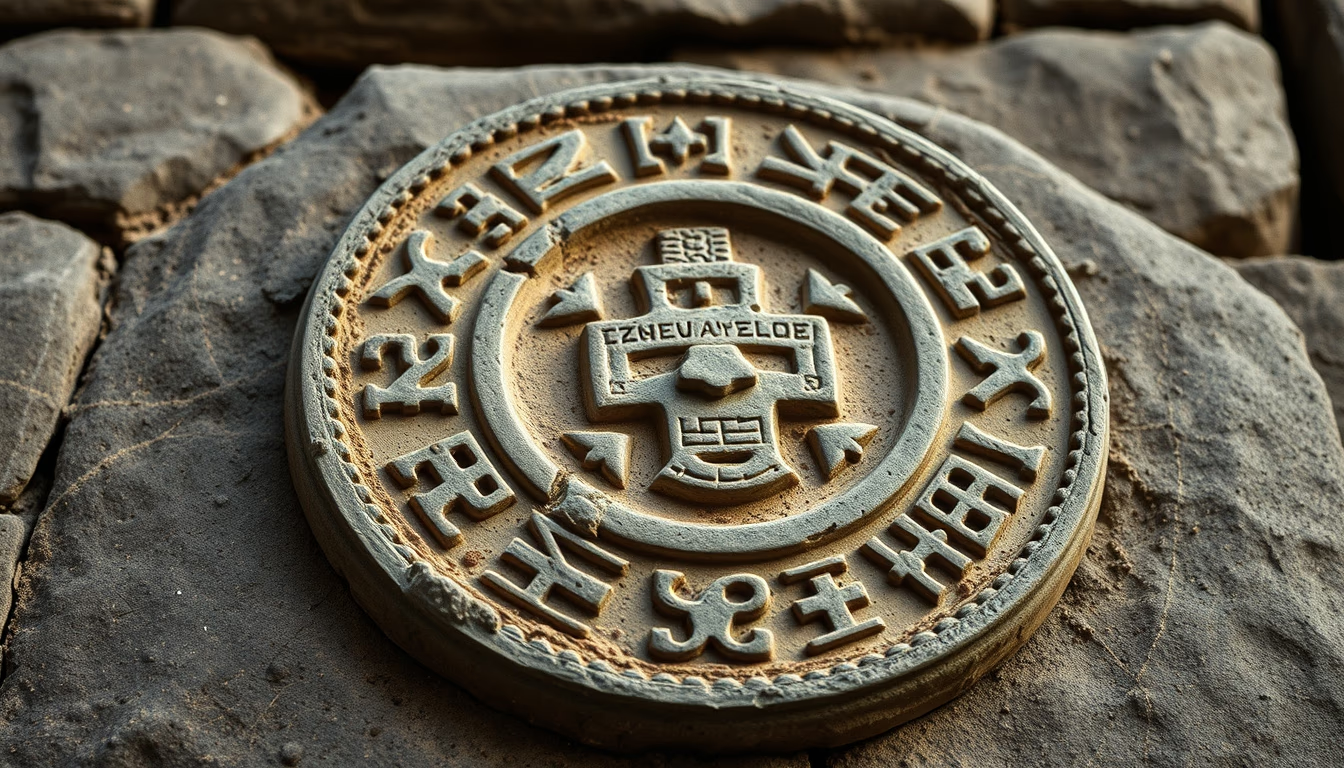
The Sun Stone, also known as the Aztec Calendar Stone, is a 15th-century basalt monolith representing Mexica cosmology.
About this subject
The Sun Stone is one of the most iconic monuments of the Mexica (Aztec) civilization. Carved from volcanic basalt, it measures about 3.6 meters in diameter and weighs approximately 24 tons. It was discovered on December 17, 1790, during leveling work in Mexico City's Zócalo (Main Square). Originally polychromed, the piece features intricate reliefs that do not function as a practical calendar but rather as a ceremonial altar or representation of the universe according to Mexica worldview. At the center, the face of Tonatiuh, the sun god, holds human hearts and tongues shaped like sacrificial knives. Surrounding him, four squares depict the previous suns (cosmogonic eras) that preceded the fifth sun, the current age. The next ring contains the 20 day signs of the sacred calendar (tonalpohualli), with glyphs such as jaguar, water, wind, and death. The outer edge shows two fire serpents, Xiuhcoatl, guiding the sun across the sky. The stone was carved during the reign of Moctezuma II (1502-1520) and likely stood in the Templo Mayor of Tenochtitlan. After the Spanish conquest, it remained buried for nearly three centuries. Today, it is displayed at the National Museum of Anthropology in Mexico City, serving as a symbol of Mexican national identity. Studies suggest the stone also functioned as a platform for gladiatorial sacrifice rituals.
Frequently Asked Questions
Is the Sun Stone actually a calendar?
No. Despite the popular name, the piece was not used to track days or months. It is a cosmological and ceremonial representation, featuring the glyphs of the 20 days of the tonalpohualli but no practical calendar function.
Where is the Sun Stone currently located?
It is on display at the National Museum of Anthropology in Mexico City, in the Mexica Hall, as one of the centerpiece artifacts.
What is the meaning of the central face on the stone?
The central face is Tonatiuh, the Mexica sun god. He holds a human heart in each hand and his tongue is shaped like a sacrificial knife, symbolizing the need for offerings to keep the sun moving.
Direct URL
https://pub-c7d6a6ea828543ac903a74a341ccb2e1.r2.dev/imagens/aztec-calendar-stone-film-grain-authentic-p0.avifHow to credit
Include a visible link back to UtilizAí. Copy one of the snippets below:
<a href="https://xn--utiliza-eza.com/en/midia/imagens/aztec-calendar-stone-film-grain-authentic-p0">Aztec calendar stone</a> by <a href="https://xn--utiliza-eza.com">UtilizAí</a>, licensed under <a href="https://creativecommons.org/licenses/by/4.0/">CC BY 4.0</a>.
[Aztec calendar stone](https://xn--utiliza-eza.com/en/midia/imagens/aztec-calendar-stone-film-grain-authentic-p0) by [UtilizAí](https://xn--utiliza-eza.com), CC BY 4.0
License: CC-BY-4.0