Aztec calendar stone
1344×768 · AVIF · CC BY 4.0
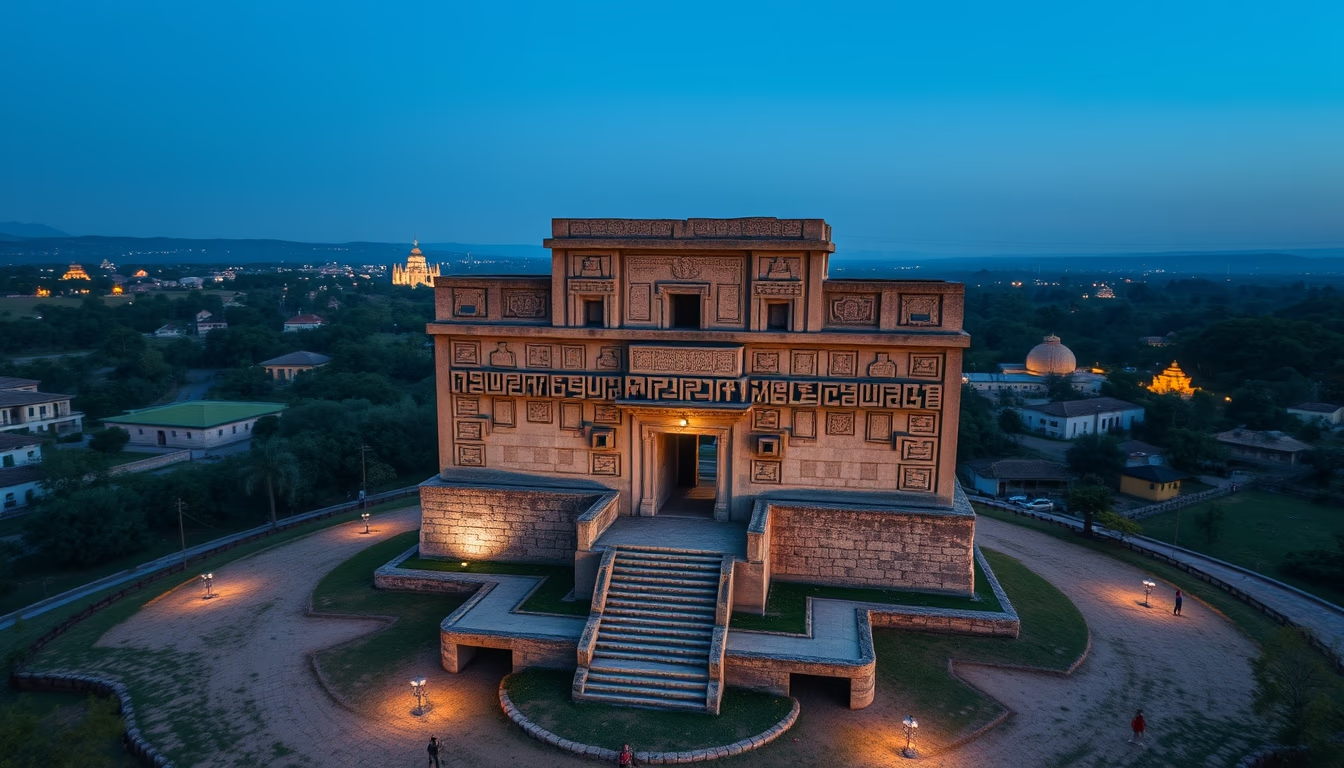
The Aztec Sun Stone, a 24-ton basalt monolith over 3.6 meters in diameter, is one of the most iconic artifacts of the Mexica civilization, rich in cosmogonic symbolism.
About this subject
The Aztec Sun Stone, also called the Aztec Calendar Stone, was carved by the Mexica around 1479 AD during the reign of Axayacatl. Discovered on December 17, 1790, in Mexico City's main square, the piece was buried shortly after the Spanish conquest, likely to avoid destruction. Carved from volcanic basalt, the monolith weighs approximately 24 tons and measures 3.6 meters in diameter. Contrary to its popular name, it was not a functional calendar but a ceremonial receptacle known as a cuauhxicalli, used to hold human hearts in sacrificial rituals dedicated to the sun god Tonatiuh. The center of the stone displays Tonatiuh's face with a flint knife tongue, surrounded by the glyphs of the four previous suns, Jaguar, Wind, Fire Rain, and Water, representing the cosmic eras before the current one, the Fifth Sun. The outer edge is decorated with two fire serpents (Xiuhcoatl) and a fringe of 260 dots composing the tonalpohualli, the Aztecs' 260-day ritual calendar. The piece was carved in meticulous bas-relief, with details requiring years of work by specialized lapidaries. Currently, the Sun Stone is exhibited at the National Museum of Anthropology in Mexico City, attracting millions of visitors annually. Recent studies suggest the stone also served as a platform for gladiatorial combats, where bound prisoners were forced to face armed warriors, a spectacle representing the sun's struggle against the forces of darkness. The aerial image of the monolith, captured by drone, reveals the impressiveness of its scale and the geometric precision of the carvings, which remain sharp after more than five centuries.
Frequently Asked Questions
What is the true name of the Aztec Sun Stone?
The original Nahuatl name is Cuauhxicalli (eagle vessel), as it served as a ceremonial receptacle for sacrificial hearts. 'Sun Stone' is a later designation.
Why isn't the Sun Stone a calendar?
Although it contains calendrical elements like the tonalpohualli (260 days), its primary function was ritual and not astronomical. It was an altar for sacrifices and cosmological representation.
Where can I see the Sun Stone today?
It is on permanent display at the National Museum of Anthropology in Mexico City, since 1964. It is one of the most visited pieces in the collection.
Direct URL
https://pub-c7d6a6ea828543ac903a74a341ccb2e1.r2.dev/imagens/aztec-calendar-stone-aerial-drone-shot-p10.avifHow to credit
Include a visible link back to UtilizAí. Copy one of the snippets below:
<a href="https://xn--utiliza-eza.com/en/midia/imagens/aztec-calendar-stone-aerial-drone-shot-p10">Aztec calendar stone</a> by <a href="https://xn--utiliza-eza.com">UtilizAí</a>, licensed under <a href="https://creativecommons.org/licenses/by/4.0/">CC BY 4.0</a>.
[Aztec calendar stone](https://xn--utiliza-eza.com/en/midia/imagens/aztec-calendar-stone-aerial-drone-shot-p10) by [UtilizAí](https://xn--utiliza-eza.com), CC BY 4.0
License: CC-BY-4.0