Asteroid surface rocky
1344×768 · AVIF · CC BY 4.0
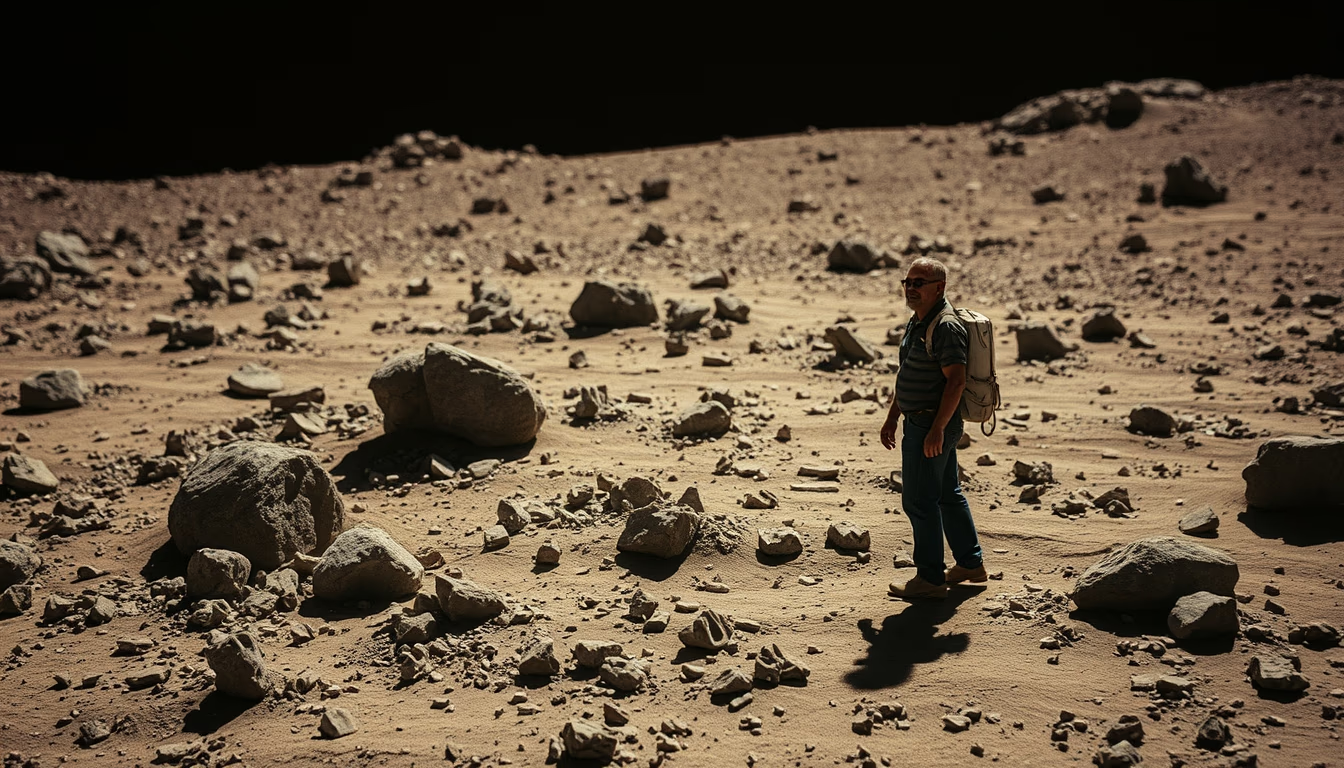
Rocky asteroid surface shows craters, regolith and boulders, recording billions of years of impacts in the Solar System.
About this subject
The surface of rocky asteroids, such as S-type (silicaceous) and C-type (carbonaceous), consists of a layer of regolith, fragmented material from billions of years of micrometeoroid bombardment. This dust and gravel cover larger boulders and exposed rocks, forming rugged landscapes with craters of various sizes. The lack of atmosphere and Earth-like erosion preserves these features over long geological periods.
Studies from missions like Hayabusa2 (Ryugu) and OSIRIS-REx (Bennu) revealed that asteroid surfaces are surprisingly porous and loosely consolidated, with lower density than terrestrial rocks. On Bennu, particle ejection events occur, possibly due to rotation and thermal shock. The color ranges from gray to reddish, depending on composition and space weathering, which darkens material over time.
Rocky asteroids are considered remnants of planetary formation in the early Solar System. Studying them helps understand planet evolution, organic material origin, and water delivery to Earth. The surface provides clues about past impacts and future collision threats.
Interestingly, some asteroid regions show overlapping ancient craters, indicating a violent history. The 'film grain' texture mentioned in the tag evokes the granular appearance of regolith, similar to underexposed photographs, but here it is a real feature of the space soil.
Frequently Asked Questions
What is regolith on asteroids?
Regolith is the layer of dust, sand, and rock fragments covering asteroid surfaces. It forms by continuous micrometeoroid impacts and space radiation.
Why do rocky asteroids have rugged surfaces?
Because they lack atmosphere and erosion processes. Impact craters and boulders remain intact for billions of years, resulting in rugged terrain.
Why is studying asteroid surfaces important?
It helps understand Solar System formation, the origin of water and organic compounds on Earth, and assess future impact risks.
Direct URL
https://pub-c7d6a6ea828543ac903a74a341ccb2e1.r2.dev/imagens/asteroid-surface-rocky-film-grain-authentic-p2.avifHow to credit
Include a visible link back to UtilizAí. Copy one of the snippets below:
<a href="https://xn--utiliza-eza.com/en/midia/imagens/asteroid-surface-rocky-film-grain-authentic-p2">Asteroid surface rocky</a> by <a href="https://xn--utiliza-eza.com">UtilizAí</a>, licensed under <a href="https://creativecommons.org/licenses/by/4.0/">CC BY 4.0</a>.
[Asteroid surface rocky](https://xn--utiliza-eza.com/en/midia/imagens/asteroid-surface-rocky-film-grain-authentic-p2) by [UtilizAí](https://xn--utiliza-eza.com), CC BY 4.0
License: CC-BY-4.0