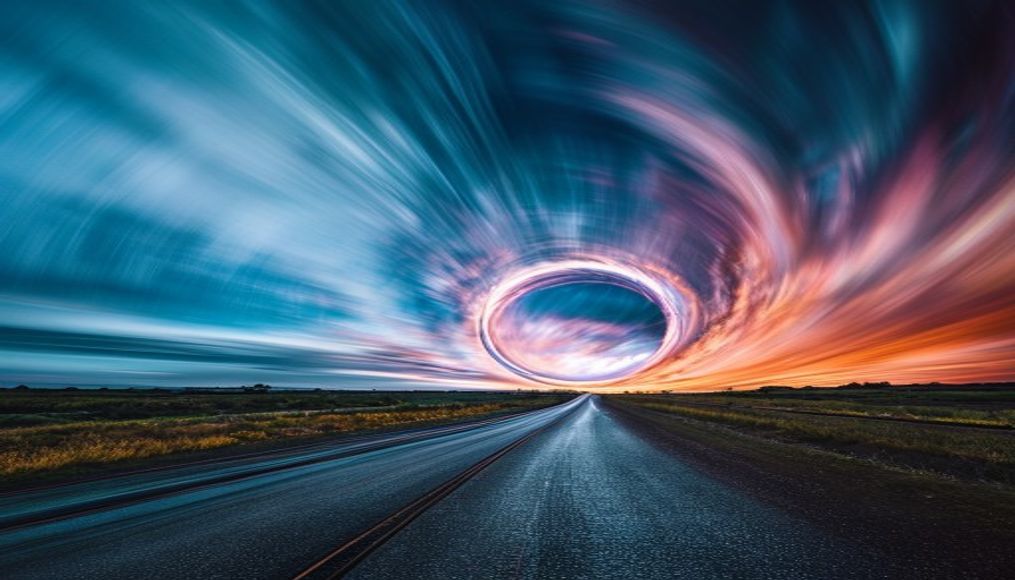
Asteroid belt artistic
1344×768 · AVIF · CC BY 4.0
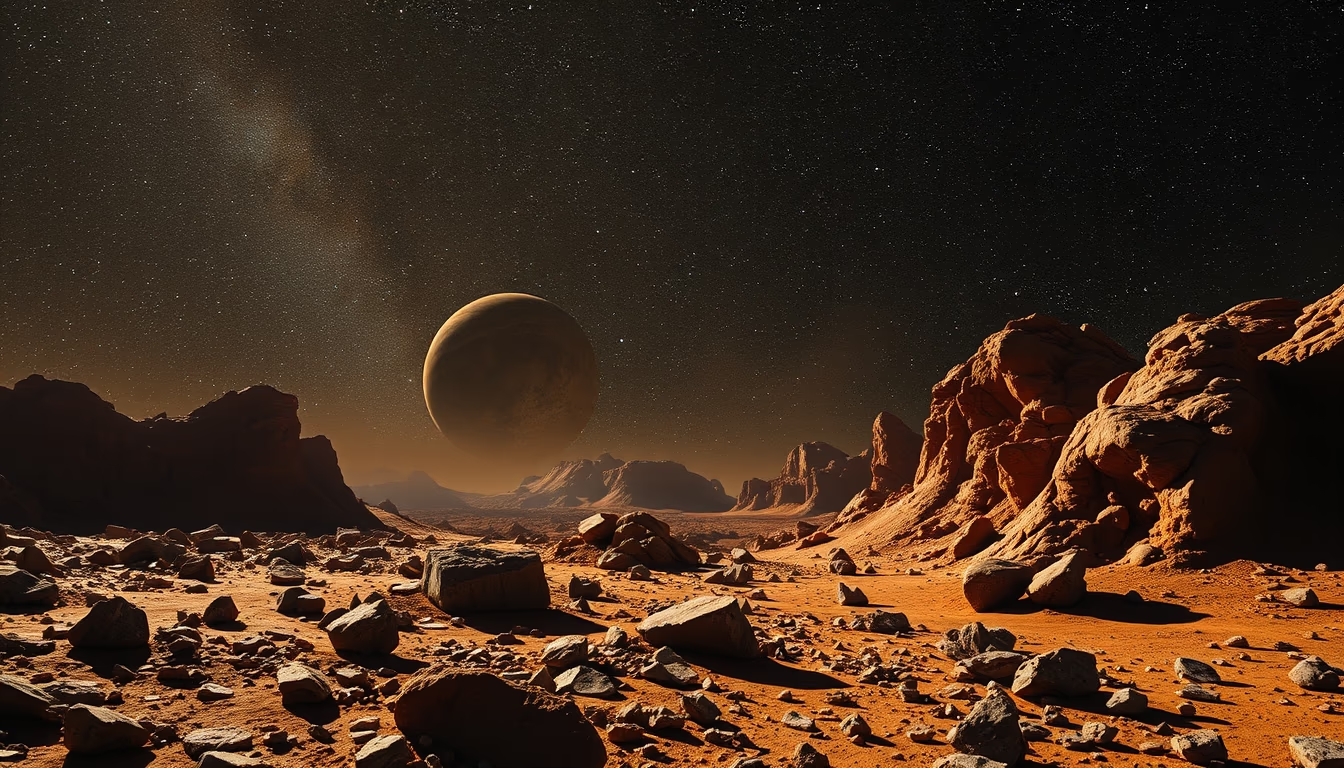
The asteroid belt between Mars and Jupiter is a region filled with rocky and metallic bodies orbiting the Sun, one of the Solar System's greatest mysteries.
About this subject
The asteroid belt, located between the orbits of Mars and Jupiter, is a region of the Solar System that harbors a vast number of rocky and metallic bodies. The first asteroid discovered was Ceres in 1801 by astronomer Giuseppe Piazzi. Since then, hundreds of thousands of objects have been cataloged, but it is estimated that there are millions with diameters over 1 km.
These celestial bodies vary in composition: carbonaceous (C-type) asteroids are dark and carbon-rich, dominating the outer belt. Silicate (S-type) asteroids are brighter and common in the inner belt, while metallic (M-type) are mainly composed of iron and nickel. The largest object, Ceres, is classified as a dwarf planet and has a diameter of about 940 km, while most asteroids are less than 100 km across.
The origin of the belt is debated. One hypothesis suggests it is the remains of a planet that never formed due to Jupiter's gravitational influence. Another theory proposes they are remnants of the protoplanetary disk. Space missions like NASA's Dawn visited Vesta and Ceres, providing crucial data. The upcoming Psyche mission will study a metallic asteroid. Interestingly, despite its fame, the belt is extremely sparse; the average distance between asteroids is hundreds of kilometers, making collisions very rare.
Studying the belt is vital for understanding planetary formation. Additionally, these objects contain valuable resources, such as water in some carbonaceous asteroids and precious metals in others, sparking interest for future space mining. The threat of Earth impact is low but monitored by programs like Sentry. The total mass of the belt is only 4% of the Moon's mass, highlighting its diffuse nature.
Frequently Asked Questions
Is the asteroid belt dangerous for spacecraft?
No, the belt's density is very low. Spacecraft crossing it, such as the Voyager probes, have minimal collision risk. The average distance between asteroids is hundreds of kilometers.
Is there a planet in the asteroid belt?
No, but Ceres is classified as a dwarf planet. It is the largest object in the belt, about 940 km in diameter, and was reclassified in 2006 by the International Astronomical Union.
Can asteroids be mined in the future?
Yes, there are conceptual plans for mining resources such as platinum, nickel, and water. Companies like Planetary Resources have proposed missions, but the technology is still under development and the cost remains very high.
Direct URL
https://pub-c7d6a6ea828543ac903a74a341ccb2e1.r2.dev/imagens/asteroid-belt-artistic-fine-art-photography-p3.avifHow to credit
Include a visible link back to UtilizAí. Copy one of the snippets below:
<a href="https://xn--utiliza-eza.com/en/midia/imagens/asteroid-belt-artistic-fine-art-photography-p3">Asteroid belt artistic</a> by <a href="https://xn--utiliza-eza.com">UtilizAí</a>, licensed under <a href="https://creativecommons.org/licenses/by/4.0/">CC BY 4.0</a>.
[Asteroid belt artistic](https://xn--utiliza-eza.com/en/midia/imagens/asteroid-belt-artistic-fine-art-photography-p3) by [UtilizAí](https://xn--utiliza-eza.com), CC BY 4.0
License: CC-BY-4.0