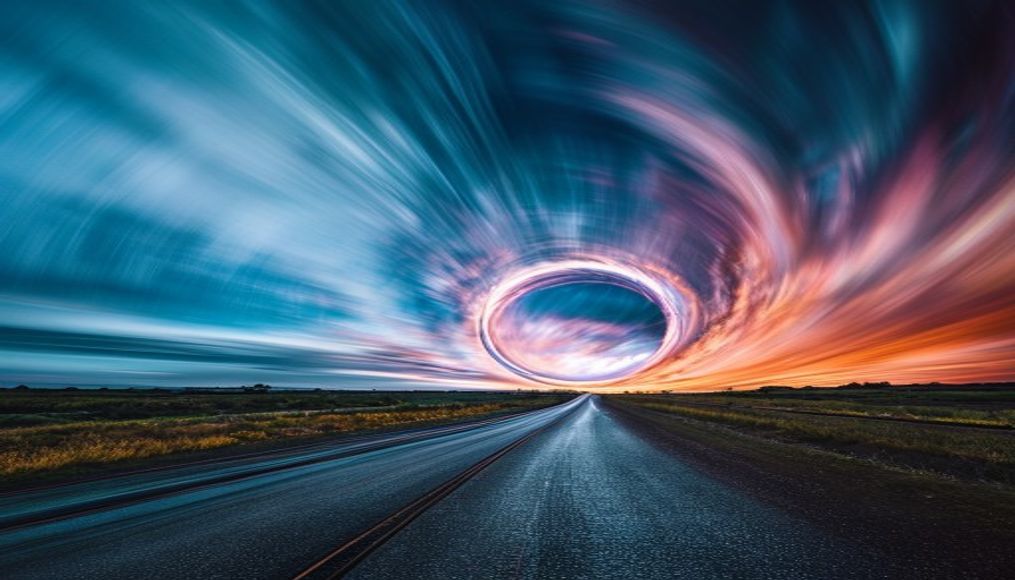
Asteroid belt artistic
1344×768 · AVIF · CC BY 4.0
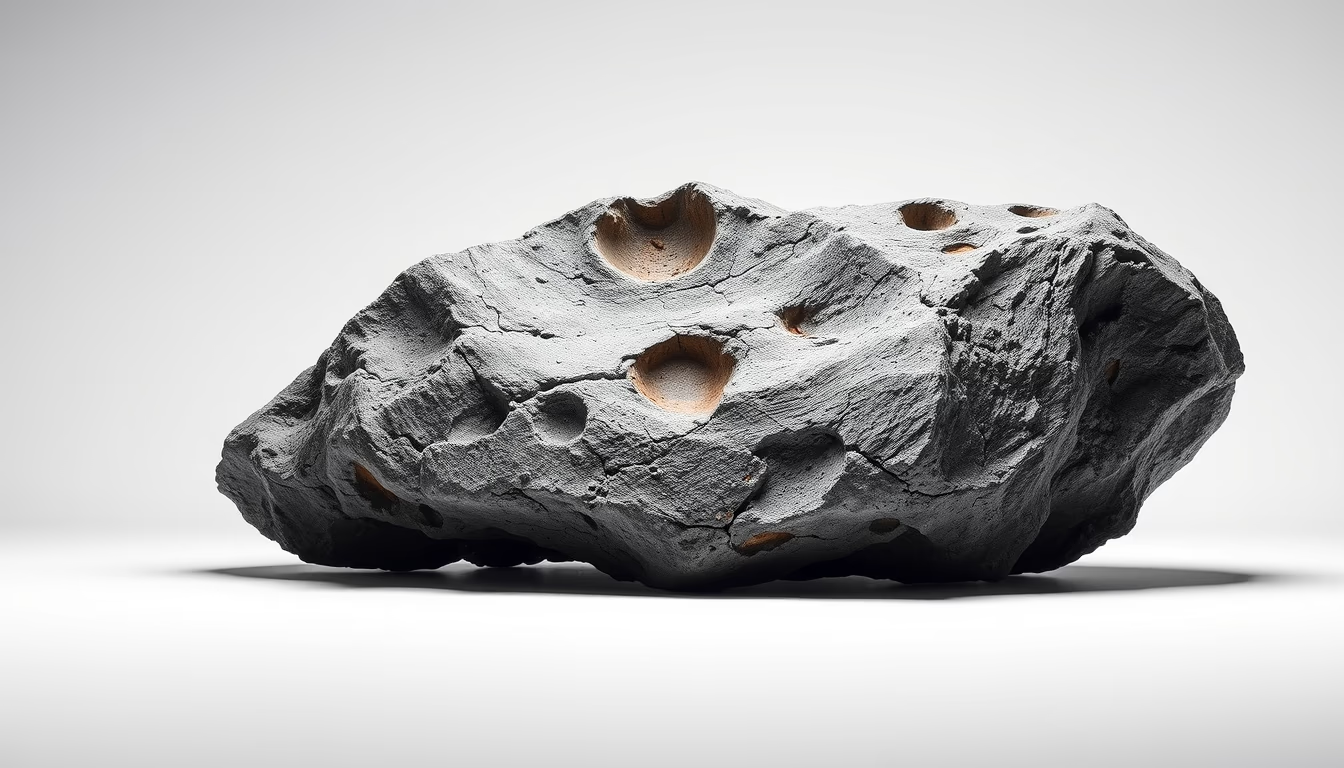
The asteroid belt, located between Mars and Jupiter, contains millions of rocky bodies orbiting the Sun, remnants from the solar system's formation.
About this subject
The asteroid belt lies between the orbits of Mars and Jupiter, spanning 2.2 to 3.2 astronomical units from the Sun (about 330 to 480 million kilometers). It contains an estimated 1.1 to 1.9 million asteroids larger than 1 km in diameter, plus tens of millions of smaller bodies. The total mass is only about 4% of that of the Moon, concentrated in the four largest objects: Ceres, Vesta, Pallas, and Hygiea. Ceres, the largest, is classified as a dwarf planet. These asteroids are primarily composed of rock and metal, with some containing water ice.
The belt's origin dates to the early solar system. Jupiter's gravity is thought to have prevented planetesimal accretion, leaving fragments that collide and break apart to this day. These bodies are scientifically valuable because they preserve primitive material from the solar nebula. Missions like NASA's Dawn visited Vesta and Ceres, revealing heavily cratered surfaces and evidence of past geological activity, such as cryovolcanoes on Ceres.
Culturally, the asteroid belt is often depicted in science fiction as a dense field of rocks requiring constant navigation. In reality, the average distance between asteroids is about 1 to 2 million kilometers, making collisions extremely rare. Artistic realistic representations show a sparser scene, with bodies of various sizes lit by the distant Sun.
Frequently Asked Questions
How far is the asteroid belt from Earth?
The belt lies between 330 and 480 million km from the Sun. Its distance from Earth varies, but averages about 300 to 400 million km.
How many asteroids are in the belt?
Estimates range from 1.1 to 1.9 million asteroids larger than 1 km in diameter, plus millions of smaller ones.
Why didn't the asteroid belt form a planet?
Jupiter's gravity likely prevented the material from accreting into a single planet, leaving fragmented bodies.
Direct URL
https://pub-c7d6a6ea828543ac903a74a341ccb2e1.r2.dev/imagens/asteroid-belt-artistic-commercial-product-photography-p5.avifHow to credit
Include a visible link back to UtilizAí. Copy one of the snippets below:
<a href="https://xn--utiliza-eza.com/en/midia/imagens/asteroid-belt-artistic-commercial-product-photography-p5">Asteroid belt artistic</a> by <a href="https://xn--utiliza-eza.com">UtilizAí</a>, licensed under <a href="https://creativecommons.org/licenses/by/4.0/">CC BY 4.0</a>.
[Asteroid belt artistic](https://xn--utiliza-eza.com/en/midia/imagens/asteroid-belt-artistic-commercial-product-photography-p5) by [UtilizAí](https://xn--utiliza-eza.com), CC BY 4.0
License: CC-BY-4.0