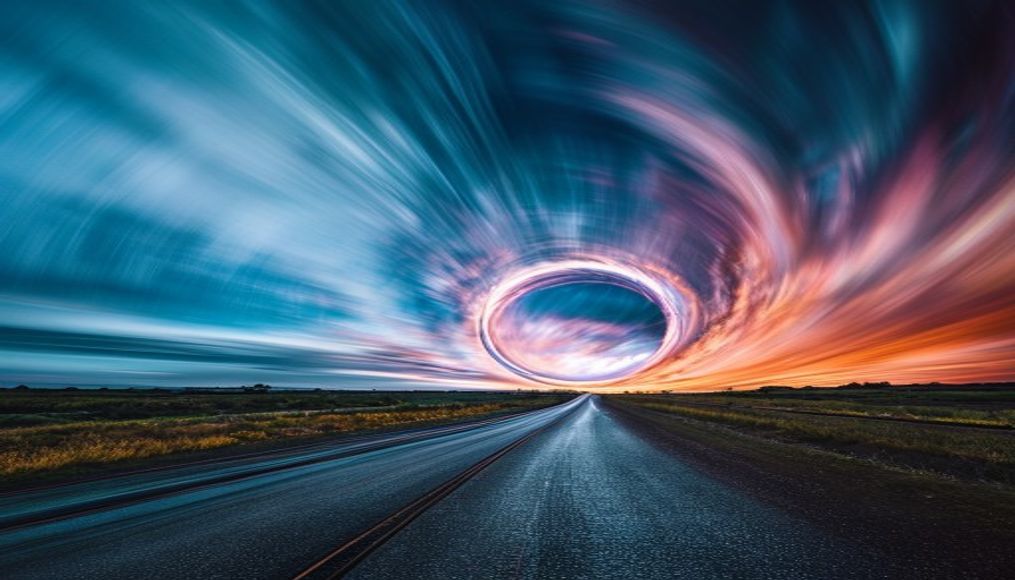
Asteroid belt artistic
1344×768 · AVIF · CC BY 4.0
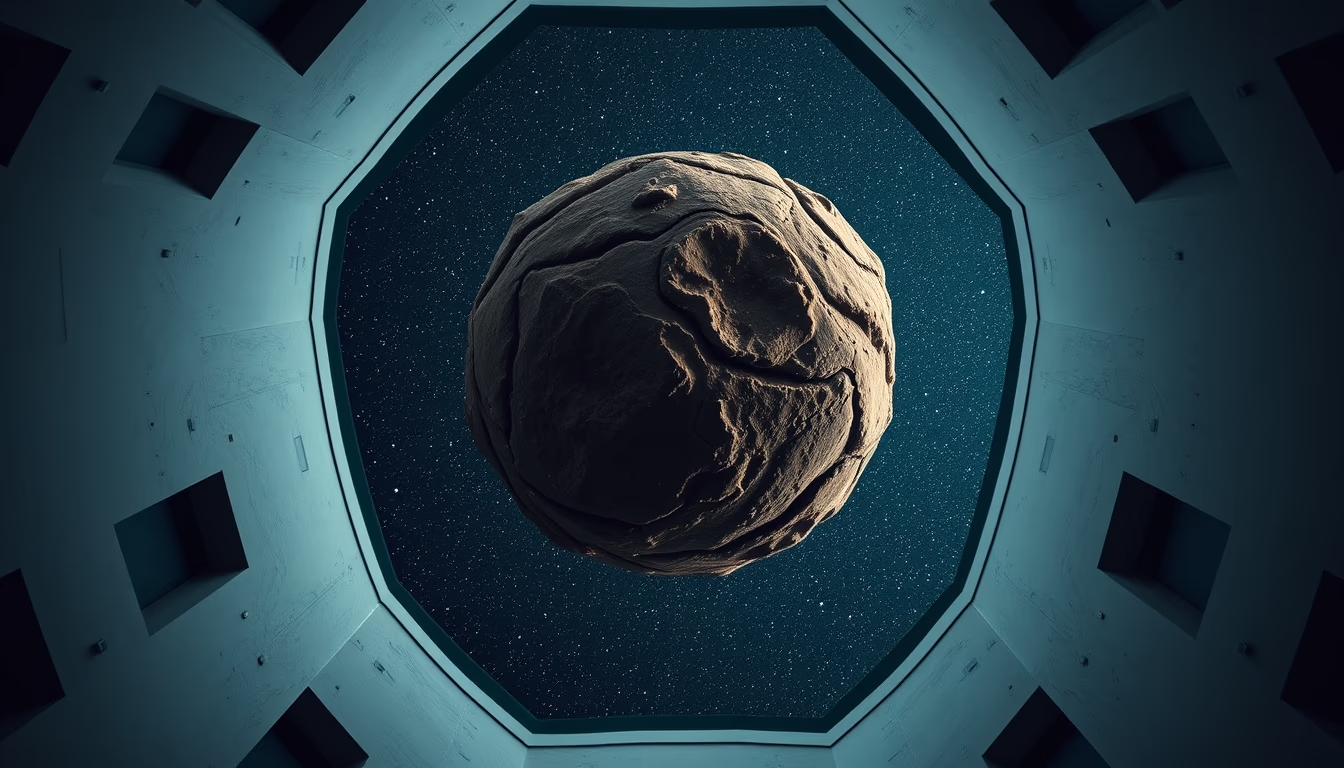
The asteroid belt, located between Mars and Jupiter, hosts millions of rocky bodies ranging from dust grains to dwarf planets like Ceres, offering clues about the early Solar System.
About this subject
The asteroid belt is a region of the Solar System located roughly between the orbits of Mars and Jupiter, spanning from 2.2 to 3.2 astronomical units from the Sun. It contains millions of objects ranging in size from tiny dust particles to bodies hundreds of kilometers in diameter. The largest object in the belt is the dwarf planet Ceres, about 940 km in diameter, followed by Vesta, Pallas, and Hygiea, which together account for about half of the belt's total mass. The total mass of the belt is estimated to be only 4% of the Moon's mass, surprising many who imagine it as a dense and dangerous region.
Formation of the asteroid belt dates back to the early Solar System, about 4.6 billion years ago. Originally thought to be remnants of a broken planet, the current hypothesis is that Jupiter's strong gravitational influence prevented materials in that region from accreting into a full-sized planet. Instead, bodies collided and fragmented over time, creating the current distribution. The belt is also a source of meteorites that fall to Earth, providing direct samples of its composition.
Studying the asteroid belt is crucial for understanding planetary evolution and impact history in the Solar System. Space missions such as Dawn (which orbited Vesta and Ceres) and the upcoming Psyche mission (targeting the metallic asteroid 16 Psyche) have provided detailed data on these objects. Additionally, the belt hosts C-type (carbonaceous), S-type (silicaceous), and M-type (metallic) asteroids, each representing different stages of planetary formation. Interestingly, not all asteroids are in the main belt; there are groups like the Trojans (near Jupiter's orbit) and near-Earth objects, studied for their impact potential.
The asteroid belt has also inspired popular culture, depicted in films like “The Empire Strikes Back” as a dense and dangerous field, but in reality it is so sparse that space probes cross it without difficulty. Artistic representations, like the one that inspired this image, help visualize the complexity and beauty of this region, merging science and imagination to highlight the historical and scientific importance of these celestial bodies.
Frequently Asked Questions
Is the asteroid belt dangerous for spacecraft?
No. Despite containing millions of objects, the belt is extremely sparse. The average distance between asteroids is hundreds of thousands of kilometers, and probes like Voyager and New Horizons have crossed it without issue.
What is the largest asteroid in the belt?
The largest object is the dwarf planet Ceres, about 940 km in diameter. It contains roughly one-third of the belt's total mass and was classified as a dwarf planet in 2006.
How can belt asteroids help us understand the Solar System?
Asteroids are remnants of planetary formation, preserving primitive materials. Studying them reveals the composition of the protoplanetary disk and the processes that led to planet formation.
Direct URL
https://pub-c7d6a6ea828543ac903a74a341ccb2e1.r2.dev/imagens/asteroid-belt-artistic-architectural-photography-p9.avifHow to credit
Include a visible link back to UtilizAí. Copy one of the snippets below:
<a href="https://xn--utiliza-eza.com/en/midia/imagens/asteroid-belt-artistic-architectural-photography-p9">Asteroid belt artistic</a> by <a href="https://xn--utiliza-eza.com">UtilizAí</a>, licensed under <a href="https://creativecommons.org/licenses/by/4.0/">CC BY 4.0</a>.
[Asteroid belt artistic](https://xn--utiliza-eza.com/en/midia/imagens/asteroid-belt-artistic-architectural-photography-p9) by [UtilizAí](https://xn--utiliza-eza.com), CC BY 4.0
License: CC-BY-4.0