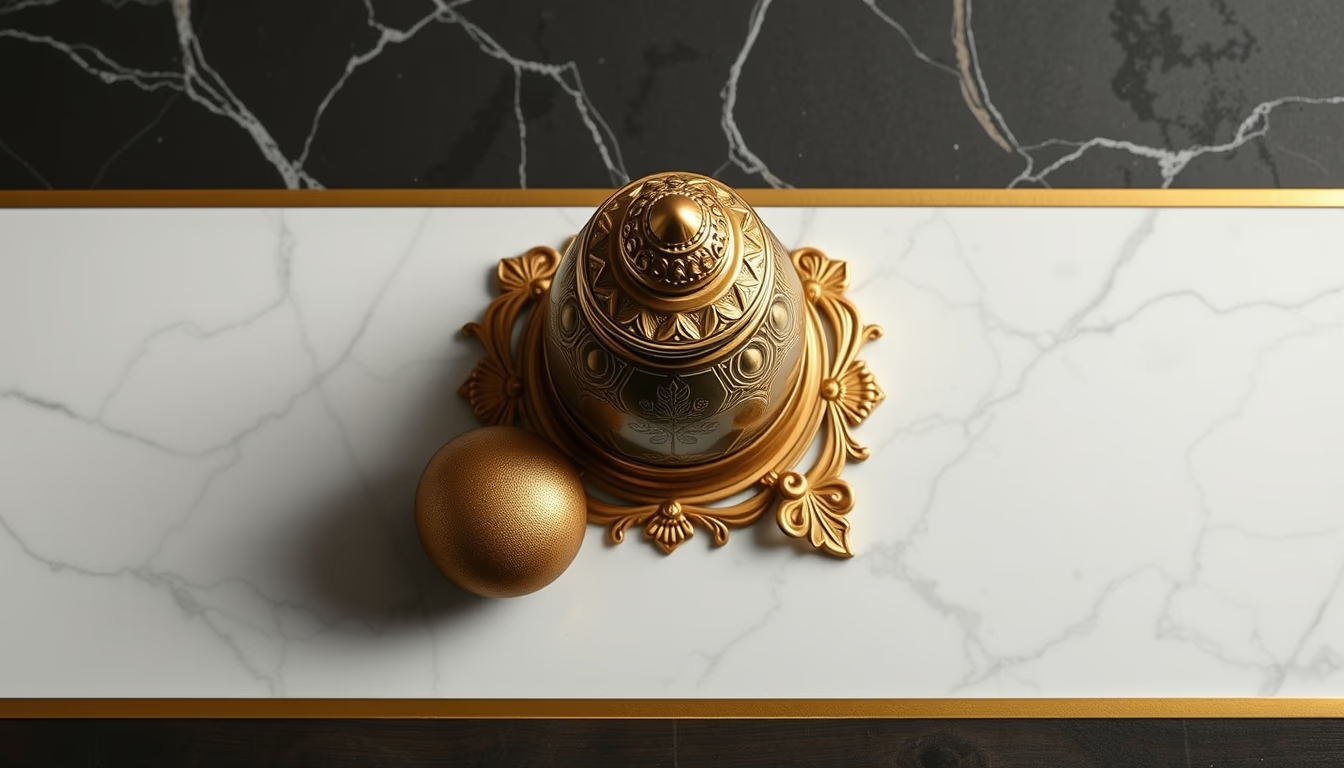
Art nouveau klimt gold
1344×768 · AVIF · CC BY 4.0

Art Nouveau, with Gustav Klimt's bold use of gold leaf, defined the turn of the 20th century in Austria.
About this subject
Gustav Klimt (1862-1918) was an Austrian symbolist painter and a leading figure of the Vienna Secession, a movement that broke away from traditional academic art. His golden period, from 1899 to 1910, is characterized by extensive use of gold leaf, inspired by Byzantine mosaics and sacred art. Works such as "The Kiss" (1907-1908) and "Portrait of Adele Bloch-Bauer I" (1907) exemplify this technique, where gold is not merely decorative but carries symbolic meanings of love, death, and transcendence.
Art Nouveau, known in Austria as Jugendstil, emphasized curved lines, organic forms, and the integration of applied arts. Klimt, though controversial for his erotic figures and allegories, became an icon of the style. His work reflects influences from Japonism, Egyptian art, and classical mythology, blended with a modern sensibility. The golden backgrounds in his paintings evoke religious icons but with a pagan and psychological theme.
Applying precious metals to painting required precise technique: gold was beaten into ultra-thin sheets and fixed with shellac. Klimt also used silver and platinum, creating reliefs and textures. This approach influenced designers like Alphonse Mucha and Secession architects such as Otto Wagner. Today, Klimt's works are housed in museums like the Belvedere (Vienna) and the Neue Galerie (New York), and have achieved auction records. The Klimt gold style remains a reference in fashion, graphic design, and decoration, associated with luxury and sensuality.
Frequently Asked Questions
Why did Klimt use so much gold in his paintings?
Klimt was influenced by Byzantine mosaics and sacred art, and used gold leaf to create a luminous and symbolic effect. Gold represented transcendence, eternal love, and a break from conventional painting.
What are Klimt's most famous works with gold?
The best-known are The Kiss (1907-1908), Portrait of Adele Bloch-Bauer I (1907), and The Beethoven Frieze (1902). All feature extensive gold areas and belong to his golden period.
Does Klimt's style still influence contemporary art?
Yes. Klimt's use of metal in painting, sensual figures, and ornamental design inspire artists, fashion designers, and tattoo artists. His aesthetic is often reproduced in decoration and digital media.
Direct URL
https://pub-c7d6a6ea828543ac903a74a341ccb2e1.r2.dev/imagens/art-nouveau-klimt-gold-studio-editorial-portrait-fresh3.avifHow to credit
Include a visible link back to UtilizAí. Copy one of the snippets below:
<a href="https://xn--utiliza-eza.com/en/midia/imagens/art-nouveau-klimt-gold-studio-editorial-portrait-fresh3">Art nouveau klimt gold</a> by <a href="https://xn--utiliza-eza.com">UtilizAí</a>, licensed under <a href="https://creativecommons.org/licenses/by/4.0/">CC BY 4.0</a>.
[Art nouveau klimt gold](https://xn--utiliza-eza.com/en/midia/imagens/art-nouveau-klimt-gold-studio-editorial-portrait-fresh3) by [UtilizAí](https://xn--utiliza-eza.com), CC BY 4.0
License: CC-BY-4.0