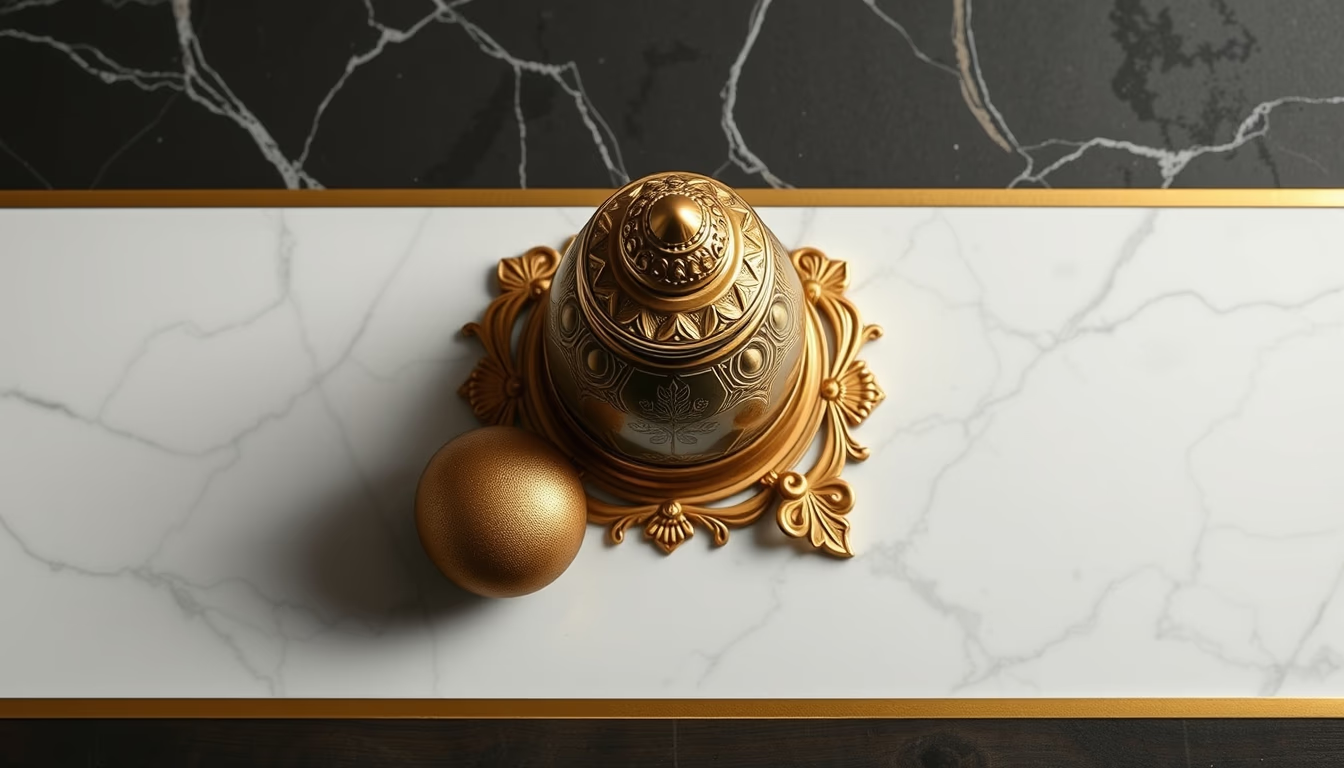
Art nouveau klimt gold
1344×768 · AVIF · CC BY 4.0
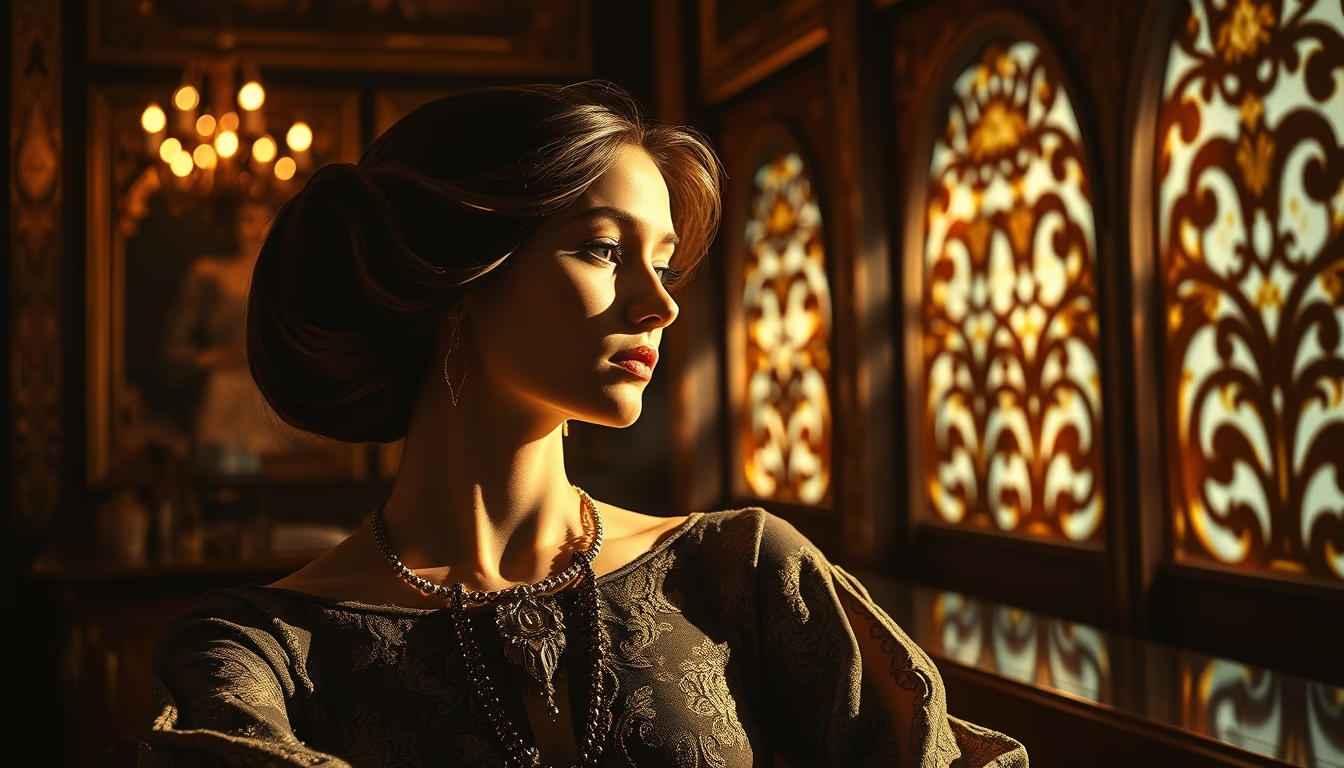
Exploration of Art Nouveau style in Gustav Klimt's golden period, combining luxurious ornamentation with dramatic lighting inspired by Rembrandt.
About this subject
Art Nouveau emerged in the late 19th century as a reaction against academic historicism. Characterized by flowing lines, organic forms, and nature-inspired motifs, this decorative style influenced architecture, design, and fine arts across Europe. In Austria, the movement was led by the Vienna Secession, of which Gustav Klimt was a founding member.
Klimt reached the peak of his career during his so-called 'golden period', between 1901 and 1909. Influenced by Byzantine art and the mosaics of Ravenna, he began applying gold leaf to his canvases, creating a metallic sheen that gives the works an almost sacred atmosphere. Paintings such as 'The Kiss' (1907-1908) and 'Portrait of Adele Bloch-Bauer I' (1907) are iconic examples of this technique, where gold is not merely decoration but an integral part of the composition.
Dramatic lighting, known as Rembrandt lighting, is a chiaroscuro technique that creates strong contrasts between light and shadow. Although associated with Dutch Baroque, this approach was adapted by modern artists to enhance textures and volumes. In the context of Klimt's work, light strikes the gold surfaces, generating reflections that emphasize ornamental patterns and human figures. This combination of decorative luxury and luminous drama results in hypnotic images where every detail seems to pulse.
Klimt's use of genuine gold was not merely aesthetic: he sought to create a transcendent visual experience, connecting the viewer to something eternal. The layers of gold leaf, applied over gesso, required precise technique and gave the paintings a unique materiality. Today, these works are preserved in museums such as the Belvedere Gallery in Vienna and continue to inspire artists and designers exploring the fusion of ornamentation and light.
Frequently Asked Questions
What characterizes the Art Nouveau style?
Art Nouveau is defined by flowing lines, organic forms inspired by nature, floral and vegetal motifs, and a desire to integrate art and craftsmanship. It emerged in the late 19th century as a break from historical styles.
Why did Gustav Klimt use so much gold in his paintings?
Klimt was influenced by Byzantine art and the golden mosaics of Ravenna. He applied gold leaf to create a luminous and symbolic effect, associating the precious metal with themes of love, death, and transcendence.
What is the Rembrandt lighting technique?
It is a dramatic lighting technique that creates a triangle of light under the subject's eye, contrasting bright and dark areas. The name comes from the Dutch painter Rembrandt, who often used it to add depth and emotion to his works.
Direct URL
https://pub-c7d6a6ea828543ac903a74a341ccb2e1.r2.dev/imagens/art-nouveau-klimt-gold-rembrandt-lighting-dramatic-shadows-fresh0.avifHow to credit
Include a visible link back to UtilizAí. Copy one of the snippets below:
<a href="https://xn--utiliza-eza.com/en/midia/imagens/art-nouveau-klimt-gold-rembrandt-lighting-dramatic-shadows-fresh0">Art nouveau klimt gold</a> by <a href="https://xn--utiliza-eza.com">UtilizAí</a>, licensed under <a href="https://creativecommons.org/licenses/by/4.0/">CC BY 4.0</a>.
[Art nouveau klimt gold](https://xn--utiliza-eza.com/en/midia/imagens/art-nouveau-klimt-gold-rembrandt-lighting-dramatic-shadows-fresh0) by [UtilizAí](https://xn--utiliza-eza.com), CC BY 4.0
License: CC-BY-4.0