Art nouveau klimt gold
1344×768 · AVIF · CC BY 4.0
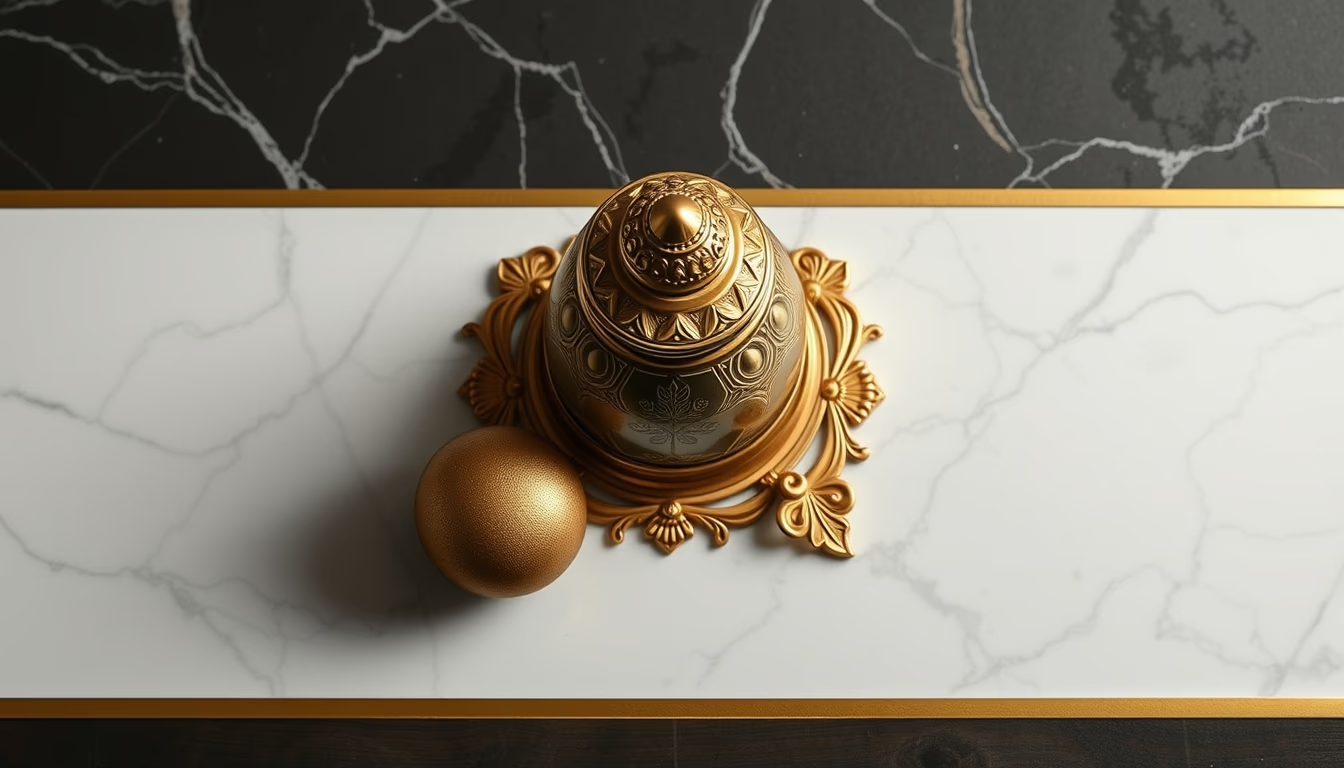
Art Nouveau and Gustav Klimt's lavish use of gold leaf define the aesthetic movement that flourished at the turn of the 19th to 20th century in Europe.
About this subject
Art Nouveau, also known as Modern Style, reached its peak between 1890 and 1910. It is characterized by organic lines, nature-inspired forms, and a desire to integrate art and craftsmanship. In Austria, the movement took a distinctive turn with the Vienna Secession, a group founded by Gustav Klimt, Josef Hoffmann, and other artists who broke away from traditional academic art.
Gustav Klimt (1862, 1918) is one of the most iconic figures of Art Nouveau, especially due to his golden phase. Inspired by the goldsmithing and Byzantine mosaics he saw in Ravenna, Italy, Klimt began applying gold leaf to his canvases. His masterpiece "The Kiss" (1907, 1908) depicts a couple embracing against a golden background, symbolizing the fusion of masculine and feminine through geometric and decorative patterns typical of the style.
Klimt's use of gold was not merely decorative; it gave the paintings an ethereal luminosity and a spiritual dimension. The precious metal appears in garments, backgrounds, and objects, creating textures that reflect light in a unique way. Gold also evoked wealth and symbolism, addressing themes such as love, death, and regeneration that recur in his compositions.
The legacy of Klimt and the golden Art Nouveau extended beyond painting to architecture, interior design, and graphic arts. In the digital age, elements of this style remain a reference for illustrations, fashion, and decoration. The combination of fluid lines, floral motifs, and the glow of gold continues to fascinate, representing a transitional aesthetic moment between the 19th century and modernity.
Frequently Asked Questions
What characterizes the Art Nouveau movement?
Art Nouveau is an artistic and decorative style that flourished between 1890 and 1910, marked by organic lines, natural forms such as flowers and vines, and the integration of art with craftsmanship. It aimed to create a total art, encompassing architecture, interior design, and everyday objects.
Why did Gustav Klimt use so much gold in his paintings?
Klimt was influenced by the Byzantine mosaics he saw in Ravenna, Italy, and by goldsmithing. Gold gave his works luminosity, texture, and a spiritual quality, while also evoking wealth and symbolism related to themes such as love, death, and regeneration.
What is the most famous work of Klimt's golden phase?
The most famous work is 'The Kiss' (1907, 1908), which depicts a couple embracing against a golden background with geometric patterns. The painting is an icon of Art Nouveau and represents the fusion of masculine and feminine, combining eroticism and ornamentation.
Direct URL
https://pub-c7d6a6ea828543ac903a74a341ccb2e1.r2.dev/imagens/art-nouveau-klimt-gold-isometric-flat-lay-fresh17.avifHow to credit
Include a visible link back to UtilizAí. Copy one of the snippets below:
<a href="https://xn--utiliza-eza.com/en/midia/imagens/art-nouveau-klimt-gold-isometric-flat-lay-fresh17">Art nouveau klimt gold</a> by <a href="https://xn--utiliza-eza.com">UtilizAí</a>, licensed under <a href="https://creativecommons.org/licenses/by/4.0/">CC BY 4.0</a>.
[Art nouveau klimt gold](https://xn--utiliza-eza.com/en/midia/imagens/art-nouveau-klimt-gold-isometric-flat-lay-fresh17) by [UtilizAí](https://xn--utiliza-eza.com), CC BY 4.0
License: CC-BY-4.0