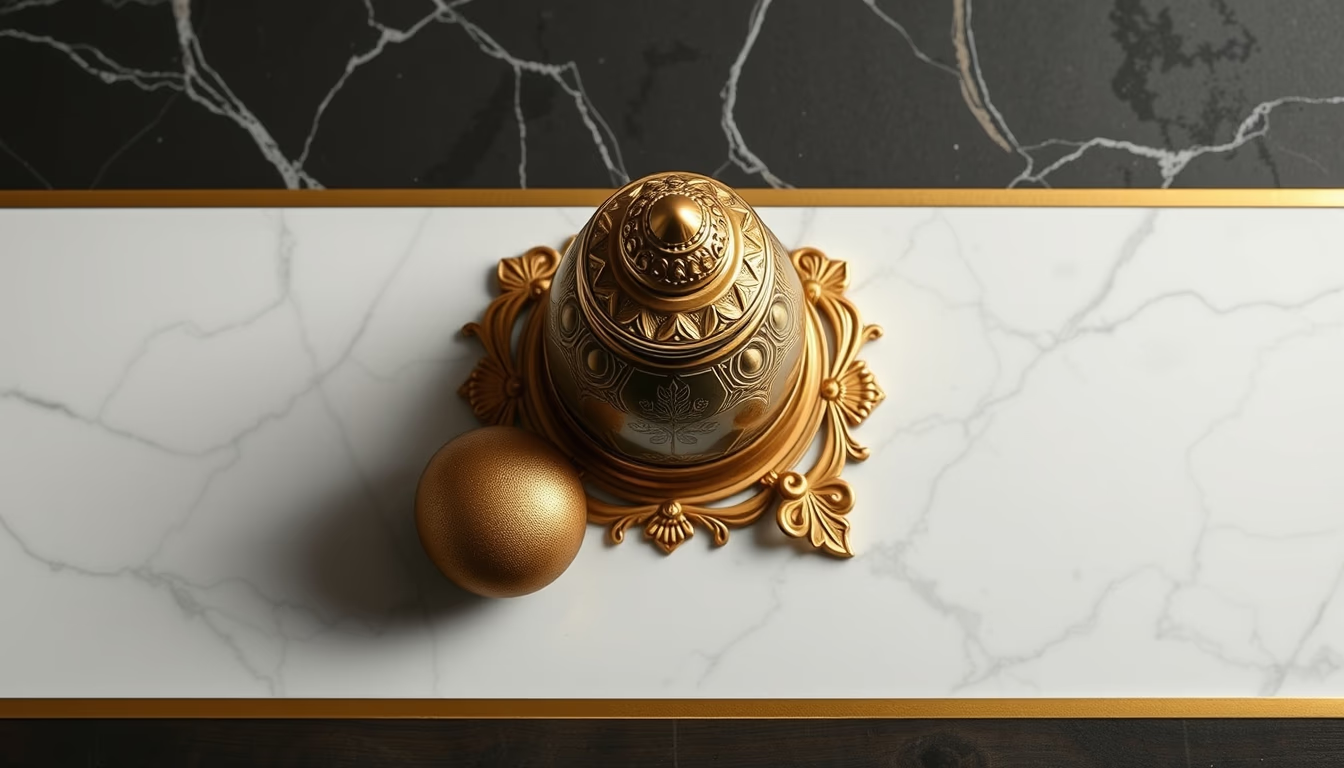
Art nouveau klimt gold
1344×768 · AVIF · CC BY 4.0

Gustav Klimt, a leading figure of Art Nouveau, revolutionized painting with his golden phase, marked by works such as The Kiss and the lavish use of gold leaf.
About this subject
Art Nouveau, an artistic movement that flourished between 1890 and 1910, found one of its greatest representatives in Gustav Klimt. The Austrian painter, co-founder of the Vienna Secession, developed a unique style blending symbolism, geometric ornamentation, and strong influences from Byzantine art. His golden phase, initiated around 1903 after travels to Ravenna, where he was impressed by mosaics, became his hallmark.
Klimt used genuine gold leaf in canvases such as The Kiss (1907, 1908) and Portrait of Adele Bloch-Bauer I (1907), imparting luminosity and a precious character to the works. This technique was unusual in traditional oil painting and required a meticulous process: the leaves were applied with special brushes and polished to create reflections. The gold was not mere decorative detail but symbolized spirituality, inner wealth, and the transcendence of love and death.
Klimt's themes explore eroticism, the human psyche, and the female condition, often in flat compositions with golden backgrounds reminiscent of medieval religious icons. His work influenced not only painting but also architecture, interior design, and Art Nouveau jewelry. Despite admiration, the artist faced criticism from conservatives who found his figures too sensual. Today, his canvases are among the world's most valuable, with Portrait of Adele Bloch-Bauer I fetching US$ 135 million in 2006.
In Brazil, Art Nouveau arrived in the late 19th century, adapting to the tropical climate and local culture. Cities like Manaus and Belém preserve notable examples, such as the Amazon Theatre, whose dome is decorated with motifs reminiscent of the style. Klimt's golden phase, however, is particularly celebrated in exhibitions in Brazil, attracting thousands of visitors and inspiring contemporary artists to explore the combination of gold and figuration.
Frequently Asked Questions
What characterizes Gustav Klimt's golden phase?
Klimt's golden phase is marked by the intensive use of gold leaf in his paintings, combined with geometric patterns and symbolism. Works such as The Kiss and Portrait of Adele Bloch-Bauer I exemplify this period, which began after his trip to Ravenna, influenced by Byzantine mosaics.
How did Art Nouveau relate to Brazil?
Art Nouveau arrived in Brazil in the late 19th century, mainly through architecture and design. The Amazon Theatre in Manaus and the Palace of Justice in Belém are iconic examples. The movement adapted to the local climate, using materials like tiles and cast iron.
Why are Klimt's works so valuable today?
Klimt's works are valuable due to their rarity, innovative technique, and historical significance. The use of gold and the unique style attract collectors. In 2006, Portrait of Adele Bloch-Bauer I sold for US$ 135 million, a record at the time.
Direct URL
https://pub-c7d6a6ea828543ac903a74a341ccb2e1.r2.dev/imagens/art-nouveau-klimt-gold-high-fashion-editorial-fresh11.avifHow to credit
Include a visible link back to UtilizAí. Copy one of the snippets below:
<a href="https://xn--utiliza-eza.com/en/midia/imagens/art-nouveau-klimt-gold-high-fashion-editorial-fresh11">Art nouveau klimt gold</a> by <a href="https://xn--utiliza-eza.com">UtilizAí</a>, licensed under <a href="https://creativecommons.org/licenses/by/4.0/">CC BY 4.0</a>.
[Art nouveau klimt gold](https://xn--utiliza-eza.com/en/midia/imagens/art-nouveau-klimt-gold-high-fashion-editorial-fresh11) by [UtilizAí](https://xn--utiliza-eza.com), CC BY 4.0
License: CC-BY-4.0