Art nouveau klimt gold
1344×768 · AVIF · CC BY 4.0
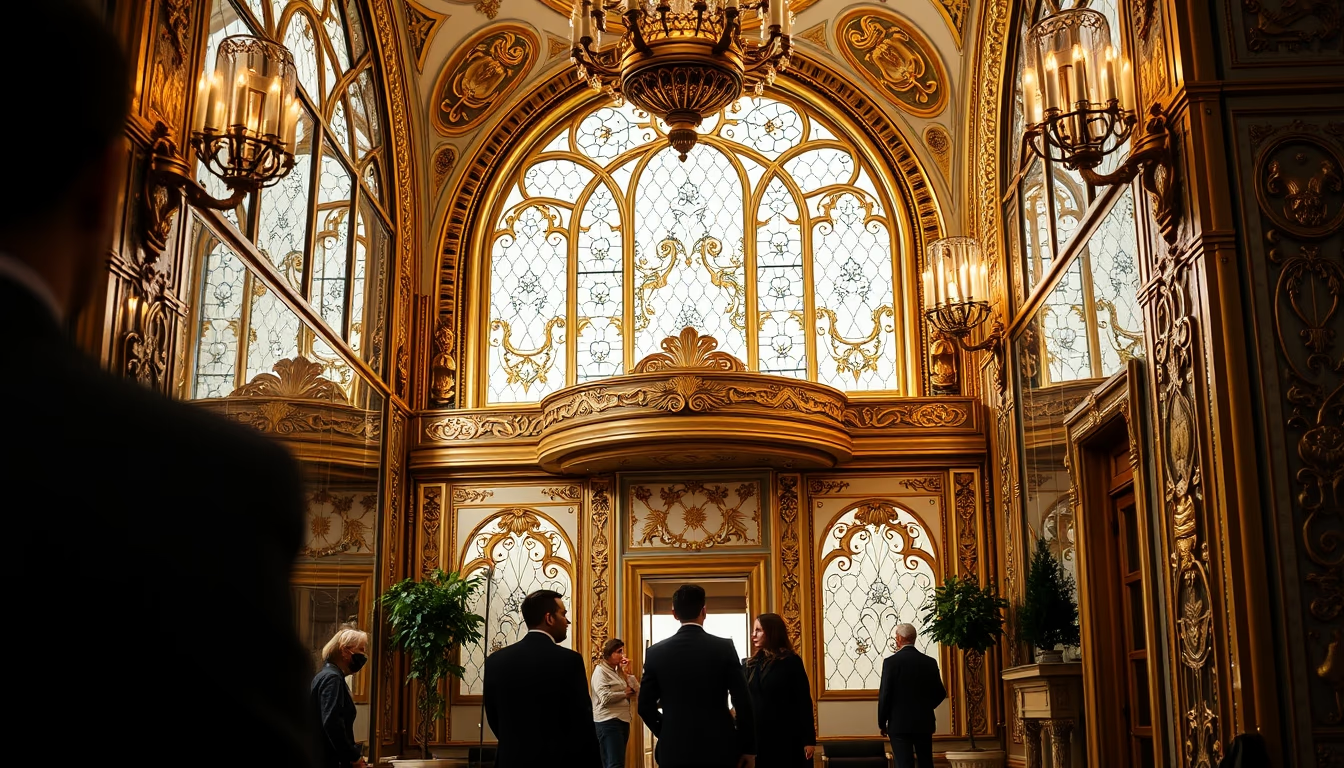
Gustav Klimt, master of Art Nouveau, revolutionized painting with his exuberant use of gold leaf, inspired by Byzantine mosaics, creating iconic works like The Kiss.
About this subject
Gustav Klimt (1862, 1918) was one of the foremost figures of the Art Nouveau movement, particularly its Viennese Secession branch. His so-called "Golden Phase," spanning from 1899 to 1910, marked an intense period of production where he incorporated gold and silver leaf into his canvases. This decorative technique was heavily influenced by Byzantine mosaics that Klimt observed during a trip to Ravenna, Italy. The use of gold was not merely aesthetic but also symbolic, lending his works a spiritual and timeless aura.
His most famous work from this period is "The Kiss" (1907, 1908), depicting a couple embracing in a flower field, their garments adorned with geometric and gold patterns. Klimt used a mixed technique: oil on canvas with gold leaf application, creating reliefs that reflect light uniquely. This innovative approach challenged academic conventions of the time and brought painting closer to applied arts like goldsmithing and mosaic.
Art Nouveau, which flourished between 1890 and 1910, sought to integrate art into daily life, valuing flowing lines, natural motifs, and sophisticated ornamentation. Klimt pushed this philosophy to the extreme by transforming his canvases into precious objects. His female figures, often enveloped in gold, represent the fusion of eroticism, life, and death, recurring themes in his oeuvre. Klimt's influence extended beyond painting into architecture, interior design, and fashion of the era.
Interestingly, Klimt's "Golden Phase" coincided with a period of economic prosperity in Vienna, allowing artists to experiment with expensive materials. However, after 1910, he gradually abandoned gold, turning to brighter colors and more expressionist compositions. His legacy remains a hallmark of Art Nouveau, continuing to inspire contemporary artists and serving as one of the most reproduced subjects in posters and decorative objects worldwide.
Frequently Asked Questions
Why did Gustav Klimt use so much gold in his paintings?
Klimt was inspired by Byzantine mosaics he saw in Ravenna, Italy. Beyond aesthetics, gold added a symbolic and spiritual quality to his works, elevating themes of love, life, and death into a timeless dimension.
What is the relationship between Klimt and the Art Nouveau movement?
Klimt was a leading figure of the Viennese Secession, the Austrian branch of Art Nouveau. His works featured flowing lines, floral motifs, and the integration of art and craft, core principles of the movement.
What are the main works from Klimt's Golden Phase?
The most iconic works include 'The Kiss' (1907, 1908), 'Portrait of Adele Bloch-Bauer I' (1907), 'Danae' (1907, 1908), and 'The Tree of Life' (1909). All feature extensive use of gold leaf and decorative patterns.
Direct URL
https://pub-c7d6a6ea828543ac903a74a341ccb2e1.r2.dev/imagens/art-nouveau-klimt-gold-documentary-photography-fresh1.avifHow to credit
Include a visible link back to UtilizAí. Copy one of the snippets below:
<a href="https://xn--utiliza-eza.com/en/midia/imagens/art-nouveau-klimt-gold-documentary-photography-fresh1">Art nouveau klimt gold</a> by <a href="https://xn--utiliza-eza.com">UtilizAí</a>, licensed under <a href="https://creativecommons.org/licenses/by/4.0/">CC BY 4.0</a>.
[Art nouveau klimt gold](https://xn--utiliza-eza.com/en/midia/imagens/art-nouveau-klimt-gold-documentary-photography-fresh1) by [UtilizAí](https://xn--utiliza-eza.com), CC BY 4.0
License: CC-BY-4.0